

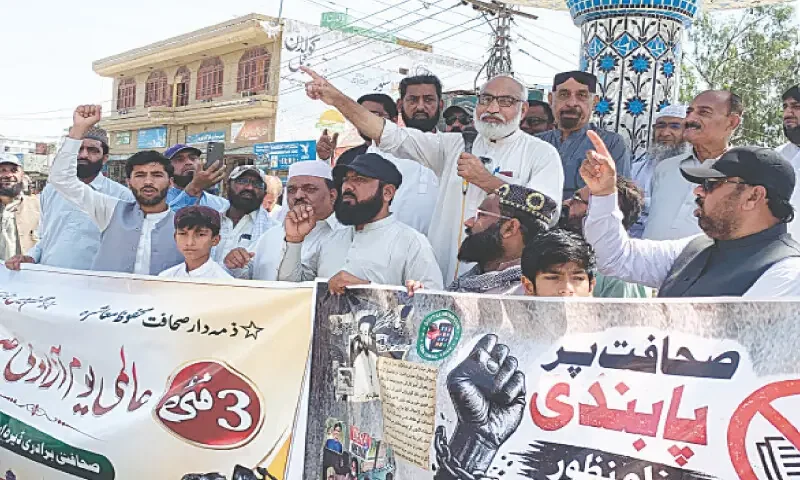
Journalists Killed in Khyber Pakhtunkhwa Still Await Justice, Say Protesters
Rising Concern Over Journalists Killed in Khyber Pakhtunkhwa as Media Workers Unite for Change

KP – (Special Correspondent / Web Desk) – Journalists across Khyber Pakhtunkhwa took to the streets on World Press Freedom Day, shining a light on a painful truth — several journalists killed in Khyber Pakhtunkhwa over recent years have yet to see justice served. From Peshawar to Bajaur, media workers gathered with one clear message: they are tired of working in fear, and they want real protection now.
Hundreds of journalists from print, electronic, and digital media joined protests outside the Peshawar Press Club. The Khyber Union of Journalists led the rally, with its president Kashifuddin Syed and other senior figures walking alongside fellow journalists. People carried banners calling for safety, freedom of speech, and an end to the silence around journalist killings.
Speakers at the event were clear in their frustration. They said that a country cannot truly be democratic if the people who report the news are afraid for their lives. Journalists in this region have kept doing their jobs under extremely tough conditions — security threats, financial pressure, and little legal support.
One of the biggest concerns raised was the closure of media bureau offices across the province. This has left hundreds of journalists without jobs, pushing many into financial hardship. Speakers also strongly rejected the newly passed changes to the Prevention of Electronic Crimes Act, calling it a direct attack on media freedom and freedom of expression.
In Charsadda, members of the Muhammadzai Union of Journalists sat together with community members to talk about the real challenges journalists face every day. They remembered veteran journalists who gave their lives to this profession and paid tribute to their legacy.
In Khyber district, journalists gathered at the press club in Landi Kotal and spoke openly about the dangerous environment they work in. They said that no journalist can do their job properly without basic personal safety. The situation in tribal areas is especially concerning, where reporters often work without any institutional support or legal protection.
In Mohmand, the mood was both proud and heavy. The press club’s general secretary confirmed that three journalists from the district alone were killed while on duty in recent years, and many others were seriously injured. Journalists there said they work under constant pressure — threats to life, no stable income, no proper training, and almost no legal cover.
In South Waziristan, the Wana Union of Journalists raised the same alarm. Their chairman and the local press club president both said that journalism in tribal districts is genuinely dangerous. They called on the government to take real steps — not just make promises — to protect media workers on the ground.
In Dera Ismail Khan, journalists marched through the city streets, starting from GPO Chowk and ending at Topanwala Chowk, where the march turned into a large public gathering. In Bajaur, local journalists also observed the day and made it clear they would continue doing their work no matter how difficult things become.
Comments are closed, but trackbacks and pingbacks are open.