
Isaias Leaves Four Dead as Flood Threats Persist
Thousands Lose Electricity as Isaias Brings Destructive Winds and Heavy Rainfall

Isaias: At least four people have died as post-tropical cyclone Isaias moved northward across the southeastern United States, leaving damaged homes, widespread power outages and continuing threats of flooding and tornadoes.
According to the National Hurricane Center (NHC), Isaias made landfall late Friday near Destin on Florida’s Gulf Coast as a Category 2 hurricane, packing sustained winds of approximately 105 miles per hour (165 kilometres per hour). The storm weakened overnight but continued to pose risks as it moved inland.
Residents in coastal communities reported property damage and power cuts. In Mary Esther, near Destin, local resident Matt Howard said the storm had weakened before reaching the area. Although his electricity was cut off and a neighbour’s metal shed landed in his backyard, he said his household emerged safely after taking precautions.
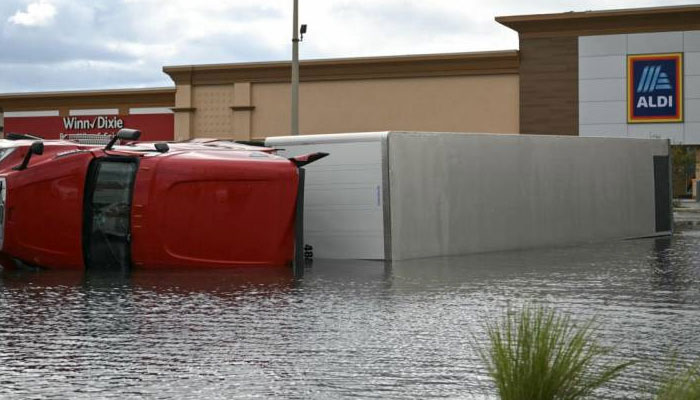
Officials reported at least four storm-related fatalities, including two people killed when trees fell onto homes in Florida and Alabama. Other areas experienced overturned vehicles, fallen trees, damaged rooftops and downed power lines.
Florida Governor Ron DeSantis urged residents to remain cautious, warning that standing water and fallen electrical lines could be dangerous. He also stressed that portable generators must never be operated inside homes or garages because of the risk of carbon monoxide poisoning.
A man was reportedly found dead in Florida after a generator was left running inside his garage, according to CNN.
Power outages affected approximately 440,000 electricity customers across Florida, Alabama and Georgia on Saturday night, according to PowerOutage.com. Meanwhile, the US Department of Energy authorised the release of up to four million barrels of crude oil from reserves to help address potential disruptions in the Gulf Coast region, a major centre for the country’s oil refining industry.
Flooding Concerns Grow as Isaias Moves Inland
Despite weakening, Isaias continued to threaten communities with heavy rainfall and flash flooding. The National Hurricane Center warned that some areas could receive as much as 10 inches (25 centimetres) of rain, with additional risks of landslides across the Southern Appalachian Mountains.
Concerns were particularly high in North Carolina, where communities were still recovering from the devastating effects of Hurricane Helene in 2024. That storm brought exceptionally heavy rainfall to mountainous areas, triggering deadly floods and extensive damage.
Meteorologists attributed the unusually late arrival of the Atlantic hurricane season’s first hurricane, as described in the report, largely to a strong El Niño phenomenon. This climate pattern can increase vertical wind shear over the Atlantic, making it more difficult for tropical storms to develop and strengthen.
Michael Fischer of the University of Miami’s Rosenstiel School of Marine, Atmospheric, and Earth Science told AFP that near-record wind shear across the Atlantic basin was consistent with conditions expected during a strong El Niño event.
In the Pacific, El Niño can have the opposite effect by reducing wind shear and creating more favourable conditions for tropical cyclone development.
Meanwhile, Mexico’s Baja California region and neighbouring parts of California were preparing for the arrival of weakening post-tropical cyclone Rachel. Hurricane Simon was also forecast to approach western Mexico, adding to concerns about severe weather across parts of the region.
Authorities continued to urge residents in affected areas to follow official weather alerts, avoid flooded roads and stay away from damaged power lines as the storm’s impacts unfolded.
Comments are closed, but trackbacks and pingbacks are open.