
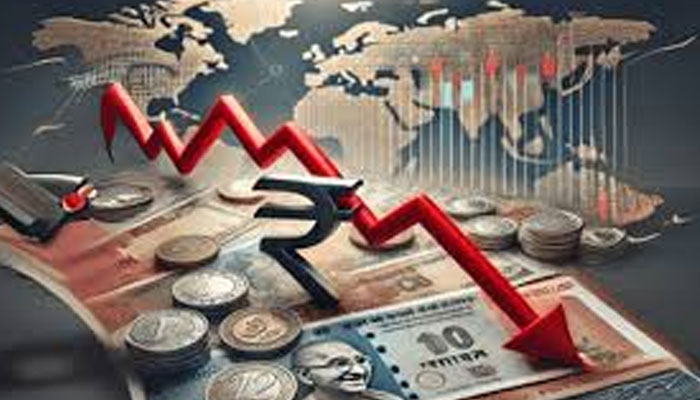
India Struggles To Stabilize Rupee Amid Economic Pressures
Weak Rupee Increases Costs For Businesses Students And Importers

NEW DELHI: (Web Desk) – India is facing mounting economic pressure as the rapid decline of the rupee, fueled by soaring oil prices linked to the Middle East conflict, threatens to disrupt the country’s economic momentum.
The Indian rupee has fallen more than five percent since the regional crisis began in February, extending its losses throughout 2025 and making it the worst-performing major Asian currency so far in 2026.
The currency slipped to a historic low of over 96 against the US dollar on Friday, prompting authorities to signal that stabilizing the rupee has become a major macroeconomic priority.
The Reserve Bank of India has already spent billions of dollars from foreign exchange reserves to support the currency, while also tightening speculative trading and extending special credit support to oil importers to reduce pressure on dollar demand.
Prime Minister Narendra Modi has additionally urged citizens to adopt voluntary austerity measures, including reducing gold purchases and limiting overseas travel to help conserve foreign exchange reserves.
Economists say the weakening rupee is closely tied to rising crude oil prices, large foreign investor outflows and concerns surrounding slowing economic growth.
According to analysts, India’s current account deficit is expected to exceed two percent of GDP this fiscal year, more than double the previous year’s level and potentially the widest gap since 2012–13.
Foreign investors have reportedly withdrawn more than $20 billion from Indian stock markets since the Middle East conflict intensified, while dollar inflows into the economy have slowed significantly.
The pressure has forced the central bank to rely heavily on foreign reserves, which have fallen from more than $720 billion before the crisis to around $697 billion.
ISPR Strongly Rejects Indian Army Chief’s Provocative Remarks
The currency decline is also impacting businesses and consumers across the country. Manufacturers dependent on imported raw materials are struggling with rising costs, particularly smaller firms unable to hedge against currency volatility.
Industries heavily reliant on imports, such as Kerala’s cashew sector, have been especially affected. Business owners say higher import costs have sharply reduced purchasing capacity and contributed to widespread closures of processing units.
The weaker rupee is also creating difficulties for students planning to study abroad, with education consultants reporting that studying in the United States now costs significantly more compared to last year due to exchange rate fluctuations.
India’s broader ambition of becoming the world’s third-largest economy has also faced setbacks, as the rupee’s depreciation has affected the country’s global GDP ranking measured in dollar terms.
Analysts warn that authorities may consider additional measures, including fuel price increases, tighter remittance regulations and incentives aimed at attracting foreign currency deposits from overseas Indians.
Economists caution, however, that currency intervention alone cannot permanently solve the issue unless underlying economic pressures, including inflation and trade imbalances, are addressed.
Comments are closed, but trackbacks and pingbacks are open.