
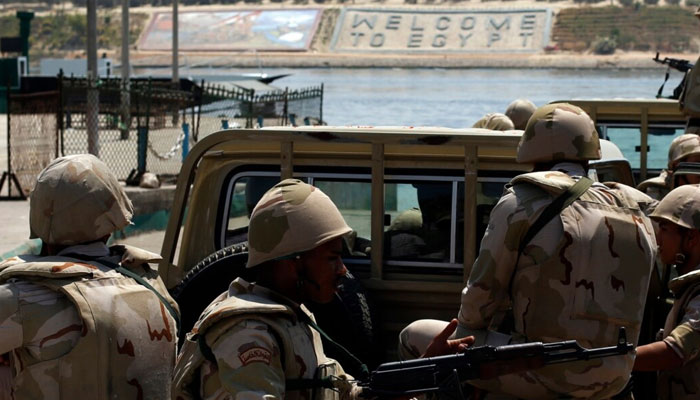
Egypt’s Potential Military Involvement Could Jeopardise Suez Canal Recovery and Threaten Vital Revenues
By Asmaa Selim

Escalating tensions in the Red Sea raise fresh concerns over maritime security, shipping costs and Egypt’s fragile economic recovery.
The gradual recovery of maritime traffic through the Red Sea and the Suez Canal is facing renewed uncertainty as fighting in Yemen intensifies and Egypt considers the possibility of providing military support to Saudi Arabia. Any further escalation could undermine efforts to restore international shipping through one of the world’s most important maritime corridors, threatening a vital source of foreign currency for the Egyptian economy.
The developments come as major international shipping companies have begun cautiously resuming services through the Suez Canal, the shortest maritime route between Asia and Europe, following nearly three years of disruption that forced numerous vessels to reroute around the Cape of Good Hope.
Shipping data covering September and mid-October 2026 point to a fragile recovery. Although traffic through the Suez Canal and the Bab al-Mandab Strait has improved, shipping volumes remain below pre-crisis levels. At the same time, renewed security concerns and rising freight rates are threatening to reverse some of the progress achieved in recent months.
Experts at the Egyptian Chamber of Shipping have warned that the recovery remains vulnerable to regional instability. The risk of a wider confrontation, potentially extending beyond Yemen and involving other regional powers, has heightened concerns across the global shipping industry.
Against this backdrop, the United States has also threatened to resume military hostilities with Iran, with tensions centred on the Strait of Hormuz, a strategic waterway through which approximately 20 million barrels of oil per day passed before the war.
Shipping industry experts who spoke to Al-Araby Al-Jadeed on condition of anonymity outlined two possible outcomes of Egyptian military involvement. Such participation could potentially contribute to securing maritime routes and supporting the recovery of the Suez Canal. However, it could also expose shipping companies to additional risks, prompting them to delay their return or divert vessels away from the Red Sea once again.
The consequences for Egypt could be substantial, particularly if renewed disruptions reduce canal revenues, increase energy and import costs, and place further pressure on foreign currency reserves. A prolonged escalation could also deepen existing economic difficulties and threaten employment across sectors dependent on trade and maritime activity.
Escalating Security Risks Could Push Shipping Costs Higher
Wael Qaddoura, a former member of the Suez Canal Authority’s board of directors and a maritime transport expert, said freight rates had risen significantly over the preceding week, particularly for shipments passing through the Bab al-Mandab Strait.
He warned that transportation costs could continue to increase as long as regional instability and military confrontations persist.
Qaddoura argued that the crisis in Yemen requires a political solution rather than further military escalation. He also maintained that Egypt could support Saudi Arabia’s defence without launching military strikes inside Yemen.
According to Qaddoura, disruptions at strategic maritime chokepoints have consequences extending far beyond the countries directly involved. Protecting these waterways therefore requires international cooperation, coordinated security arrangements and agreements capable of safeguarding freedom of navigation.
He also highlighted shortcomings in the international legal framework governing maritime security, calling for clearer rules to protect strategic straits and mechanisms to ensure their effective enforcement.
Without a more comprehensive international framework, he warned, the region would remain exposed to recurring confrontations, instability and further disruptions to global shipping.
Addressing the challenge of ensuring Houthi compliance with international law, Qaddoura said effective enforcement would require an international mechanism capable of compelling compliance. He suggested that legally grounded international restrictions could be considered by countries seeking to protect freedom of navigation through strategic waterways.
Qaddoura also argued that Egypt’s direct entry into the conflict would neither guarantee the safe passage of vessels through the Red Sea and the Suez Canal nor necessarily reduce shipping costs. Continued hostilities, he cautioned, could instead complicate the security situation and prolong the disruption.
He expects freight rates and maritime disturbances to continue rising gradually until the legal and coordination challenges surrounding the protection of strategic chokepoints are addressed.
Egypt Faces Mounting Economic and Political Pressures
Hamdy Barghout, a professor of logistics and maritime transport expert, similarly warned against the economic consequences of Egypt becoming involved in another military confrontation.
He said the country was already dealing with multiple political and economic challenges and that entering a new conflict could place additional pressure on its resources and further complicate its domestic situation.
Barghout explained that when commercial shipping routes become exposed to military confrontation, transportation costs can rise sharply and, in some cases, double. These increases are ultimately passed on through higher commodity prices and more expensive goods for consumers.
He rejected the argument that unilateral military intervention would necessarily reopen the Bab al-Mandab Strait to international shipping or provide sufficient protection for Egyptian interests and Suez Canal revenues.
Given the complex regional and international dynamics surrounding the waterway, he argued, securing the strait cannot be achieved through the military actions of a single country alone.
Concerns have also emerged over the prospect of committing Egyptian forces to a prolonged conflict that could strain military capabilities while aggravating an economy already vulnerable to external shocks and financial pressures.
On October 19, 2026, Egypt’s parliament postponed a vote on the request for authorisation concerning potential military support for Saudi Arabia until October 26.
Several lawmakers called on the presidency to provide further clarification regarding the proposed mission, including its objectives, financial costs and potential risks. Their concerns reflect the possibility that deeper military involvement could trigger further regional escalation, disrupt international shipping and undermine the recovery of Suez Canal revenues.
Suez Canal Traffic Recovers, but Remains Vulnerable
Despite the renewed security concerns, shipping figures indicate that maritime traffic through the Suez Canal has begun to recover.
According to data published by Lloyd’s List Intelligence on October 15, 2026, a total of 1,228 vessels transited the canal in September, compared with 1,234 in August.
Although this represented a slight monthly decline, September traffic was 21 per cent higher than in the same month last year, making it the canal’s busiest month since December 2023.
Traffic through the Bab al-Mandab Strait also increased. A total of 1,215 vessels passed through the strait in September, up from 1,170 in August, representing a 16 per cent year-on-year increase.
These figures suggest that international shipping activity is gradually returning to the region. Nevertheless, the recovery remains incomplete, and the latest security developments threaten to undermine the progress made so far.
For Egypt, the stakes extend beyond maritime traffic. Suez Canal revenues represent an important source of foreign currency, making the waterway’s stability closely linked to the country’s broader economic outlook.
Any renewed diversion of commercial vessels could reduce revenue inflows, increase the cost of imports and place additional pressure on foreign exchange resources. Higher freight rates could also feed into domestic prices, adding to the financial burden on households and businesses.
A Fragile Recovery at a Critical Crossroads
Egypt’s dilemma highlights the difficult balance between regional security commitments and domestic economic priorities. While protecting maritime navigation remains essential to the country’s strategic interests, military escalation could produce consequences that extend well beyond the immediate conflict.
The recovery in Suez Canal traffic offers a measure of economic relief after years of disruption. Yet the latest rise in freight rates and the renewed threat of confrontation demonstrate how quickly that progress could be reversed.
For Egypt and the wider international shipping industry, the central challenge is to secure the Red Sea and its strategic waterways without triggering a broader conflict that further undermines trade, increases transportation costs and weakens an already fragile economic recovery.
The direction of the crisis in Yemen, the response of regional and international powers, and the decisions made by shipping companies in the coming weeks will be critical in determining whether the Suez Canal’s recovery can be sustained or whether renewed instability will once again threaten one of the world’s most important trade routes.
Comments are closed, but trackbacks and pingbacks are open.