


Samina Mustafa
M.Phil. Scholar
“War does not determine who is right—only who is left.” This enduring observation captures the precarious position now facing Donald Trump as he confronts the consequences of a month-long military confrontation with Iran. With global energy markets in turmoil and his domestic approval ratings steadily declining, Trump finds himself navigating a narrowing path between diplomacy and escalation—each fraught with significant risks.
Another apt reflection comes from political theory: “In war, the simplest decisions are often the most difficult to execute.” For Trump, the choice is stark—either negotiate an exit that may be perceived as incomplete or weak, or intensify military engagement at the risk of drawing the United States into a prolonged and destabilizing conflict that could overshadow his presidency.
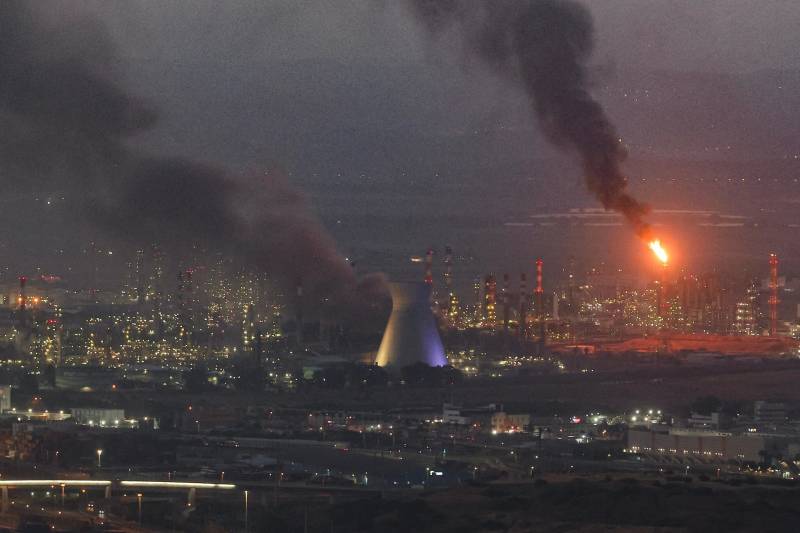
Despite an intense wave of diplomatic outreach, the joint campaign involving the United States and Israel has struggled to contain an increasingly volatile regional crisis. Iran has demonstrated strategic resilience, maintaining its grip over critical maritime routes, particularly the Strait of Hormuz—a chokepoint through which nearly one-fifth of the world’s oil supply passes. By disrupting this vital artery and continuing missile and drone operations across the region, Tehran has amplified both economic and geopolitical instability.
The central dilemma now revolves around whether Trump is prepared to de-escalate or deepen the conflict. Analysts widely characterize the situation as a “war of choice,” one that has already triggered a historic global energy shock and expanded beyond its initial geographic boundaries. While Trump has privately expressed a desire to avoid a “forever war,” emphasizing a limited operational timeframe of four to six weeks, such projections appear increasingly fragile amid evolving realities on the ground.
Simultaneously, the administration has signaled readiness to escalate if diplomatic efforts falter. A 15-point peace proposal—reportedly transmitted through backchannel communications involving Pakistan—reflects an urgent attempt to identify an off-ramp. However, many of its provisions mirror earlier demands that Iran had firmly rejected, casting doubt on the viability of renewed negotiations.
As noted by Jonathan Panikoff, the absence of a clearly defined end-state remains a fundamental challenge. Without a shared understanding of what constitutes a satisfactory outcome, both diplomatic and military strategies risk drifting without coherence or direction.
In parallel with diplomatic overtures, the United States has reinforced its military posture in the region, deploying additional forces while issuing warnings of intensified action, potentially including ground operations. While some analysts interpret this as a calculated effort to increase bargaining leverage, others caution that it risks entrenching the United States in a protracted conflict reminiscent of earlier engagements in Iraq and Afghanistan—conflicts that Trump himself has repeatedly pledged to avoid.
An alternative strategy under consideration involves a decisive, large-scale air offensive aimed at crippling Iran’s military infrastructure and nuclear capabilities. Such an operation could allow Trump to declare victory and disengage. Yet, without securing critical objectives—particularly the reopening of the Strait of Hormuz—any claim of success may lack credibility on the global stage.

Frustration has also surfaced in Trump’s interactions with European allies, whom he has criticized for their reluctance to contribute naval support in securing vital shipping lanes. Meanwhile, his public messaging increasingly reflects an effort to calm financial markets, emphasizing the temporary nature of the conflict even as uncertainty persists.
The lack of a clear exit strategy poses significant political risks. The war not only threatens Trump’s presidential legacy but also raises concerns for his party’s electoral prospects, especially as Republicans face closely contested congressional races. Rising fuel prices and economic instability have further intensified domestic pressures.
A critical miscalculation appears to have been the extent of Iran’s retaliatory capacity. Despite sustained military pressure, Tehran continues to launch missile and drone strikes while maintaining its influence over regional dynamics. According to Jon Alterman, Iran’s leadership may believe it possesses a greater tolerance for prolonged hardship—a strategic calculation that could shift the balance in its favor.
Indications of growing concern within the administration have become more pronounced. Trump’s decision to delay potential strikes on Iran’s power infrastructure—initially for five days and later extended—was widely interpreted as an attempt to stabilize markets and create space for diplomacy. However, domestic opposition to the war continues to grow, with public opinion polls reflecting widespread dissatisfaction.
Even within Republican ranks, unease is emerging. Lawmakers such as Mike Rogers have voiced concerns over limited transparency regarding the campaign’s objectives and scope. These internal divisions underscore the mounting political costs of the conflict.
Diplomatic prospects remain uncertain. Iran has rejected the U.S. proposal as unrealistic, particularly its demands related to dismantling nuclear and missile programs and relinquishing regional influence. Although Tehran has not entirely ruled out indirect engagement, its leadership appears confident that enduring the conflict alone could be framed as a strategic victory.
Complicating matters further is the internal reshaping of Iran’s leadership following targeted strikes, with more hardline figures assuming key roles. This shift reduces the likelihood of compromise and deepens mistrust toward Washington, particularly given previous instances where negotiations coincided with military action.
Regional allies, including Israel and Gulf states, have expressed concerns about both escalation and a premature U.S. withdrawal. While they fear being left vulnerable to a hostile Iran, they have also warned against the deployment of American ground forces, which could provoke broader retaliation and further destabilize the region.
Although the White House maintains that no immediate plans exist for ground deployment, it continues to emphasize that all options remain under consideration. Potential scenarios include targeted operations against strategic Iranian assets—moves that could rapidly escalate into a wider regional war.
Ultimately, Trump’s approach appears defined by calculated unpredictability. By alternating between conciliatory gestures and assertive threats, he seeks to maintain strategic ambiguity. As Laura Blumenfeld observes, this creates a “fog of war” in which mixed signals serve both as a tactical instrument and a source of uncertainty.
In the final analysis, the trajectory of this conflict remains uncertain. Whether it moves toward de-escalation or deeper confrontation will not only shape the future of the Middle East but also carry profound implications for global stability, economic security, and the political future of the United States.

Comments are closed, but trackbacks and pingbacks are open.