
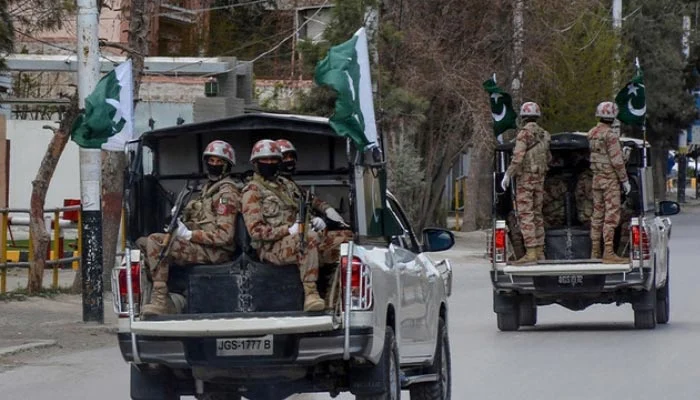
Panjgur IBO: Security Forces Kill Five India-Backed Terrorists, Says ISPR
ISPR Confirms Fitna Al Hindustan Militants Eliminated During Intelligence-Based Operation

Panjgur – (Staff Reporter/Web Desk) – Pakistan’s security forces carried out a successful Panjgur IBO on August 10, killing five terrorists linked to the banned group Fitna Al Hindustan. The military’s media wing, ISPR, shared the update on Tuesday, calling it part of the country’s ongoing fight against terrorism in Balochistan.
The operation took place in Panjgur district. It was based on solid intelligence and moved quickly once security teams reached the area. Officials say the mission was aimed at breaking up networks backed by India that continue to disturb peace in the region.
After the exchange of fire, troops searched the site and found a large amount of weapons, ammunition, and explosive devices. These items were destroyed on the spot to prevent any future misuse. Soldiers then carried out a full sweep of the surrounding area to make sure no other threats remained hidden nearby.
ISPR said this Panjgur IBO is one part of a bigger plan known as Azm-e-Istehkam. This plan was approved earlier by the Federal Apex Committee under the National Action Plan. The goal is simple: remove foreign-backed terror groups from Pakistani soil and give people in these areas a chance to live without fear.
The statement also promised that similar missions will continue across the country. Security forces, along with local law enforcement, plan to keep targeting groups that receive support from outside Pakistan’s borders.
This latest strike comes just two days after another major action. On August 8, forces removed 15 terrorists connected to Fitna al-Khawarij. That mission, called Operation Rad-ul-Fitna-3, covered several districts at once, including Mastung, Bolan, Washuk, Awaran, Sibi, Khuzdar, Harnai, and Nushki.
Violence in Balochistan and neighboring Khyber Pakhtunkhwa has grown sharply since 2021. That was the year the Afghan Taliban took control of Afghanistan, and security experts believe this shift changed the security picture across the border.
A report from the Centre for Research and Security Studies (CRSS) backs this up. It shows that KP and Balochistan made up almost all of Pakistan’s conflict-related deaths during the second quarter of 2026. Out of every death recorded, more than 61 percent happened in KP alone, while Balochistan carried 34 percent of the toll.
The numbers also show KP had the most violent incidents overall, with 151 cases reported. That’s more than half of all such events nationwide. Balochistan came next with 94 incidents.
Together, these two provinces remain the country’s biggest security challenge. Missions like the recent Panjgur IBO show that forces are trying to respond fast, using precise intelligence rather than large-scale sweeps. Officials hope steady pressure on these networks will slowly bring calm back to affected communities.
For now, security agencies say they will not slow down. More operations are expected in the coming weeks as authorities keep tracking groups tied to cross-border support.
Comments are closed, but trackbacks and pingbacks are open.