
US Signs Billion-Dollar Deal to Boost THAAD Interceptor and Patriot Missile Production
Northrop Grumman and Lockheed Martin secure billions in new contracts as US missile stockpiles run thin

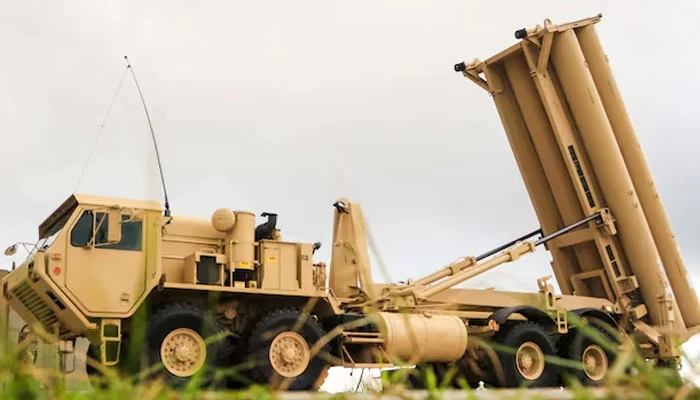
Pentagon – (Special Correspondent/Web Desk) – The Pentagon has moved to sharply increase THAAD interceptor output, striking a new deal worth more than $3 billion with defense giants Lockheed Martin and Northrop Grumman. The agreement comes as ongoing conflicts in Iran and Ukraine continue to drain America’s air defense reserves.
Officials announced the deal on Monday, just days after a separate Lockheed contract worth up to $58.6 billion was revealed. That earlier deal focused on ramping up Patriot missile production, another key system facing supply pressure.
The US has been sending large volumes of weapons to allies for months. At the same time, American forces have used their own munitions during the Iran conflict. This dual demand has left military planners worried about how much firepower remains in storage.
According to the Pentagon’s Monday statement, the new framework will allow Patriot missile output to triple. THAAD interceptor production, meanwhile, is expected to quadruple under the same plan.
The Center for Strategic and International Studies, a respected think tank based in Washington, recently shared troubling numbers. Their estimate suggests the US has fewer than 1,000 Patriot interceptors and under 250 THAAD interceptors currently available.
Both systems have seen heavy use in the Middle East over recent months. That usage has only added pressure on already stretched supply lines.
Pentagon negotiators have reportedly pushed contractors hard this year. Earlier production agreements were seen as too slow, prompting officials to demand faster timelines and bigger output numbers.
Ukraine remains a major factor in this equation. The country has struggled with chronic shortages of Patriot missiles. These weapons are currently Ukraine’s only defense capable of shooting down incoming ballistic missiles.
As part of the new agreement, a second manufacturing source will be established for PAC-3 solid rocket motors. Production of ignition safety devices will also increase under the same plan.
This isn’t the only major defense deal in motion. The US recently reached a similar framework agreement with RTX, the parent company of Raytheon. That deal aims to boost Tomahawk cruise missile production from roughly 60 units per year to an eventual 1,000 units annually.
Together, these contracts signal a broader shift in US defense strategy. Washington appears to be preparing for prolonged demand on multiple fronts, both from active conflicts and from continued support to allies abroad.
Whether this production surge can keep pace with real-world demand remains an open question. For now, defense contractors are being asked to move faster than ever before.
Comments are closed, but trackbacks and pingbacks are open.