
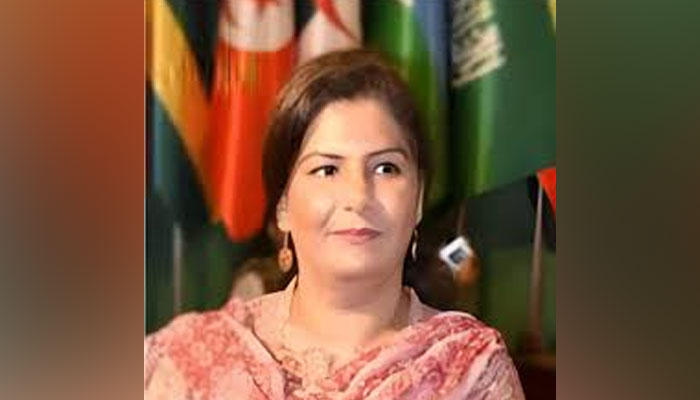
Raeesa Adil: A Bright Chapter in Women’s Leadership in Government Communication
By Syed Mujtaba Rizwan

Some appointments in Pakistan’s civil service are not merely administrative decisions; they symbolize the beginning of a new era, a fresh vision, and a commitment to positive change. Such decisions often become milestones in the institutional history of the country, opening new avenues of hope, determination, and inspiration for future generations. The appointment of Ms. Raeesa Adil as the Principal Information Officer (PIO) is one such landmark development. It has not only created a new chapter in the Ministry of Information and Broadcasting but has also marked a historic milestone within the Information Group. This achievement is not simply the success of an individual; it also reflects Pakistan’s growing confidence in the abilities of women and reaffirms the country’s commitment to merit-based leadership in the civil service.
The strength of a state is measured not only by its economy, defense capabilities, or foreign policy but also by the effectiveness with which it communicates with its citizens, presents its national narrative, and adapts its communication systems to the evolving media landscape. Around the world, government information institutions are regarded as essential pillars of governance and public policy. In Pakistan, this responsibility primarily rests with the Press Information Department (PID) and its head, the Principal Information Officer.
Ms. Raeesa Adil has assumed this office at a time when the media landscape is undergoing unprecedented transformation. Traditional newspapers and television channels now coexist with social media, digital platforms, and artificial intelligence, making the flow of information faster and more complex than ever before. In this environment, issuing press releases alone is no longer sufficient. Governments must ensure that information reaches the public in a timely, credible, transparent, and effective manner. Consequently, the need for experienced, professional, and balanced leadership has become more pressing than ever.
Ms. Raeesa Adil is among the senior officers of Pakistan’s Information Group who have served in various important capacities throughout their professional careers. Her extensive experience in government communication, media management, public relations, and public information makes her exceptionally well-qualified for this important position. Although the complete details of her personal life and service record are not widely available in the public domain, her professional reputation clearly reflects a career defined by dedication, integrity, and competence.
The journey of women within Pakistan’s bureaucracy has never been an easy one. For decades, female representation in senior administrative positions remained limited. However, this situation has gradually changed. Today, women are making significant contributions in administration, diplomacy, finance, the judiciary, and numerous other sectors, while also playing an increasingly influential role in national policymaking. Ms. Raeesa Adil’s appointment is a continuation of this positive evolution, sending a powerful message that talent, hard work, and integrity transcend gender.
Her appointment also serves as a source of inspiration for young women pursuing higher education in journalism, mass communication, public policy, and civil service. It demonstrates that with perseverance, professional excellence, and unwavering commitment, it is possible to reach the highest levels of public service.
The true significance of this appointment, however, extends beyond the fact that a woman has assumed this prestigious office. More importantly, she has taken on this responsibility at a time when Pakistan faces critical challenges in strengthening its national narrative, enhancing public trust in state institutions, and countering misinformation. Information warfare has moved beyond conventional battlefields into the digital sphere, where false news can spread to millions within moments. In such circumstances, government information institutions shoulder greater responsibilities than ever before.
The office of the Principal Information Officer is therefore far more than an administrative position; it is an intellectual, communicative, and national responsibility. The individual occupying this office must serve as a reliable bridge between the government, the media, the journalistic community, and the public. This explains why appointments to this position have always carried exceptional significance.
Ms. Raeesa Adil’s appointment reflects the confidence that women in Pakistan’s civil service are fully capable of leading key national institutions. It is hoped that under her leadership, the Press Information Department will become even more aligned with modern communication requirements, strengthen its professional engagement with the media, and further enhance the transparency, efficiency, and timeliness of government information dissemination.
This appointment also reinforces an important lesson: institutions become stronger when leadership is selected on the basis of merit, experience, and competence. Such principles ensure institutional continuity and strengthen public confidence.
The success of any state depends not only on a strong economy, modern defense capabilities, or an effective foreign policy but also on its ability to communicate its policies, decisions, and national position clearly, promptly, and transparently to its citizens, media, and the international community. Consequently, government communication has become one of the fundamental pillars of governance in developed nations. In Pakistan, the Press Information Department serves as the central institution responsible for maintaining this crucial connection between the government, the media, and the public.
Soon after Pakistan’s independence, the newly established state faced numerous challenges, including the need to develop a coherent national narrative, inform citizens about government initiatives, present Pakistan’s perspective internationally, and facilitate the effective exchange of information among public institutions. These necessities led to the establishment of an organized government communication system, which has continued to evolve in response to changing times.
Initially, communication relied primarily on newspapers, radio, and later Pakistan Television. Today, however, information can reach millions around the world within seconds through digital platforms. This transformation has significantly expanded the responsibilities of government communication institutions.
The Principal Information Officer occupies a leadership position that requires wisdom, strategic vision, timely decision-making, a deep understanding of national interests, and comprehensive knowledge of media dynamics. An effective PIO must communicate government policies accurately, maintain constructive relationships with journalists, respond promptly to misinformation, and develop communication strategies that safeguard the national interest.
Viewed within this context, Ms. Raeesa Adil’s appointment assumes even greater significance. It is historic not merely because she is a woman occupying this office but because she has assumed leadership during a period when government communication has entered the age of digital platforms, artificial intelligence, and global information warfare.
Modern conflicts are no longer confined to geographical borders. They increasingly take place in the information domain, where rumors, fake news, manipulated images, misleading videos, and organized online propaganda can rapidly shape public opinion. Government communication institutions therefore have a responsibility not only to disseminate information but also to preserve public trust through transparency, credibility, and timely communication.
Pakistan has confronted numerous national and international challenges in recent years, including economic reforms, counterterrorism efforts, diplomatic engagements, regional disputes, natural disasters, and the effective presentation of Pakistan’s position in international forums. Throughout these developments, the Press Information Department has quietly played an essential role by organizing and communicating the government’s narrative.
Ms. Raeesa Adil now leads an institution that must adapt not only to traditional media but also to the demands of the digital era. Government communication today extends beyond press releases to include short videos, infographics, digital briefings, social media monitoring, and rapid responses to emerging issues.
Relations between governments and the media have never been entirely free of challenges. In democratic societies, criticism, debate, and questioning are natural and healthy. Equally important, however, are mutual respect, trust, and continuous engagement. An effective Principal Information Officer serves as a bridge between the government and the media rather than a barrier.
Another important dimension of Ms. Raeesa Adil’s appointment is its contribution to strengthening the perception that Pakistani women are fully capable of assuming the highest administrative responsibilities. Today, women excel in diplomacy, the judiciary, the armed forces, law enforcement, education, healthcare, science, economics, and public administration. Her appointment sends a positive message both socially and institutionally.
The vision of Pakistan’s founding leaders continues to resonate in this context. Allama Muhammad Iqbal beautifully observed:
“The existence of woman gives color to the picture of the universe.”
Although often associated with family life, this profound thought is equally relevant to women’s participation in nation-building, leadership, and public institutions.
Likewise, Quaid-e-Azam Muhammad Ali Jinnah famously declared:
“No nation can rise to the height of glory unless its women work side by side with men.”
Ms. Raeesa Adil’s appointment represents a practical manifestation of this vision, where merit, competence, and professional integrity take precedence over gender.
The twenty-first century is rightly described as the century of information. The digital revolution has fundamentally transformed the relationship between governments, media organizations, and citizens. Information has become a strategic asset, and nations capable of providing timely, accurate, and transparent communication enjoy greater domestic trust and international credibility.
For a country like Pakistan, with its strategic geopolitical position, effective communication has become increasingly important in areas such as regional security, economic reforms, climate change, investment promotion, tourism, and diplomatic engagement. Within this environment, the Principal Information Officer symbolizes not merely administrative leadership but also national credibility.
Ms. Raeesa Adil’s foremost challenge will be to modernize traditional government communication by embracing digital innovation. Government communication today requires tailored content across multiple platforms, immediate clarification of misleading information, and meaningful engagement with public concerns.
Many countries have transformed their official communication departments into sophisticated digital communication centers utilizing videos, graphics, live briefings, real-time analytics, and social media engagement. Pakistan has made progress in this direction, but further modernization remains both necessary and achievable.
Equally important is the relationship between the government and the media. A free and responsible press strengthens democracy, while transparent and timely government communication enables journalists to fulfill their professional responsibilities effectively. The Press Information Department remains central to fostering this relationship.
The institution also coordinates communication across virtually every major federal ministry and department, supporting policy communication, ministerial outreach, international media engagement, journalist facilitation, and public awareness campaigns.
This appointment carries significant social symbolism as well. Pakistani women have demonstrated excellence across virtually every profession. Their increasing representation in senior leadership positions reflects the country’s gradual progress toward a more inclusive and merit-based administrative system.
Ultimately, however, the true measure of leadership lies in results. If government communication becomes more transparent, timely, citizen-oriented, and digitally responsive; if trust between journalists and public institutions grows stronger; and if Pakistan’s national narrative is communicated more effectively at home and abroad, these achievements will stand as the most meaningful indicators of success.
Strong communication is essential not only for enhancing the government’s credibility but also for strengthening democratic institutions. When citizens receive timely and accurate information, misinformation loses its influence, public confidence increases, and institutional legitimacy is reinforced.
For these reasons, Ms. Raeesa Adil’s appointment should be viewed not simply as an administrative change but as the beginning of a new phase in Pakistan’s government communication system—one built upon professionalism, technological innovation, transparency, and public trust.
The identity of any institution is determined not by its buildings, resources, or authority but by its leadership, vision, and commitment to public service. This principle applies fully to Pakistan’s state communication system.
As Pakistan pursues economic recovery, investment, exports, digital transformation, youth employment, regional connectivity, tourism, agriculture, and technological advancement, effective communication will remain indispensable. Even the best public policies require clear and timely communication to achieve their intended impact.
Similarly, enhancing Pakistan’s international image demands a comprehensive communication strategy highlighting the country’s achievements in science, culture, education, sports, tourism, and economic development. This objective requires close coordination among the Press Information Department, the Ministry of Information and Broadcasting, and other relevant institutions.
Under Ms. Raeesa Adil’s leadership, it is hoped that digital communication, data-driven information, infographics, video messaging, and strategic social media engagement will receive greater emphasis. As artificial intelligence and digital analytics continue to reshape global communication, Pakistan’s official communication system must evolve accordingly.
This appointment also strengthens the cause of women’s leadership. When opportunities are awarded on the basis of merit, women contribute fresh perspectives, innovative ideas, and renewed institutional energy.
Nevertheless, every public servant is ultimately judged not by title but by integrity, sound decision-making, transparency, and the lasting impact of his or her leadership. Ms. Raeesa Adil’s success will therefore be measured by the extent to which the Press Information Department becomes more modern, efficient, transparent, and responsive to public needs.
Journalism and the state are not adversaries but complementary pillars of a healthy democracy. Responsible media strengthens the state, while transparent government communication strengthens responsible journalism. The future lies not in confrontation but in cooperation, trust, and continuous dialogue.
For young officers within the Information Group—especially women—Ms. Raeesa Adil’s appointment conveys a powerful message that integrity, perseverance, professional excellence, and institutional commitment can lead to the highest levels of public service. Such values form the foundation of strong institutions and prosperous nations.
In conclusion, Pakistan stands at a historic moment in which the speed of information, the expansion of digital media, and rising public expectations demand a more dynamic, transparent, and citizen-centered communication system. Ms. Raeesa Adil’s appointment represents an important milestone in this ongoing transformation.
It is sincerely hoped that under her leadership, the Press Information Department will not only strengthen its longstanding professional traditions but will also embrace modern communication practices, deepen trust between the government, the media, and the public, and contribute meaningfully to Pakistan’s democratic and institutional development.
History remembers those who do not seek honor through office but instead bring honor to the offices they hold through integrity, competence, and public service. It is hoped that Ms. Raeesa Adil will, through her professionalism, experience, and dedication, further elevate the dignity of this distinguished office and leave behind a lasting and positive legacy in Pakistan’s government communication system.
Comments are closed, but trackbacks and pingbacks are open.