
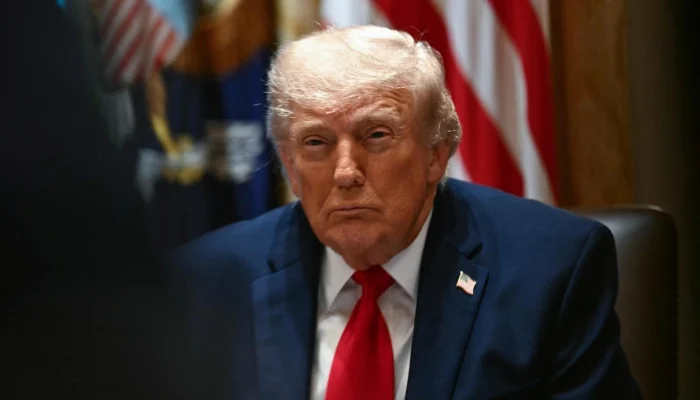
Trump Claims Iran Agrees To Nuclear Inspections
Trump Announces Iran Nuclear Inspection Deal And Hormuz Opening

WASHINGTON: (Web Desk)- U.S. President Donald Trump said on Tuesday that Iran has agreed to allow long-term nuclear inspections and that the United States will not proceed with a naval blockade of the strategically important Strait of Hormuz.
In a statement posted on his Truth Social platform, Trump claimed that Tehran had “fully and completely agreed” to extensive nuclear monitoring, describing the move as a step toward ensuring transparency regarding Iran’s nuclear activities. He also announced that commercial shipping through the Strait of Hormuz would continue without disruption, although U.S. naval assets would remain in the region as a precaution.
The remarks come as U.S. and Iranian officials continue negotiations in Switzerland aimed at advancing a broader agreement on Iran’s nuclear program and regional security issues. Trump described the talks as productive and said progress was being made on several key matters.
Trump Warns NATO Allies Over Lack of Support
However, Iranian officials have publicly challenged parts of the U.S. administration’s account of the negotiations. Tehran has denied making new commitments regarding nuclear inspections and has maintained that discussions with international nuclear monitors remain unresolved. Iranian authorities have also indicated that access to certain nuclear facilities damaged during previous U.S. and Israeli strikes remains restricted.
The future of the Strait of Hormuz remains a critical issue for global energy markets, as a significant share of the world’s oil and gas exports passes through the waterway. Any disruption to shipping in the region has the potential to affect international energy prices and supply chains.
Diplomatic efforts involving the United States, Iran, and regional mediators have intensified in recent weeks, with both sides seeking to reduce tensions and explore a longer-term framework for cooperation. Despite signs of progress, significant differences remain over nuclear oversight, sanctions relief, and regional security arrangements.
Comments are closed, but trackbacks and pingbacks are open.