

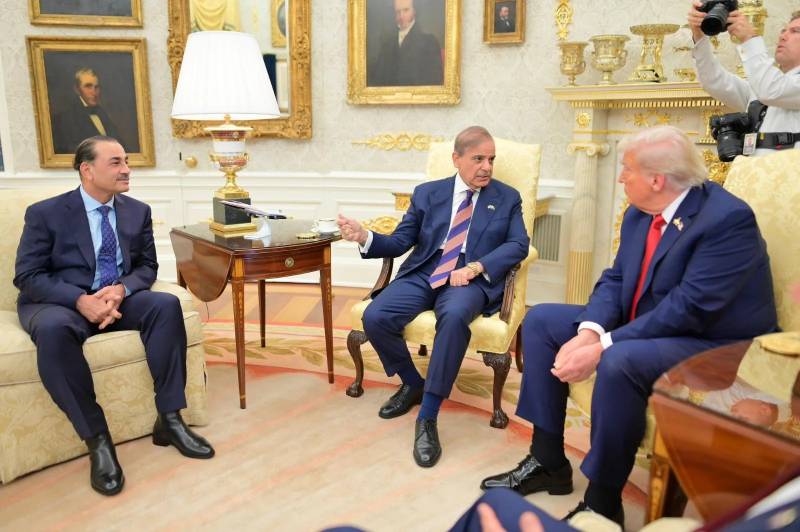
Debate on Military Leadership, International Peace, Constitutional Limits, and the Nobel Prize
By: Agha Safeer Hussain Kazmi

Recently, I came across a piece of writing whose central argument was that the Nobel Prize should be awarded to Pakistan’s military chief. It would be more appropriate to describe such a piece as flattery. Regardless of whom this flattery is intended to please, the real question is whether, after the kind of environment that has been created in Pakistan against defense institutions, anyone suddenly possessed a magic wand that made everything right. Or is the actual objective to undermine the constitutional existence of the state? Just as the title of Field Marshal cannot be granted by the Prime Minister, similarly, the Nobel Prize cannot be awarded—at least in principle—to any institution other than the elected leadership, especially one that does not have a direct role in the country’s foreign policy.
It is quite astonishing that certain individuals, driven by a tendency toward flattery, sit within different institutions and devise such narratives as if they are excessively praising a local police officer, stretching admiration beyond reasonable limits.
A proposal has been put forward to nominate Pakistan Army Chief, Field Marshal Asim Munir, for the Nobel Peace Prize. The justification given is that, during an extremely sensitive phase in Pakistan-India relations, he led the military in a way that prevented a potentially devastating conflict and ensured the avoidance of unnecessary loss of life and property. According to observers, under his command, the Pakistan Army’s response was measured, effective, and within legal boundaries, while also safeguarding civilian infrastructure and the public from harm.
This argument is essentially based on military strategy and crisis management skills. Undoubtedly, this is an important and commendable achievement. However, when it comes to the Nobel Peace Prize or any international recognition, two key points must be carefully considered:
Constitutional Jurisdiction and Democratic Principles:
The Constitution of Pakistan clearly states that the leadership of national policy and international relations lies with the elected government and the Prime Minister. The military performs its duties within its constitutional domain, primarily related to defense. Granting an international award to a military chief alone implies that all credit is being given to a non-elected institution, which contradicts the principle of democratic balance.
Institutional Harmony:
In any national or international success, multiple institutions play their roles—the military, the Ministry of Foreign Affairs, the cabinet, and the Prime Minister. If only the military leadership is praised, the contributions of other institutions appear diminished, which may pose a risk to constitutional and institutional balance.
Therefore, keeping in mind the consequences and implications of the approaches adopted by both adversaries and misguided allies of Pakistan, the following suggestions may be considered:
It is necessary to appreciate the leadership of the military and acknowledge their actions, but this recognition should remain within a constitutional and democratic framework at the national level.
For any international award, the central role should be attributed to the Ministry of Foreign Affairs or the government, so that the credit goes to the constitutional leadership and democratic institutions.
The military’s contributions should be highlighted through media, research reports, and national discourse in an ethical and professional manner, so that a positive public perception is developed while constitutional boundaries are maintained.
While discussing proposals such as the Nobel Peace Prize or other international honors, one must avoid flattery and adopt a realistic and legally grounded perspective.
Although the timely and restrained actions of the military under the leadership of Field Marshal Asim Munir are certainly worthy of appreciation and have attracted the attention of international observers, proposing a Nobel Peace Prize for a military chief is not appropriate within the framework of constitutional and democratic principles. Recognition should be given in a manner that upholds democratic processes and institutional harmony, ensuring that the balance of the state and the dignity of its institutions remain intact.


Comments are closed, but trackbacks and pingbacks are open.