

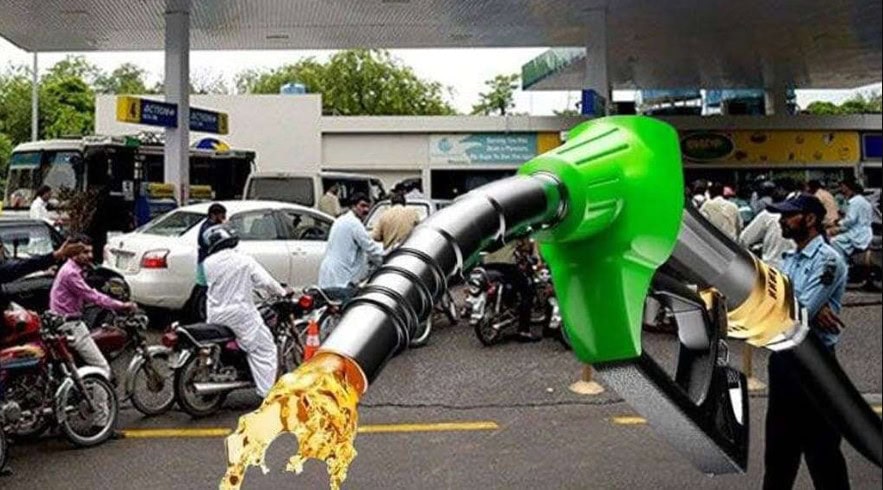

The ongoing tensions and escalating conflict in the Middle East have plunged the global economy and energy systems into a state of uncertainty. Instability in a region that produces a significant portion of the world’s oil directly affects international markets. This is why, whenever tensions intensify in this area, global petroleum prices begin to rise and concerns about supply disruptions emerge. For developing countries like Pakistan, this situation becomes particularly alarming because a large portion of the country’s energy needs depends on imported oil. Consequently, whenever a global energy crisis arises, its effects reach Pakistan’s economy, industry, agriculture, and the daily lives of ordinary citizens.
In the current circumstances, as the conflict in the Middle East continues to influence the global energy market, various public and private institutions in Pakistan have begun taking steps to conserve fuel and ensure efficient energy use. In this regard, the decision by Zarai Taraqiati Bank Limited (ZTBL) to reduce fuel consumption by twenty-five percent has been widely appreciated. This move not only reflects institutional discipline but also demonstrates a practical commitment to national interest.
Pakistan is already facing numerous energy challenges. The country’s domestic production of oil and gas is limited, while the demand for energy continues to increase due to population growth, industrial expansion, and agricultural needs. In such conditions, fluctuations in global markets and tensions in the Middle East further complicate the situation. This is why not only the government but also different institutions must take measures at their own level to ensure better utilization of energy resources. The decision by ZTBL to cut fuel consumption reflects this sense of awareness and responsibility. Through this step, the institution is not only promoting energy conservation internally but also setting an example for other organizations that every institution must play its role in times of national crisis.
Zarai Taraqiati Bank Limited is an important financial institution in Pakistan that primarily works for the development of the agricultural sector. Providing loans to farmers in rural areas, promoting agricultural projects, and strengthening the rural economy are among its core responsibilities. Because of this, the bank operates through a vast network spread across the country and remains in daily contact with thousands of people. Field officers, agricultural experts, and other bank staff regularly visit various regions to facilitate farmers. As a result, fuel consumption is an important component of the bank’s operations. However, considering the present circumstances, the management has decided to minimize fuel usage and adopt methods that allow operations to continue while conserving energy.
The decision to reduce fuel consumption by twenty-five percent may appear to be merely an institutional policy, but its implications are much broader. When a major national institution takes such a step, it encourages other public and private organizations to reassess their use of resources. In a country like Pakistan, where energy resources are already limited, such initiatives are extremely significant. If every institution and individual contributes even a small amount of savings at their own level, the overall impact can be substantial.
Under this decision, ZTBL has issued directives to its offices across the country to immediately reduce fuel consumption. Controlling officers have been assigned the responsibility to monitor the activities of their subordinate staff and ensure that fuel is used only for essential tasks. In addition, field personnel have been instructed to plan their visits in such a way that unnecessary travel can be avoided. Efforts should be made to cover multiple assignments within the same area during a single trip in order to maximize fuel efficiency.
The institution has also encouraged employees to adopt trip pooling or shared travel. Under this method, several staff members traveling for the same purpose can use a single vehicle. This not only saves fuel but also helps reduce traffic congestion. In many developed countries, this approach has already been implemented successfully, and its importance is now being recognized in Pakistan as well.
Promoting the use of modern technology is another key element of this policy. The management of ZTBL has advised its staff to increase the use of video conferencing and telephone communication instead of unnecessary physical meetings. In the modern era, digital technology has significantly reduced distances, and many tasks can now be performed efficiently without travel. This not only saves time but also significantly reduces fuel expenses.
In the context of the energy crisis, the importance of this step becomes even greater. Pakistan imports oil worth billions of dollars every year, which directly affects the country’s foreign exchange reserves. If prices rise in the international market, the import bill also increases, placing additional pressure on the national economy. This is why energy conservation measures are always considered important by the government and institutions alike. The recent decision by ZTBL is another link in this chain, indicating that serious institutional steps are being taken in the national interest.
It is also a reality that the energy crisis cannot be solved solely through government policies. Every member of society must play their role. Until ordinary citizens prioritize efficient energy use in their daily lives, large-scale change will not be possible. This is also the message conveyed by ZTBL’s management—that small changes in habits can lead to significant savings. For example, avoiding unnecessary travel, maintaining vehicles properly, adopting fuel-efficient driving practices, and increasing the use of modern technology are measures that not only conserve fuel but also have positive environmental impacts.

Current global circumstances have once again proven that dependence on energy resources is a highly sensitive issue for any country. If a nation’s economy relies heavily on imported energy, global politics and regional conflicts can directly influence its economic stability. Pakistan faces this very challenge. Therefore, it is essential not only to conserve energy but also to promote alternative energy sources. Solar energy, wind power projects, and hydropower resources can play an important role in this regard.
Institutions like ZTBL have an even greater responsibility because they are directly connected with the rural economy. If the culture of energy conservation and efficient usage is promoted in rural areas, its positive effects can spread throughout the country. Farmers can also be educated on how to save fuel while using agricultural machinery and how modern farming methods can reduce energy costs.
The President and Chief Executive Officer of ZTBL, Tahir Yaqoob Bhatti, has also emphasized that extraordinary circumstances demand extraordinary measures. According to him, if all employees demonstrate responsibility, significant fuel savings can be achieved without affecting routine operations or performance. His statement clearly shows that the institution is taking serious steps to conserve energy while maintaining its operational efficiency.
In fact, such thinking is the need of the hour. Around the world, institutions are no longer limited to profit generation alone; they are increasingly incorporating social and national responsibilities into their policies. Under the concept of corporate social responsibility, organizations undertake various initiatives for environmental protection, energy conservation, and social welfare. The recent initiative by ZTBL reflects the same approach, in which national interest is given priority.
If other public and private institutions in Pakistan adopt similar measures, the effects of the energy crisis can be reduced to a considerable extent. For example, the use of unnecessary vehicles in government offices can be limited, online meetings can be encouraged, and employees can be trained in efficient energy usage. Similarly, public awareness campaigns can educate people that conserving energy is, in fact, a form of national service.
Ultimately, it must be acknowledged that the solution to the energy crisis does not lie solely in increasing the supply of resources but also in their efficient use. Unless we change our habits and priorities, these problems cannot be fully resolved. This is why the initiatives of institutions like ZTBL not only help address immediate crises but also promote a long-term mindset in which energy is regarded as a valuable national asset.
At a time when the world is passing through an uncertain period and the situation in the Middle East continues to influence the global economy, Pakistan must demonstrate caution and wisdom in the use of its resources. In such circumstances, the decision by Zarai Taraqiati Bank Limited to reduce fuel consumption by twenty-five percent is not only a positive step but also proof that national institutions stand with the country during difficult times and understand their responsibilities. If the same spirit develops among other institutions and ordinary citizens, the energy crisis can be confronted more effectively and the country can move toward greater economic stability.
Note: The views or analysis expressed by the writer do not necessarily reflect those of the organization.
Comments are closed, but trackbacks and pingbacks are open.