
Water availability shrinks as the investment gap increases in Pakistan: UN reports
UN Warns of Deepening Water Challenges in Pakistan

ISLAMABAD: (Web Desk) – Pakistan is facing increasing water stress and a widening investment gap in the water sector, according to three major water-related reports launched by United Nations agencies and development partners in Islamabad.
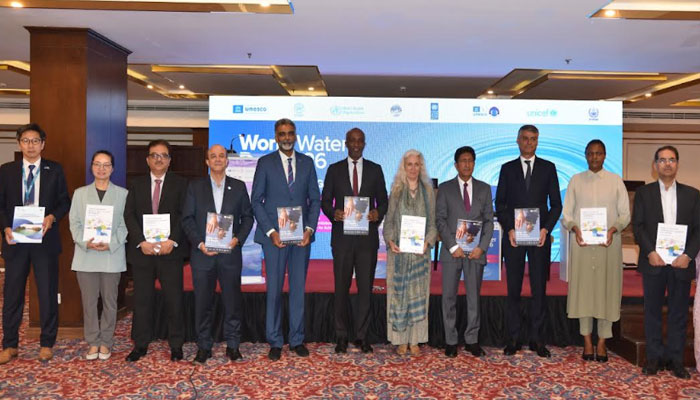
The publications were jointly unveiled by UNESCO, WHO, UNICEF and UNDP as part of the extended World Water Day celebrations. The event brought together government officials, researchers, development organizations, water experts and policymakers to discuss solutions for improving water security, public health and gender inclusion in water governance.
One of the key findings highlighted that women and girls worldwide spend an estimated 250 million hours every day collecting water—more than three times the amount of time spent by men and boys. The burden significantly impacts education, health and economic opportunities for women and girls.
The UN World Water Development Report 2026 revealed that 2.1 billion people globally still lack safely managed drinking water, while 3.4 billion do not have access to safely managed sanitation services. In Pakistan, WHO and UNICEF estimates indicate that around 55 percent of the population lacks access to safely managed drinking water, while more than 58 percent of rural residents remain without safely managed sanitation facilities.
Addressing the gathering, Federal Minister for Water Resources Mian Muhammad Mueen Wattoo noted the sharp decline in Pakistan’s per capita water availability. He stated that at the time of independence, every Pakistani had access to more than 5,000 cubic meters of freshwater annually, whereas current availability has fallen below 1,000 cubic meters per person.
UK Commits £8 Million Crime Funding to Fight Pakistan Illegal Migration
The UN-Water Global Analysis and Assessment of Sanitation and Drinking-Water (GLAAS) 2025 Report highlighted that Pakistan’s urban Water, Sanitation and Hygiene (WASH) investment gap has widened compared to previous years, despite an increase in nominal government spending.
According to the report, combined WASH budgets across Pakistan’s provinces and Islamabad Capital Territory increased from Rs225 billion to Rs265 billion between 2022 and 2024. However, after accounting for inflation, the increase translates into a real-term decline of approximately 20 percent.
During the event, UNESCO and the Pakistan Council of Research in Water Resources also presented new guidelines aimed at strengthening cooperation between scientists, policymakers and practitioners to improve water security and evidence-based decision-making.
Speakers stressed that climate change, declining water resources and inadequate infrastructure are intensifying challenges across the country. They called for stronger governance, climate-resilient water management strategies, increased investment, and greater participation of women in water-related decision-making processes.
A high-level roundtable and expert panel concluded that science-based policies, institutional cooperation and inclusive planning will be essential to achieving sustainable water security and advancing progress toward Sustainable Development Goal 6 on clean water and sanitation.
Comments are closed, but trackbacks and pingbacks are open.