
UK Prime Minister Says Brexit Has Done More Harm Than Good
The proposal has drawn criticism from opposition figures

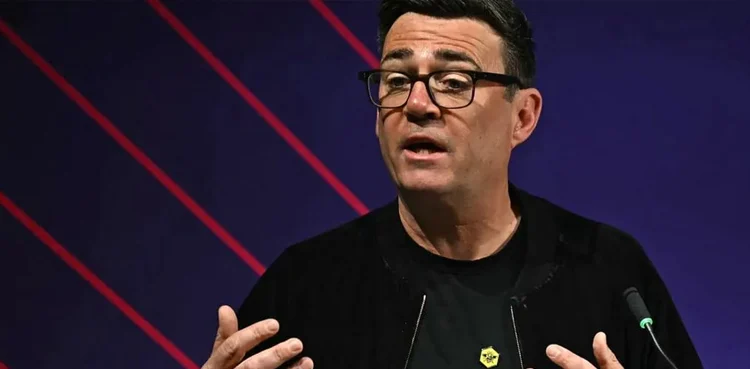
LIVERPOOL: (News Desk) – British Prime Minister Andy Burnham has said Brexit has done “more harm than good”, pledging to outline options for the United Kingdom’s future relationship with the European Union and promising a new direction for Britain’s economy and public services.
Addressing the Labour Party’s annual conference in Liverpool on Tuesday, Burnham said the country needed clarity on its long-term relationship with the EU, which he described as Britain’s largest market.
He said he would present different options for future ties with the bloc around a planned summit later this year and seek consensus on the way forward.
The UK formally left the European Union in 2020, following a 2016 referendum in which approximately 52 per cent of voters supported leaving.
Burnham also announced that Labour’s next election manifesto would include a commitment to reform the country’s electoral system.
In his first major conference speech as party leader, the 56-year-old prime minister pledged to reverse decades of privatisation, strengthen public control over essential services and rebuild Britain’s economy.
“I will make a break with the direction of the past 40 years and put Britain on a new path, build a new economy and a new politics,” he told party members and activists.
Burnham said his government would introduce legislation to repeal the restrictions on public ownership of water companies introduced during former prime minister Margaret Thatcher’s tenure.
He also pledged to establish a National Care Service offering free social care at the point of use, although the initiative would not be implemented before the next general election, expected in 2029.
The prime minister acknowledged that the proposed reforms would be challenging but said he was prepared to face political consequences to improve support for people living with illnesses or disabilities.
Burnham became prime minister on July 20, following the end of Keir Starmer’s premiership. Since taking office, he has sought to present a more optimistic vision for the country while facing pressure to explain how his government would finance its extensive commitments.
His plans include reindustrialising the economy, ending rough sleeping, constructing thousands of new council homes and expanding public influence over housing, energy and water services.
The UK economy continues to face sluggish growth and rising borrowing costs, while households are under pressure from high energy prices amid conflicts in the Middle East and Ukraine. The government must also allocate additional funding to meet its defence commitments to NATO.
Burnham said he would campaign in the next general election for changes to the pension system, including a potential overhaul of the triple lock, which determines annual increases in the state pension.
The proposal has drawn criticism from opposition figures. Reform UK leader Nigel Farage argued that removing the triple lock would undermine the government’s responsibility to pensioners.
Meanwhile, the Health Foundation think tank estimates that introducing a social care system modelled on the National Health Service could cost nearly £19 billion annually.
Burnham also announced plans for a new government body to invest in Britain’s electricity grid, with the aim of helping reduce energy costs.
The Labour Party conference, held under the slogan “Hope Again”, has reflected renewed optimism among some party members following a period marked by policy reversals and internal disagreements.
However, a YouGov poll published on Tuesday placed Reform UK at 25 per cent and Labour at 24 per cent in voting intentions, highlighting the political challenges facing the government.
During his speech, Burnham also spoke emotionally about his father, who died earlier this month after suffering from Alzheimer’s disease, saying he wanted to use his position to build the kind of Britain his father had hoped to see.
He said his proposals were intended to put the country on a new path through economic reform, improved public services and a reassessment of its relationship with Europe.
Comments are closed, but trackbacks and pingbacks are open.