
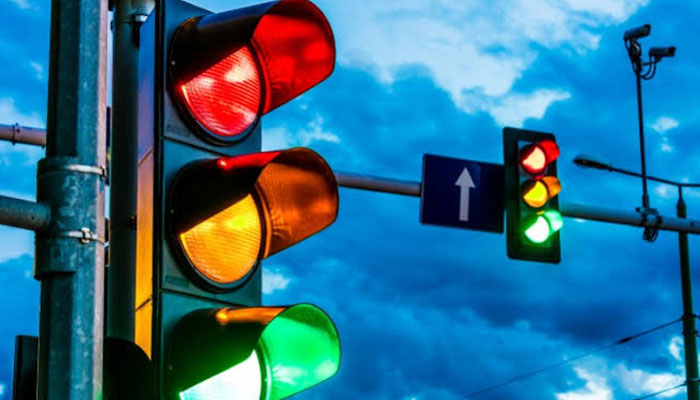

Every year on August 5, the world observes International Traffic Light Day to highlight the importance of traffic signals in protecting lives and promoting road discipline. Traffic lights are far more than colored signals at busy intersections. They represent respect for the law, responsible driving, and the shared responsibility of keeping roads safe for everyone.
Rapid urbanization and rising vehicle ownership have placed unprecedented pressure on road networks across the world. As traffic continues to increase, effective traffic management has become more important than ever. The first traffic signal was tested in London in 1868 but failed due to technical problems. Later, on August 5, 1914, the first successful electric traffic signal was installed in Cleveland, USA, marking the beginning of modern traffic management.
Over the past century, traffic management has evolved dramatically. Many countries now use artificial intelligence, sensors, and cameras to monitor traffic flow and adjust signal timings automatically. These technologies help reduce congestion, conserve fuel, and improve air quality. In Pakistan, institutions such as the Punjab Safe Cities Authority have also introduced modern traffic management systems to improve road safety and ensure better enforcement of traffic laws.
However, technology alone cannot prevent road accidents. According to the World Health Organization (WHO), approximately 1.16 million people die in road traffic crashes every year, while millions more suffer serious injuries or permanent disabilities. WHO research also shows that using a mobile phone while driving increases the risk of a crash by about four times. Likewise, speeding, ignoring traffic signals, and failing to wear seat belts or helmets remain among the leading causes of fatal accidents.

Despite these technological advances, Pakistan continues to face a severe road safety crisis. According to the WHO, around 28,000 people lost their lives in road crashes in Pakistan in 2021. Meanwhile, Rescue 1122 reported that nearly 4,800 people died in road accidents across Punjab during 2025. These accidents also impose an economic burden of nearly US$12 billion annually, equivalent to about 3 percent of Pakistan’s GDP. Officials estimate that, on average, one person is killed or seriously injured in a road accident every five minutes.
Even more concerning, motorcycles account for nearly 75 percent of road accidents in Pakistan, according to Rescue 1122. Common causes include speeding, helmet negligence, one-wheeling, driving against traffic, and crossing red lights. In addition, almost 41 percent of road fatalities involve pedestrians, highlighting the urgent need for safer crossings and improved urban planning.
Therefore, reducing road accidents requires more than stricter laws. Public awareness and responsible behavior are equally important. Stopping at red lights, following speed limits, staying within lanes, giving way to pedestrians, and avoiding mobile phone use while driving are simple actions that can save thousands of lives.
Finally, road safety education should begin at home and in schools. Parents, teachers, the media, and public institutions must work together to promote a culture of responsible driving. International Traffic Light Day reminds us that waiting a few extra seconds at a red light may seem insignificant, but those few seconds can save a life. Respecting traffic signals is not only about obeying the law—it is about respecting human life.
Comments are closed, but trackbacks and pingbacks are open.