
The Shifting Sounds of the Walled City and Beyond: Exploring the Rich Dialects of Lahore
By: Azhar Ahmad

To truly understand Lahore, one must listen to it. Beyond the historic architecture and the rich culinary traditions, the soul of Punjab’s capital resides in its language. While Punjabi is the historic mother tongue of the region, Lahore does not speak with a single voice. Instead, it possesses a fluid linguistic landscape where geography, history, and social class shape distinct local dialects, creating a fascinating auditory map that evolves from the narrow alleys of the Walled City to the wide avenues of the modern suburbs.
At the core of Lahore’s linguistic identity is the Majhi dialect, historically recognized as the standard form of Punjabi. Characterized by its melodic tones, rich vocabulary, and soft pronunciation, Majhi in Lahore has acquired a unique flavor often referred to simply as “Lahori Punjabi.” It is a dialect defined by its warmth and an innate sense of humor. Words like Bhaji (brother) or expressions of hospitality are delivered with a distinct cadence that is instantly recognizable across Pakistan.
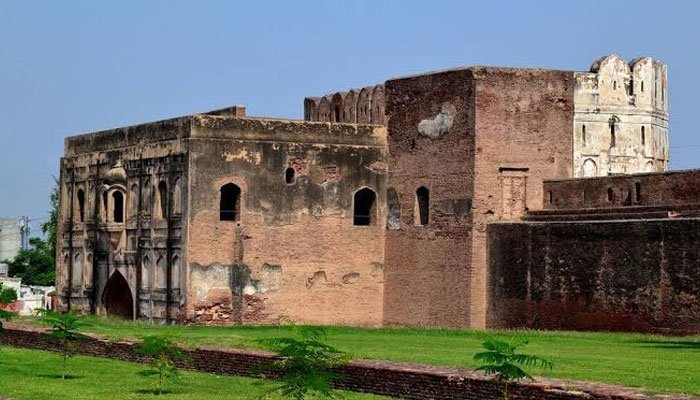
However, step inside the historic thirteen gates of the Walled City (Androon Shehar), and the language takes on a completely different texture. The Old Lahori dialect is raw, rhythmic, and intensely expressive. Here, Punjabi is spoken with a rapid fire delivery and infused with colorful slang, idioms, and theatrical emphasis. The vernacular of the Walled City is deeply communal; it is a dialect born of closely packed neighborhoods where street theater, storytelling, and daily commerce blend into one. In these quarters, linguistic sub-dialects even vary slightly from one bazaar to another, preserving old vocabulary that has long been forgotten in the outer city.
As one moves away from the center toward neighborhoods built in the mid to late 20th century, such as Samanabad and Model Town, a visible linguistic shift occurs. Here, the dialect reflects the post partition migration and urbanization. It is a more regulated, urbanized Punjabi, deeply influenced by Urdu, the national language. In these areas, code switching between Punjabi and Urdu languages is common, serving as a bridge between generational identities.
In stark contrast lie the modern expanses of Gulberg, Defense (DHA), and Bahria Town. In these socioeconomic hubs, a newer linguistic phenomenon has taken root. The youth predominantly speak Urdu or English, giving rise to a distinct contemporary dialect often colloquially dubbed “Burglish” or “Lahori Urdu.” This dialect is marked by a unique accent, English loanwords, and a specific sentence structure that sets it apart from the Urdu spoken in Karachi and Islamabad. Yet, even among the English-fluent elite, Lahori Punjabi slang stubbornly breaks through, proving that the city’s root language is impossible to completely erase.
Lahore’s dialects are more than just a means of communication; they are a living archive of the city’s social evolution. While some cultural purists worry that the rapid expansion of the city and the dominance of Urdu and English languages among the younger generation might dilute the traditional Majhi dialect, the vernacular of Lahore has always been resilient. It adapts, absorbs, and survives, ensuring that the voice of Lahore remains as vibrant and diverse as the city itself.
Comments are closed, but trackbacks and pingbacks are open.