
Hainan’s Wuzhishan Promotes Rainforest Tea Industry, Boosts Rural Incomes and International Cooperation

By: Zafar Hussain
WUZHISHAN: Nestled in the tropical rainforest mountains of China’s southern Hainan Province, Wuzhishan is developing its distinctive large-leaf tea industry by combining ecological conservation, modern agricultural technology, cultural tourism and international market cooperation.
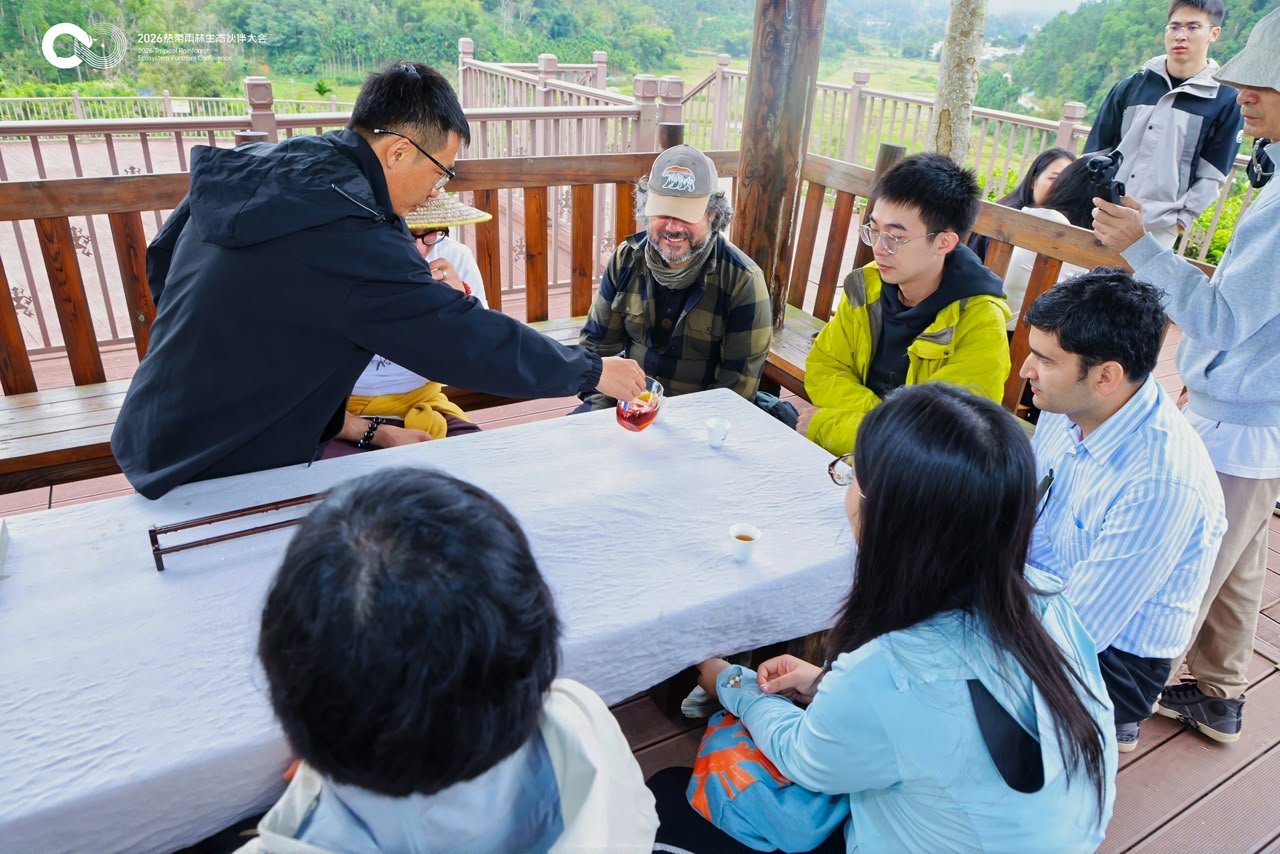
During a visit to the Wuzhishan Yingge Jinghong Ecological Organic Tea Plantation, visitors explored how the region is transforming its natural ecological advantages into an emerging agricultural industry while creating new economic opportunities for local communities.
Located within the Hainan Tropical Rainforest National Park, the plantation lies in the core production area of Hainan Rainforest Large-Leaf Tea, at an altitude of more than 650 metres above sea level. Covering approximately 648.67 mu, or 43 hectares, it cultivates indigenous wild large-leaf tea varieties native to the Wuzhishan region, with tea trees averaging around 40 years of age.
Lu Xiangming, a staff member of the Publicity Department of the Wuzhishan Municipal Party Committee, briefed visitors on the plantation’s development, highlighting its organic cultivation practices, rainforest environment and integration of tea production with tourism.
The area’s mountainous landscape, abundant rainfall, frequent mist, distinctive temperature variations and mineral-rich acidic soil provide favourable conditions for producing rainforest tea with a distinctive flavour.
Operated by the Wuzhishan branch of Hainan Yinggeling Jinghong Tea Co., Ltd., the plantation follows an integrated business model covering cultivation, processing, research and development, and marketing.
The company combines traditional tea-making techniques with modern intelligent processing facilities and maintains a production traceability system to monitor quality throughout the supply chain. It also holds organic certification and export qualifications, with quality management practices benchmarked against international standards.
Tea industry driving rural revitalization
Under a cooperative development model involving enterprises, cooperatives and farming households, companies provide tea seedlings, technical training and guaranteed purchasing arrangements, enabling farmers to participate more actively in the industrial supply chain.
The local government has also introduced measures to protect traditional tea resources, promote organic cultivation and strengthen product quality standards.
A distinctive tea variety with scientific potential
Hainan’s large-leaf tea is also attracting scientific attention because of its distinctive genetic characteristics.
According to the municipal report, research findings released in May 2024 identified a genetic background different from traditional large-leaf and small-leaf tea varieties, with the researchers recognizing it as a distinct species within the Camellia genus. The discovery has been described locally as the potential emergence of a “third type of tea” in the world.
Wuzhishan has established a germplasm resource bank containing 500 tea genetic resources and developed a DNA-based identification database to support conservation, research and future breeding.
The city is also promoting green and low-carbon production. In 2023, the carbon footprint of Hainan large-leaf tea was calculated at 5.39 kilograms of carbon dioxide equivalent per kilogram of tea, significantly below the reported national average for tea.
Tea tourism opens new opportunities
Beyond agricultural production, Wuzhishan is developing tea tourism to introduce visitors to its rainforest ecosystem and traditional tea culture.
At the Yingge Jinghong plantation, visitors can participate in tea picking, traditional tea-making demonstrations, tasting sessions and rainforest exploration. The company also organizes educational tours and cultural exchange activities.
Recognizing the growing international tourism market, the plantation has introduced Russian-language educational materials and bilingual interpretation services, alongside activities such as the China-Russia Tea Culture Exchange Salon.
These initiatives demonstrate how local agricultural products can become a platform for cultural exchange and international engagement.
Wuzhishan has also developed a broader tea-tourism network, including shared agricultural farms, sightseeing tea gardens, tea culture exhibition centres, study-tour bases and rural guesthouses.
The municipal government has invested in improving tea plantations and infrastructure while promoting the integration of agriculture, tourism and cultural heritage.
The city’s efforts are also gaining wider recognition. In September 2026, the Hainan Tropical Mountain Complex Agricultural System was recognized as a Globally Important Agricultural Heritage System, with Wuzhishan’s tropical rainforest large-leaf tea cultural system forming a core component.
Meanwhile, the city’s tea products are expanding their presence through international exhibitions and cultural exchange platforms, including activities marking International Tea Day in Rome.
Looking ahead, Wuzhishan plans to strengthen its organic tea production, improve processing technologies, develop higher-value tea-based products and expand international marketing through the Hainan Free Trade Port and Belt and Road cooperation opportunities.
By connecting rainforest conservation with agricultural innovation, rural development and cultural tourism, Wuzhishan is seeking to transform its distinctive tea resources into a sustainable industry with growing international appeal.
Comments are closed, but trackbacks and pingbacks are open.