
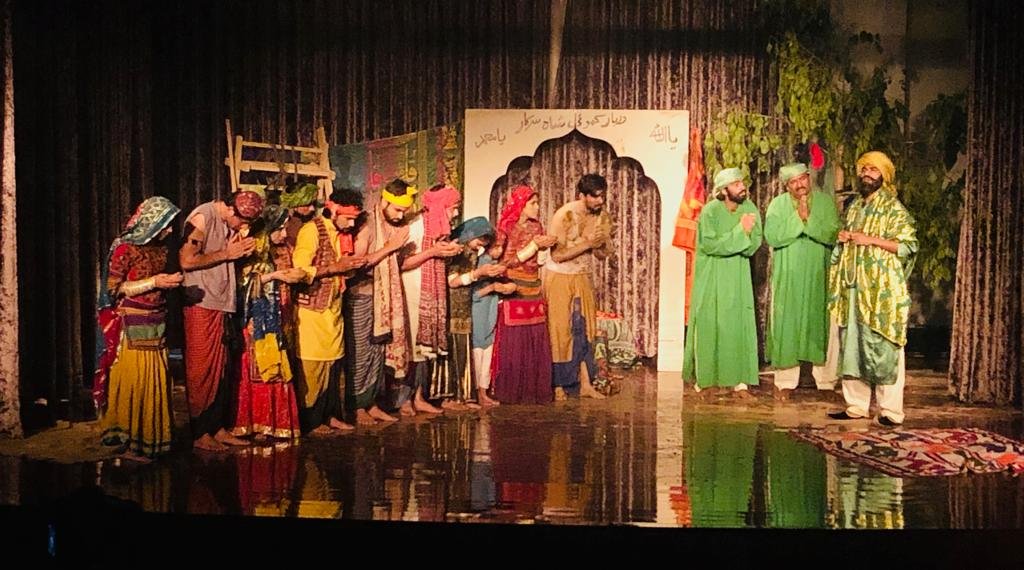
New Law for Theatre in Punjab: Cultural Reform or a Restriction on Artistic Freedom?
By: Mudassar Iqbal

The Punjab Assembly’s approval of the Punjab Dramatic and Theatrical Performances Bill 2026 has sparked a fresh debate about the future of theatre and performing arts in the province. While the government describes the legislation as an important step towards improving the quality of stage performances, discouraging inappropriate content and promoting family-friendly entertainment, it has also raised serious questions among artists, theatre organisers and cultural critics.
The bill, presented by Provincial Minister for Information and Culture Azma Bokhari, was passed by the Punjab Assembly on November 18, 2026, through a majority vote. Opposition members raised objections to several provisions, expressing concerns that mandatory registration, advance licensing requirements and government scrutiny of scripts could undermine creative freedom in theatre. Amendments proposed by the opposition were also rejected.
The new legislation seeks to replace the century-old Dramatic Performances Act of 1876 with a modern regulatory framework governing dramatic and theatrical activities across Punjab.
Under the proposed system, organisers will be required to obtain a formal licence from the Department of Information and Culture before staging theatrical performances at public venues. They will also have to submit complete scripts to the relevant Script Review Committee. Approval from the Executive Director of the Punjab Council of the Arts will be necessary before a performance can proceed.
The legislation does not limit its regulatory scope to theatrical content alone. It also brings individuals associated with theatre productions under its framework. Actors, directors, technical staff, makeup artists and other relevant professionals will be required to register. This means that individuals who are not registered may not be permitted to participate in theatrical productions.
The government maintains that these measures will help prevent inappropriate material in stage dramas, improve professional standards and ensure better oversight of theatrical activities. According to the government’s position, theatre should serve as a cultural platform where families can enjoy entertainment together, including with their children.
However, the legislation comes at a time when Pakistan’s theatre and performing arts industry is already struggling with several challenges, including limited financial resources, inadequate infrastructure, a shrinking audience base and uncertain employment opportunities. In this environment, additional licensing requirements, mandatory registration and government scrutiny could increase production costs and create further administrative difficulties for theatre organisers and independent artists.
The central question is whether the new law will genuinely improve the quality of theatre in Punjab or make it increasingly difficult for independent performers and smaller theatre groups to continue their creative work.
There is no doubt that maintaining ethical and professional standards in theatre is important. However, the success of any regulatory framework will depend on its ability to strike a balance between oversight and reform on the one hand, and artistic freedom, freedom of expression and the economic interests of performers on the other.
Punjab’s new legislation is not merely about regulating theatrical performances. It raises a much broader question about how much creative freedom the state is willing to allow while seeking to regulate cultural activities.
The practical implementation of the law in the coming months will determine whether it gives Punjab’s theatre industry a new lease of life or creates additional obstacles for an already struggling sector.
Comments are closed, but trackbacks and pingbacks are open.