
The New Geography of Conflict: How Drones, Cyber Operations, and AI Are Changing Warfare
Usama Jamshed National Defense University

For centuries, geography of wars was determined by trenches, borders and physical terrain. Armies fought on plains, navies battled in straits and air forces fought in cities. That geography is becoming unraveled today. The battlefield has traversed the electromagnetic spectrum, it has gone in orbit, into undersea cables, and into lines of code. Drones, cyber operations and artificial intelligence are not just new weapons, but are essentially reshaping how, when and by whom wars are being fought.
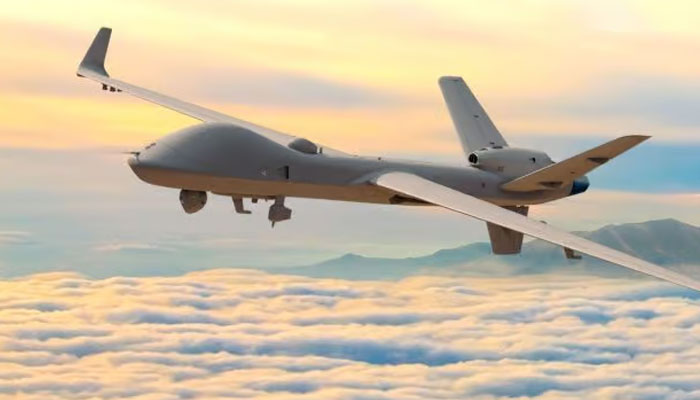
A deadly weapon of the 2020s is the weapon that was once the exclusive concern of superpowers: the unmanned aerial vehicle. Whether it’s the Nagorno-Karabakh war of 2020 or the war in Ukraine, the drone has proven to blow out established assumptions in the field of military affairs. The Bayraktar TB2 drones of Azerbaijan successfully attacked the Armenian armoured columns in systematic operations, proving that low cost, accurate, and remotely managed force could strike the high cost traditional force. Since then, Ukraine has done more, using first-person-view (FPV) drones that cost just a few hundred dollars to knock out tanks worth millions.
This revolution is not only technologically significant, but also and importantly, accessible. In addition, non-state actors such as Hezbollah, the Houthis, and other militia groups now have their own drones capable of threatening the air defense systems of nation-states.The Houthis drone and missile campaign against Red Sea shipping is one example of the fact that a relatively small armed movement can impose strategic costs on the entire international order. Space of power projection has been dramatically shrunk. Now, a group with a landlocked stronghold can threaten naval vessels as far away as thousands of kilometers.
The future of drone swarms is autonomous. Several armies are developing swarm weapons that can outnumber and outmaneuver air defense with numbers and synchronized operations. If dozens or hundreds of inexpensive drones are launched at once, it can be difficult for human operators to pick out one signal from a barrage of noise, which is why things are moving toward machines to make decisions. While drones have increased the surface area of the battlefield, cyber operations have eliminated it altogether. In cyberspace, there’s no front line. A server farm in Eastern Europe, a power grid in the Middle East, a hospital network in Southeast Asia, they’re all the same keys to press from a keyboard anywhere on the planet.

The first sign was the attack on Estonia in 2007, which was believed to have been carried out by Russian state actors. It showed that a war can be fought without a single missile being fired, by destroying the government, the banking system and the media infrastructure. The scale and sophistication of cyber operations have since increased immensely. The Stuxnet worm was the first time that people saw digital code that actually caused kinetic effects, in this case, destroying Iranian centrifuges. Because of the attack on Colonial Pipeline in the United States in 2021, civilian infrastructure fuel, water, electricity is now a permanent theatre of conflict.
The issue of “who or what is being attacked” and “when is it too late to do anything about it” is the distinguishing quality of cyber warfare that differentiates it from a traditional armed confrontation. Once a missile has hit a capital it becomes clear who is responsible and how escalation will occur. The process of attribution is lengthier when a power grid goes down, or the infrastructure for elections is breached, and the range of possibilities for a proportionate response is still very unclear. This vagueness is not a bug, it’s a feature: it’s what makes this system easier for an aggressor to use. Cyber operations are a place in between the levels of armed conflict, enabling a state to kill a rival without it really becoming a war.
Behind the spectacle of drones and cyberattacks is another transformation the speeding up of the military decision-making process by artificial intelligence. In war, speed has been and will be a privilege, but AI is shortening decision-making cycles to ones that humans cannot keep up with. AI is now being used in intelligence, target recognition, logistics and EW. The U.S., China and Russia are all pursuing programs of autonomous weapons systems that can “see” and act on their own without the need for human approval. This trajectory is a troubling one, with the sharpest ethical and strategic doubts of our time. When the machines rule, it is not a matter of law but of philosophy who lives and who dies. When two artificial intelligence-backed military systems come into contact, during a crisis situation, they may escalate sooner than anyone could respond. Furthermore, AI can greatly enhance the potential of cyber operations by allowing for quicker penetration, more believable disinformation and more responsive malware. Strategists are calling it a “perfect storm” of offensive domination, or a situation in which offensive moves are significantly more efficient and effective than defensive ones.
The new geography of conflict is borderless, asymmetric and continually active. It does not stop between wars, it operates constantly under the surface during peacetime and makes balances of power which will shape the next decades. The major question for students of strategy and policy makers today is not just how to win wars anymore, but what is the world in which war and peace have become casualties. It is the thinking of those states and institutions that will fashion the international order that adapt to this new geography. Others will find themselves outmaneuvered even before the first shot is even fired.
The writer Usama Jamshed is a freelance journalist.
Email: osamajams123@gmail.com
Comments are closed, but trackbacks and pingbacks are open.