
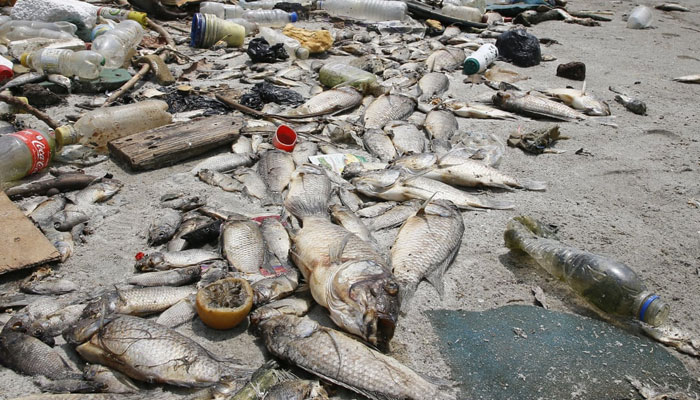

In the modern age, plastic has become an inseparable part of human life. From packaging and household items to industrial applications, its convenience is undeniable. However, beneath this convenience lies a growing environmental crisis—plastic pollution in our oceans, rivers, and
lakes. Among its most tragic victims are fish and other aquatic organisms, whose survival is increasingly threatened by the relentless accumulation of plastic waste.
Each year, millions of tons of plastic enter water bodies across the globe. Unlike organic materials, plastic does not decompose easily; instead, it breaks down into smaller particles known as microplastics. These particles are often invisible to the naked eye, yet they pose a
significant danger to aquatic ecosystems. Fish frequently mistake plastic debris for food. Floating plastic bags resemble jellyfish, while tiny fragments mimic plankton, leading to accidental ingestion.
The consequences of this ingestion are severe. Once inside the body, plastic can block digestive tracts, reduce the sensation of hunger, and ultimately lead to starvation. Moreover, plastics often contain toxic chemicals such as bisphenol A (BPA) and phthalates. These substances can leach into the tissues of fish, disrupting hormonal systems, impairing reproduction, and even causing death.
Entanglement is another critical issue. Discarded fishing nets, plastic rings, and other debris can trap fish and marine animals, restricting their movement and making them easy prey for predators. Many fish suffer injuries or suffocate due to such entanglements, contributing to declining populations in already fragile ecosystems.
The impact of plastic pollution extends beyond individual species. It disrupts entire food chains.

When small fish consume microplastics, these particles move up the food chain as larger fish prey on them. Eventually, these contaminated fish reach human consumers, raising serious concerns about food safety and public health. Thus, plastic pollution is not only an environmental issue but also a direct threat to human well-being.
Additionally, plastic waste alters aquatic habitats. Coral reefs, often referred to as the “rainforests of the sea,” are particularly vulnerable. Plastic debris can smother coral, block sunlight, and introduce harmful pathogens, leading to widespread coral bleaching and degradation. This, in turn, affects the countless species that depend on reefs for shelter and food.
Addressing this crisis requires immediate and collective action. Governments must enforce stricter regulations on plastic production and disposal, while industries should invest in sustainable alternatives. Public awareness is equally crucial. Simple actions, such as reducing single-use plastics, recycling responsibly, and participating in clean-up initiatives, can make a significant difference.
Education also plays a vital role. By incorporating environmental awareness into school curricula, future generations can develop a deeper understanding of the consequences of plastic pollution and adopt more sustainable habits.
In conclusion, the effects of plastic on fish and aquatic life are profound and far-reaching. What was once considered a symbol of modern convenience has now become a silent threat beneath the waves. If urgent measures are not taken, the damage may soon become irreversible.
Protecting our aquatic ecosystems is not merely an environmental responsibility—it is essential for the survival of life on Earth, including our own.
By: Uzma BS Botany
Govt. Girls Degree College No 1,D.I.Khan
Comments are closed, but trackbacks and pingbacks are open.