
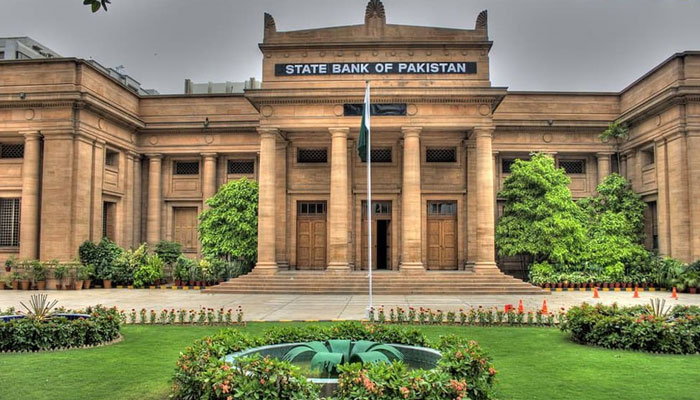

ISLAMABAD: (Finance Reporter) – The State Bank of Pakistan (SBP) on Monday decided to keep the policy rate unchanged at 11.5%, as rising global commodity prices and growing geopolitical tensions offset signs of a gradual recovery in domestic economic activity.
The Monetary Policy Committee (MPC) approved the decision by a majority of seven out of 10 members during its meeting held on September 14.
According to the SBP, the prolonged conflict in the Middle East has intensified, pushing already elevated global commodity prices higher and extending supply chain disruptions. Despite these challenges, recent domestic macroeconomic indicators have largely remained in line with the committee’s expectations.
Headline inflation increased to 11.1% year-on-year in August from 9.2% in July, while core inflation remained slightly below expectations.
The MPC said pressure on the external account remained contained, supported by strong workers’ remittances and increased financial inflows. Economic activity, which slowed during the fourth quarter of FY26, has also begun showing signs of a gradual recovery based on recent high-frequency indicators.
The committee maintained that the existing monetary policy stance was appropriate to bring inflation towards its medium-term target range of 5-7%.
However, it warned that uncertainty surrounding the economic outlook had increased significantly, particularly due to the worsening geopolitical situation.
The MPC also noted that Moody’s had upgraded Pakistan’s sovereign credit rating to B3 with a stable outlook. Pakistan additionally raised $3 billion through Eurobonds in international capital markets.
The Eurobond proceeds, together with continued foreign exchange purchases by the SBP, helped increase the central bank’s foreign exchange reserves to $21.4 billion, taking them above the $21 billion mark.
The central bank said inflation expectations among both businesses and consumers rose in September, while overall confidence weakened.
Large-scale manufacturing output fell 3.5% in June, although cumulative LSM growth during FY26 remained positive at 5%.
The MPC said fiscal consolidation during FY26 exceeded the government’s budget target, mainly because of controlled current expenditure and lower interest payments.
Federal Board of Revenue tax collection remained broadly on target during July-August FY27, although its growth slowed compared with the same period last year.
The SBP also transferred Rs1.9 trillion in profits to the government, significantly exceeding the budgeted amount of Rs1.4 trillion.
The committee observed that central banks worldwide had adopted a more cautious approach amid increasingly challenging global economic conditions.
Pakistan’s real GDP growth projection for FY27 was retained at 3.5-4.5%. The SBP said economic activity was gradually recovering after slowing in the fourth quarter of FY26 due to conflict-related disruptions.
High-frequency indicators, including petroleum product sales, private-sector credit, textile exports, business sentiment and satellite-based data on nighttime lights and gas emissions, suggested improving economic activity in July.

The agriculture outlook has also strengthened, with increased acreage under rice and sugarcane and encouraging early reports on cotton arrivals. The SBP said stronger performance in commodity-producing sectors would also help support growth in services.
On the external front, the SBP said the current account deficit in July remained broadly in line with expectations, as imports of goods and services grew faster than exports and workers’ remittances.
The central bank expects resilient remittances and stronger information and communications technology exports to keep the FY27 current account deficit between zero and 1% of GDP.
It said planned financial inflows and continued foreign exchange purchases would help meet external financing needs and support reserve accumulation. The SBP expects foreign exchange reserves to approach three months of import cover by the end of June 2027.
However, elevated global commodity prices and supply constraints linked to developments in the Middle East remain key risks to the external sector outlook.
The MPC also called for faster fiscal reforms, urging the government to maintain efforts to achieve its tax revenue target despite uncertainty at home and abroad.
It stressed the need to broaden the tax base and reduce losses of public sector enterprises, saying such measures were essential for achieving higher and sustainable economic growth.
Broad money growth slowed to 11.6% year-on-year as of August 28, compared with 13.2% at the time of the previous MPC meeting. The SBP attributed the slowdown to weaker contributions from both net domestic assets and net foreign assets of the banking system.
Private-sector credit, meanwhile, rose 13.4% year-on-year amid lower government borrowing from banks and a gradual recovery in economic activity. Credit growth was spread across working capital, fixed investment and consumer financing, with wholesale and retail trade, agriculture and the sugar sector among the major borrowers.
The SBP expects private-sector credit growth to gain further momentum as economic activity strengthens.
Inflation remained a major concern, with headline inflation rising from 9.2% in July to 11.1% in August. The central bank said higher food prices, particularly wheat, related products and perishable items, were among the main drivers.
The intensifying Middle East conflict also kept energy inflation elevated. Higher fuel prices increased transportation costs and contributed to core inflation reaching 8.7%.
Consumer and business inflation expectations also increased in the latest surveys.
However, changes to the high-speed diesel pricing mechanism resulted in a sharp decline in diesel prices in August, partly offsetting the impact of higher international prices.
The MPC said positive real interest rates on a forward-looking basis should help contain demand pressures and limit second-round effects from food and energy price increases.
The SBP kept its overall FY27 inflation outlook broadly unchanged and expects inflation to gradually decline towards the upper end of its 5-7% target range by June 2027.
At the same time, the committee warned that risks to the inflation outlook had increased considerably, citing volatility in global commodity prices, changes in electricity and gas tariffs, supply disruptions and unexpected food price movements amid worsening El Niño conditions.
The MPC said it would continue monitoring incoming economic data and developments in the Middle East closely. It also stressed the importance of a prudent combination of monetary and fiscal policies, stronger economic buffers and timely structural reforms to absorb future supply shocks, improve productivity and support sustainable economic growth.
Comments are closed, but trackbacks and pingbacks are open.