
Saudi Arabia Unveils Cosmic Events Guide Through 2030
Saudi Space Agency Highlights Major Cosmic Events Across Kingdom Until 2030

RIYADH: (News Desk) – The Saudi Space Agency (SSA) has released a comprehensive guide highlighting major astronomical events that can be observed from Saudi Arabia through 2030.
The initiative is designed to encourage public interest in astronomy, strengthen scientific awareness and support the development of astrotourism as part of the broader objectives of Saudi Vision 2030.
A Guide To The Kingdom’s Skies
The newly released astronomical calendar provides forecasts for a range of celestial events expected to be visible from different parts of the Kingdom.
The guide is intended for stargazers, researchers, students and astronomy enthusiasts, offering information on observation dates, expected timings and suitable locations for viewing various phenomena.
Eclipses And Meteor Showers
The calendar includes information about upcoming solar and lunar eclipses, covering total, partial and annular events that may be visible from Saudi Arabia.
It also highlights annual meteor showers, including the Perseids, Geminids and Quadrantids. Areas with relatively low levels of light pollution are expected to provide better conditions for observing these displays.
Planetary Alignments
The guide also covers planetary conjunctions and other close celestial encounters.
Astronomy enthusiasts will be able to follow observation opportunities involving planets such as Jupiter, Saturn and Mars, as well as alignments involving the Moon.
The calendar also includes solstices and equinoxes, which mark important points in the annual cycle and provide useful opportunities for astronomical education and observation.
Promoting Science And Astrotourism
The publication supports Saudi Vision 2030 objectives by promoting scientific literacy, STEM education and youth engagement while also opening opportunities for specialised tourism.
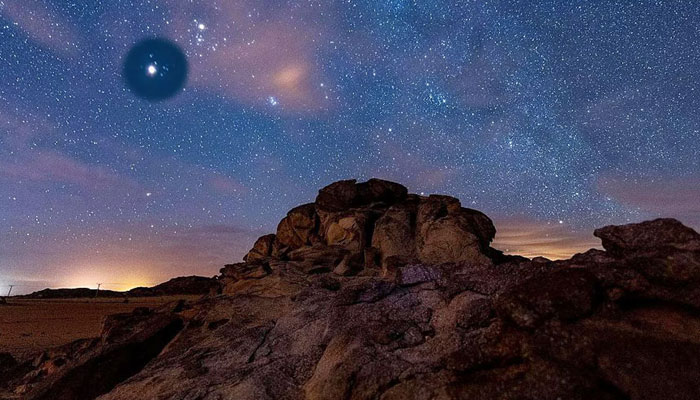
The Saudi Space Agency has highlighted locations including AlUla, the Empty Quarter (Rub’ al Khali) and the mountainous regions of Asir as promising destinations for stargazing because of their dark skies and relatively low light pollution.
By promoting these locations for astronomical observation, Saudi Arabia aims to strengthen its position as a potential dark-sky and astrotourism destination in the Middle East.
Comments are closed, but trackbacks and pingbacks are open.