
Petroleum Minister Reviews Daily Fuel Pricing Reform With Industry
Government, Industry Discuss Daily Petroleum Pricing Reform And Implementation Challenges

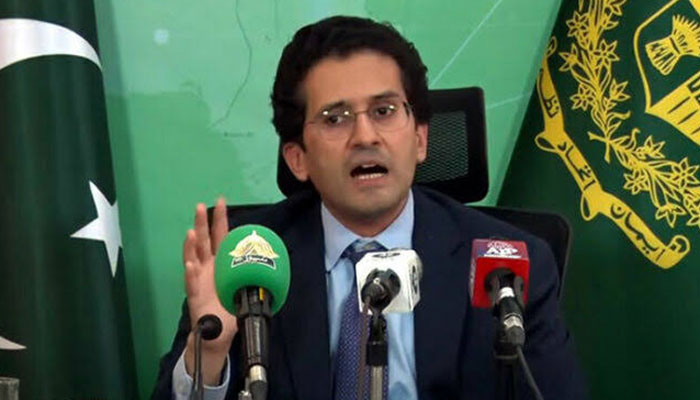
ISLAMABAD: (Finance Reporter) – Federal Minister for Petroleum Ali Pervaiz Malik chaired a high-level meeting with key stakeholders to discuss the implementation of Pakistan’s new daily petroleum pricing mechanism and gather feedback from the industry ahead of its nationwide rollout.
The meeting was attended by representatives of the Oil and Gas Regulatory Authority (OGRA), the Oil Companies Advisory Council (OCAC), the Oil Marketing Association of Pakistan (OMAP), refineries, oil marketing companies (OMCs) and senior officials of the Petroleum Division.
The minister briefed participants on the transition from a weekly to a daily fuel pricing system, describing it as a major step toward deregulating Pakistan’s petroleum sector. The reform aims to improve transparency, strengthen consumer protection and promote a more competitive market environment.
According to the Petroleum Division, the new pricing mechanism has been introduced on the directive of Prime Minister Shehbaz Sharif and approved by the Federal Cabinet as part of broader efforts to establish a rules-based petroleum pricing regime.
Under the revised system, retail fuel prices will be determined through a transparent formula linked to market fundamentals, reducing political influence over petroleum price adjustments.
Ali Pervaiz Malik said the daily pricing mechanism represents a significant shift toward a market-driven economy. He added that ending the weekly price announcement cycle would help reduce opportunities for market manipulation and windfall gains.
Officials informed the meeting that the reform is part of the government’s phased deregulation strategy, allowing market forces to play a greater role in determining petroleum prices, similar to the daily movement of exchange rates.
The minister said the Petroleum Division, in consultation with OGRA and industry representatives, is preparing comprehensive Standard Operating Procedures (SOPs) to support a smooth transition. Technical matters, including the Inland Freight Equalization Margin (IEFM), refinery adjustments and true-up mechanisms, are also being finalized through stakeholder consultations.
OGRA informed participants that it is upgrading its internal systems and data-sharing processes to support the new pricing model. The authority also committed to publishing daily petroleum price data to improve transparency and public access to information.
The meeting also reviewed supply chain operations, inventory management and the availability of real-time market data. The government assured industry stakeholders that operational challenges would be addressed through continuous consultation.
A dedicated committee has been established to oversee implementation of the new pricing regime and resolve technical and operational issues through consensus.
Representatives of OCAC, OMAP, refineries and oil marketing companies welcomed the reform while highlighting several operational concerns. The petroleum minister assured participants that all legitimate issues would be resolved through ongoing engagement with the industry.
He also directed the Petroleum Division and OGRA to continue follow-up consultations with stakeholders to further refine the pricing formula and ensure the successful implementation of Pakistan’s daily petroleum pricing system.
Comments are closed, but trackbacks and pingbacks are open.