

Pakistan’s greatest economic resource may not lie underground.
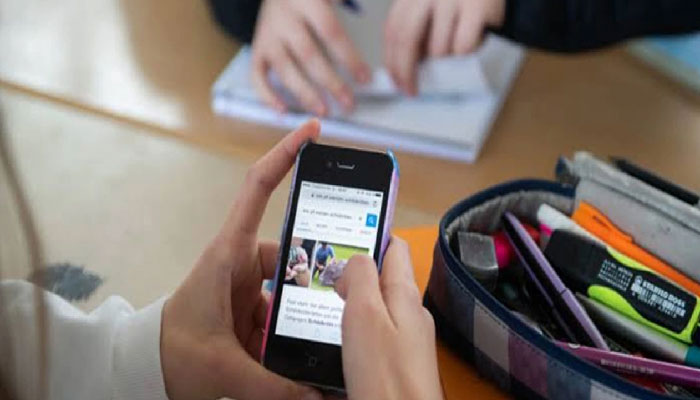
It may be sitting in classrooms, working in small offices, riding motorcycles through crowded streets, learning skills online and holding smartphones in their hands.
The country’s young population represents an enormous opportunity—but only if Pakistan can convert youth into skills, productivity and meaningful economic participation.
Pakistan has one of the world’s largest youth populations. The United Nations says nearly 67 per cent of Pakistan’s population is under the age of 30, while an estimated 32 million young people are not in education, employment or training.
The International Labour Organization has provided another revealing picture. Pakistan has an estimated 46.3 million young people between 15 and 24. According to the Pakistan Labour Force Survey 2024–25, 20.6 million participate in the labour force, while 2.6 million are unemployed. Youth unemployment stands at 12.8 per cent—almost twice the overall unemployment rate of 7.1 per cent. Meanwhile, 28.4 per cent of young people are outside employment, education or training.
These figures tell two stories at once.
The first is a warning.
The second is an extraordinary opportunity.
A young population can become a demographic dividend when people are educated, skilled and productively employed. But if millions remain disconnected from education and decent work, the same demographic structure can become a source of frustration and economic pressure.
Technology has now changed the equation.
A young Pakistani no longer necessarily needs to live in Islamabad, Lahore or Karachi to access the global economy. A laptop and a reliable internet connection can potentially connect a freelancer in a small city with a client in Europe, the Gulf, North America or East Asia.
A designer can sell a service abroad.
A programmer can work remotely.
A teacher can conduct an online class.
A small business can sell products through digital platforms.
A content creator can build an international audience.
This is one of the most important economic changes of our time.
But there is a danger in confusing access to technology with access to opportunity.
A smartphone does not automatically create a skilled worker.
Internet access does not automatically create employment.
And watching hundreds of educational videos does not necessarily mean that a person has acquired a marketable skill.
The difference is discipline.
The young person who uses technology to learn, create, experiment and build something has a completely different relationship with the same device from someone who spends hours endlessly scrolling through short videos.
The challenge, therefore, is not to take smartphones away from young people.
It is to give them a reason to use those smartphones intelligently.
Pakistan’s education system must also change with the economy.
The world of work is increasingly being reshaped by artificial intelligence, digitalisation, climate change and technological innovation. The ILO has stressed the need to strengthen the connection between Pakistan’s skills system and actual labour-market demand.
This does not mean every young person needs to become a software engineer.
Pakistan still needs doctors, teachers, journalists, engineers, lawyers, farmers, technicians, designers, entrepreneurs and skilled tradespeople.
But every profession increasingly requires some level of digital competence.
A modern farmer may need data.
A modern journalist needs digital verification skills.
A modern business owner needs digital marketing.
A modern teacher needs online tools.
A modern technician may work with increasingly sophisticated machinery.
The future belongs not simply to people with degrees, but to people who can keep learning.
This is where Pakistan’s youth challenge becomes a national economic challenge.
We should stop measuring success only by how many young people are waiting for jobs.
A stronger question is: how many young people can we help become job creators?
Entrepreneurship, freelancing, e-commerce, technology startups, creative industries, digital services and modern agriculture can create new pathways. But young people need more than motivational speeches. They need practical training, mentorship, access to finance, market connections and an environment in which small businesses can survive.
There is already movement in this direction. In June 2026, the Government of Pakistan, through the Prime Minister’s Youth Programme, launched Pur Azm Pakistan in partnership with UNICEF and Generation Unlimited to connect young people with skills, employment, entrepreneurship and economic opportunities.
But the scale of the challenge demands much more.
Parents also have a role.
For decades, many families have measured educational success almost entirely through examination results. Marks matter, but they are not the complete definition of ability.
A young person who can solve a real problem, communicate effectively, build a product, manage a project or create a useful service possesses economic value—even if that ability does not fit neatly into an examination paper.
Teachers, too, must increasingly become guides rather than merely sources of information.
Information is everywhere.
The more important skill is knowing what information to trust, how to test it, how to use it and how to turn knowledge into something useful.
Pakistan therefore stands at an important crossroads.
It can see its young population as a problem that needs to be managed.
Or it can see it as an economic asset that needs to be developed.
The difference between these two approaches could determine the country’s future.
The smartphone in a young Pakistani’s hand can become a distraction, a source of misinformation and wasted hours.
But it can also become a classroom, an office, a marketplace, a design studio, a newsroom and a gateway to the global economy.
The real question is not how much screen time our young people have.
The real question is:
How much future are we helping them build with that screen?
Comments are closed, but trackbacks and pingbacks are open.