
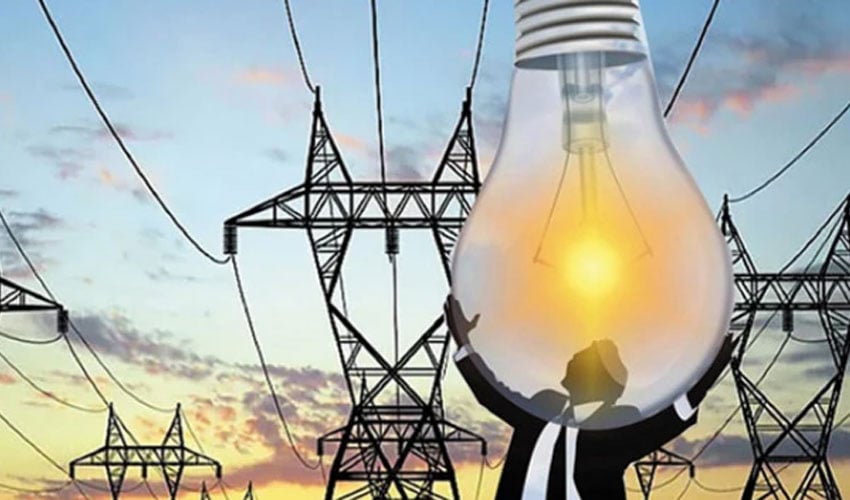
Pakistan’s IPP Payments Cross Rs3 Trillion Annually
Pakistan’s IPP Payments Exceed Rs3 Trillion as Consumers Face Rising Bills

ISLAMABAD: (Staff Reporter) – Pakistan’s electricity consumers are once again facing a difficult question: how long can ordinary citizens continue bearing the financial consequences of an energy system shaped by decades of policy decisions, expensive contracts and institutional weaknesses?
During the first 11 months of the previous fiscal year, from July 2025 to May 2026, the federal government paid Independent Power Producers (IPPs) Rs2.935 trillion, highlighting the enormous financial burden the power sector continues to place on the national economy and electricity consumers.
Of this amount, Rs1.168 trillion was paid under energy payments, while Rs1.565 trillion went toward capacity payments. However, the two figures total approximately Rs2.733 trillion, leaving a difference of around Rs202 billion compared with the reported overall payment of Rs2.935 trillion.
The discrepancy requires clarification. The additional amount could include adjustments, taxes, arrears, interest or other components associated with power-sector settlements. Since the figures cover only 11 months and the billing and settlement process for June 2026 was incomplete when the information was presented, the final annual amount could be even higher.
Pakistan is therefore facing an annual IPP-related payment burden of more than Rs3 trillion at a time when millions of consumers are struggling to pay their electricity bills.
The issue, however, is not simply whether IPPs should be paid. Private investment in electricity generation is not inherently problematic. Pakistan required additional generation capacity, and private investors played an important role in expanding the country’s power infrastructure when the government faced financial and technical limitations.
The real question is whether Pakistan negotiated sustainable contracts, developed the right generation mix and established a system capable of paying for contracted capacity without placing an excessive burden on consumers and taxpayers.
Under many power purchase agreements, IPPs receive two broad categories of payments. Energy payments are made for electricity actually generated and supplied to the national grid, while capacity payments compensate producers for maintaining generation capacity and keeping plants available under contractual terms.
Consequently, a power plant can receive capacity-related payments even when it is not generating electricity during a particular period, provided it remains available and fulfills the conditions specified in its agreement.
Pakistan’s generation capacity has accumulated under successive governments and different energy policies. In some cases, long-term demand forecasts, transmission capacity, fuel costs and consumer affordability were not sufficiently integrated into planning.
The result is a system in which Pakistan can be paying substantial amounts for available generation capacity while actual electricity demand remains below earlier expectations.
In simple terms, the country may have contracted more expensive capacity than its economy and consumers can comfortably absorb.
The immediate beneficiaries of these payments are the companies and investors legally entitled to receive them. These may include Pakistani and foreign investors, listed companies, business groups, lenders, fuel suppliers, equipment providers and financial institutions associated with power-sector financing.
But the broader question is who benefited politically or institutionally from the decisions that created these long-term obligations.
Pakistan’s IPP agreements were negotiated and implemented through successive governments, bureaucracies, regulators and policymakers over several decades. Responsibility, therefore, cannot fairly be attributed to a single political party or administration.
Every major agreement has a history. Projects were proposed, policy frameworks approved, terms negotiated, sovereign guarantees issued and tariffs or payment mechanisms approved through the relevant regulatory and legal processes.
That history should be made transparent.
The public also deserves an evidence-based answer to the highly sensitive question of whether politicians, government officials, bureaucrats or other influential individuals received illegal financial benefits from IPP-related agreements.
If corruption or criminal misconduct occurred, it should be investigated through independent forensic audits, financial records, procurement trails, beneficial ownership disclosures and credible legal inquiries. Anyone found guilty should face prosecution regardless of political affiliation or status.
Pakistan needs transparency rather than political theatre. Major IPP agreements should be available for parliamentary scrutiny, subject only to legitimate commercial or national-security restrictions.
The public should be able to know which power plants receive capacity payments, how much they receive, how frequently they generate electricity, whether they are operational, what fuel they use, who ultimately owns them and what contractual obligations require government payments.

One of the most troubling aspects of Pakistan’s electricity crisis is that consumers who pay their bills honestly are often forced to bear the consequences of inefficiencies they did not create.
A household that carefully limits electricity consumption can still receive a bill containing taxes, surcharges, fuel adjustments, capacity costs and other charges. Similarly, industrial consumers face electricity prices that can make Pakistani products less competitive in international markets.
High energy costs affect textiles, engineering, agriculture, food processing and other industries. Businesses may reduce production, postpone investment, shift toward alternative energy sources or pass higher costs on to consumers.
At the same time, declining electricity consumption can create another problem. When fixed capacity costs are distributed over fewer units of electricity sold, the per-unit burden can increase further, creating a cycle in which expensive electricity reduces demand and lower demand pushes costs higher.
Electricity theft, transmission losses, distribution losses and weak bill recovery add another layer to the crisis. These failures can ultimately increase the financial burden on consumers who pay their bills regularly.
Why should a factory that pays every bill on time bear the cost of electricity theft elsewhere?
Why should a salaried household pay for administrative failures?
And why should honest consumers absorb technical losses caused by years of inadequate investment in transmission and distribution infrastructure?
These are structural questions requiring structural solutions.
The government should first conduct a comprehensive and transparent audit of IPP agreements and publicly disclose the major financial obligations associated with each project. Parliament should also establish a permanent mechanism for reviewing major sovereign commitments before they become long-term burdens on future governments.
Second, capacity payments should be assessed against actual electricity demand and credible future projections. Where contracts legally permit restructuring, the government should negotiate revised terms, extended payment periods, reduced returns or other arrangements capable of lowering immediate pressure on consumers without violating legitimate contractual obligations.
Third, Pakistan must stop adding expensive generation capacity without rigorous demand forecasting and adequate transmission planning. Building power plants without ensuring that electricity can be efficiently transmitted to consumers is an expensive policy failure.
Fourth, the country should accelerate investment in cheaper indigenous and renewable energy, including solar, wind and hydropower, alongside other economically viable domestic resources. The objective should not simply be to generate more electricity, but to provide electricity at an affordable cost.
Fifth, distribution companies require fundamental reform. Theft, line losses, weak governance, political interference and poor recovery cannot continue to be transferred to honest consumers through higher tariffs.
Sixth, Pakistan needs greater transparency over beneficial ownership. Citizens have a legitimate right to know who ultimately benefits from major power-sector contracts, particularly when public funds and sovereign guarantees are involved.
Finally, accountability must extend beyond IPPs themselves. Policymakers, regulators, bureaucrats and political leaders involved in approving economically damaging agreements should face appropriate scrutiny.
If decisions were made in good faith under the circumstances prevailing at the time, the evidence should establish that. If corruption, favoritism or criminal misconduct occurred, those responsible should be held accountable regardless of their political affiliation or social status.
The reported Rs2.935 trillion paid during 11 months is more than an accounting figure. It represents a massive public financial commitment at a time when households and businesses are struggling with rising electricity costs.
Pakistan does not need to abandon private investment in power generation. It needs a fairer, more transparent and economically rational energy system in which investors receive legitimate returns, the country maintains energy security and consumers are not forced to pay indefinitely for poor planning and institutional failures.
The central question is no longer whether Pakistan needs electricity. The question is whether Pakistan can continue to afford the electricity system it has created.
Until that question is answered honestly—and followed by meaningful reform—the ordinary Pakistani consumer will remain the ultimate payer for a system whose costs are measured in trillions and whose consequences are felt through shrinking household purchasing power and rising economic pressure.
Comments are closed, but trackbacks and pingbacks are open.