


By: Malik Khalid Zameer
Email:kmzameer@gmail.com
When we turn the dusty pages of history, a vivid scene dances before our eyes—a time when the green crescent flag was not just a piece of cloth, but a symbol of global dominance on the hockey field. It was an enchanting era. Fans would sit huddled around radios, breaths held tight, as commentators’ voices trembled with excitement. One chant echoed across the nation: “The ball is with Samiullah… Samiullah to Kaleemullah… and it’s a GOAL!” It wasn’t just a sport; it was a romance, a passion that flowed like blood through the veins of the entire country. When the “Green Shirts” stepped onto the turf, opponents played not just against a team, but against the crushing weight of history.
The lightning-fast dribbling of Shahbaz Senior, the magical skills of Hassan Sardar, the sheer speed of Samiullah, and the iron leadership of Akhtar Rasool—these names were more than just players; they were icons of an era. Who can forget the historic final in Delhi? In the presence of Indian Prime Minister Indira Gandhi, the “Shaheens” (Falcons) scored seven goals against their rivals, silencing a stadium of thousands. As four-time World Champions, Pakistan was a force that could not be ignored. Whether it was the Asian Games, the Champions Trophy, or the Azlan Shah Cup, the green flag reigned supreme.
But then, the tides of time turned cruel. Our national sport fell victim to neglect, poor management, a lack of professional expertise, and shifting priorities. It began to wither in the shadows of anonymity. The world’s “King of Hockey” slowly faded into the darkness of decline. Resources dwindled, institutions weakened, and above all, unprofessional decisions in sports administration choked the life out of the game. A fundamental mistake was repeatedly made: we forgot that administration, management, and training are three entirely different disciplines. In Pakistan, these roles were wrongly merged, resulting in wasted talent and a tragic slide in global rankings. Pakistan, once the emperor of hockey, reached a point where even qualifying for the World Cup became a distant dream.

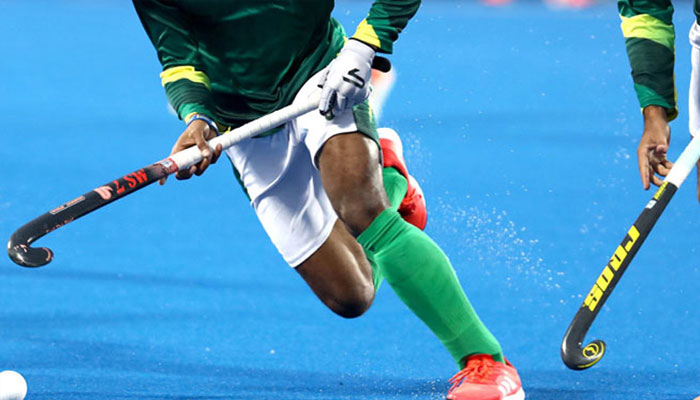
Eight years… this is not just a number. For Pakistani hockey fans, it was a long, painful, and agonizing exile. But the beauty of history is that it is never truly silent; it always finds a way to repeat itself. In March 2026, those seven days changed the course of history. When the FIH World Cup Qualifier semi-final against Japan began, it was more than just a match—it was the final exam for years of longing and broken dreams. On the field, the players’ faces showed fierce determination, and their eyes reflected a years-long thirst for victory.
The nerve-wracking match reached its peak, the score was tied, and the entire nation’s eyes were glued to their screens. In the final moments, when the pressure was like a mountain, a Pakistani forward launched a lightning attack and sent the ball into the net. Score: 4-3! With that single goal, an eight-year-long wait ended. The air filled with cheers, and it felt as though life had returned to a lifeless body. This victory did not come from a grand system; it was a victory of the players’ blood and sweat, their honorable spirit, and those “broken shoes”—worn by athletes who received neither the glamour of cricket nor its financial comfort.
At this historic turning point, while the players deserve all the praise, it would be unfair not to acknowledge the foresight of the current administration and the Pakistan Hockey Federation (PHF). Under the leadership of PHF President Mohiuddin Ahmad Wani, a clear vision has emerged. Mr. Wani has proven that with visionary leadership, one can find the shore even in the roughest storms. Under his active guidance, players found the encouragement they had been seeking for years. Furthermore, the efforts of PCB Chairman Mohsin Naqvi—meeting with Captain Amad Butt, promising jobs, and taking responsibility for the treatment of injured players—offer a beacon of hope for a bright future.
But remember, this is only the beginning; the destination is still far. We must accept that to stand hockey on its own feet, it must not remain a dependent of the Cricket Board. Instead, a fully autonomous “Pakistan Hockey Board” must be established to create its own policies. The time has come to completely separate administrators, managers, and coaching staff, appointing experts in each specific field.
In this regard, another revolutionary step is the establishment of the “National Education Hockey Coordination Committee,” aimed at reviving hockey at the school and college levels. We must paint our educational institutions green once again. When the sound of hockey sticks echoing through schools reaches the Under-14 and Under-16 levels across the country, only then will Pakistan’s name truly resonate in international arenas. We also need a major brand like the “Hockey Premier League” (HPL) to attract sponsors and provide our players with the financial rewards they rightfully deserve.
Today, as the national team climbs to 12th in the world rankings, a candle of hope has been lit. The day is not far when we will return to the Top 10, and then the Top 3. This success is not just a tournament win; it is the herald of the return of Pakistan’s true pride.
I appeal to the nation: stand by these young men; they are the crown on our heads. Remember, hockey is in our blood and it is our true identity. Insha’Allah, the 2026 World Cup will be the year of Pakistan Hockey’s rebirth and rise. Because the truth is: Hockey is the heartbeat of Pakistan—and heartbeats can never be silenced.

Comments are closed, but trackbacks and pingbacks are open.