
Makkah Joint Defense Agreement: Pakistan, Türkiye, Saudi Arabia Pledge Attack on One Means Attack on All
Three Muslim-majority nations pledge collective defense amid rising Middle East tensions

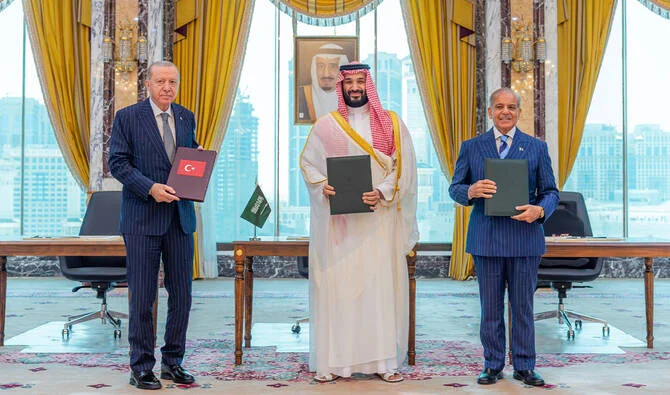
Pakistan, Saudi Arabia & Turkey – (Special Correspondent/Web Desk) – In a major diplomatic move, Pakistan, Saudi Arabia, and Turkey have come together to sign the Makkah Joint Defense Agreement. This pact was formalized on Friday and sends a strong message about regional unity at a time when tensions between the United States and Iran remain high.
Turkish President Recep Tayyip Erdogan flew into Saudi Arabia for a one-day visit to take part in the signing. He joined Pakistan’s Prime Minister Shehbaz Sharif, who had already arrived earlier that week for a longer, three-day trip. Sharif brought along a senior team, including Field Marshal Syed Asim Munir, to hold talks on shared security concerns.
Honoured to sign the Makkah Joint Defence Agreement alongside my dear brothers, HRH Crown Prince Mohammed bin Salman and H.E. President Recep Tayyip Erdoğan.
Three brotherly nations, united by faith, friendship and a shared resolve for peace and security.
May this historic… https://t.co/v4gcORhbyd
— Shehbaz Sharif (@CMShehbaz) August 7, 2026
The three leaders met at Al-Safa Palace in Makkah, where Saudi Crown Prince Mohammed bin Salman hosted the gathering. Officials called it the Makkah Al-Mukarramah Summit for Joint Defense. After discussing ties between their nations, the leaders put pen to paper on the new agreement.
At its heart, the deal is simple but powerful. Under this pact, if any one of the three countries is attacked, it will be treated as an attack on all three. Pakistan’s foreign office described the move as a way to boost shared deterrence and guard against outside threats.
The agreement also opens the door to closer defense ties between the three nations moving forward. Officials say it reflects a joint desire to protect peace and stability, not just within their own borders, but across the wider region as well.

The Pakistan-Saudi Arabia-Türkiye Comprehensive Defence Pact is more than a military agreement—it is the first concrete building block of an emerging regional security architecture for South and West Asia. As reliance on extra-regional security providers declines, regional powers…
— Asif Durrani (@AsifDurrani20) August 7, 2026
Sharif shared his thoughts on social media shortly after the signing. He called the three nations “brotherly,” bound together by faith and a common goal of peace.
Experts see this as an important building block. Former Pakistani diplomat Asif Durrani noted that regional powers are stepping up to handle their own security instead of depending heavily on outside partners. He believes this shift could eventually help resolve older regional conflicts too.
This agreement comes against the backdrop of ongoing friction between the US and Iran. Just days earlier, US President Donald Trump halted planned military action against Iran, pointing to progress toward a possible deal among Middle Eastern nations.
Adding to the developments, Iran reportedly reached an understanding with Oman regarding safe shipping routes through the Strait of Hormuz.
Pakistan has played a quiet but active role in easing US-Iran tensions. It hosted early talks between the two sides and helped shape an interim peace understanding known as the Islamabad Memorandum. However, fighting reignited soon after, following accusations that Iran targeted vessels in the Strait of Hormuz.
The Makkah Joint Defense Agreement marks a turning point, showing how regional nations are choosing to stand together during uncertain times.
[…] Retired Lieutenant General Nauman Mehmood has been appointed as the first Secretary-General of the Makkah Defense Agreement, according to the Foreign […]