
Makkah Joint Defence Agreement Committee Holds First Meeting In Istanbul
Pakistan, Saudi Arabia and Turkiye open a new chapter in trilateral security cooperation.

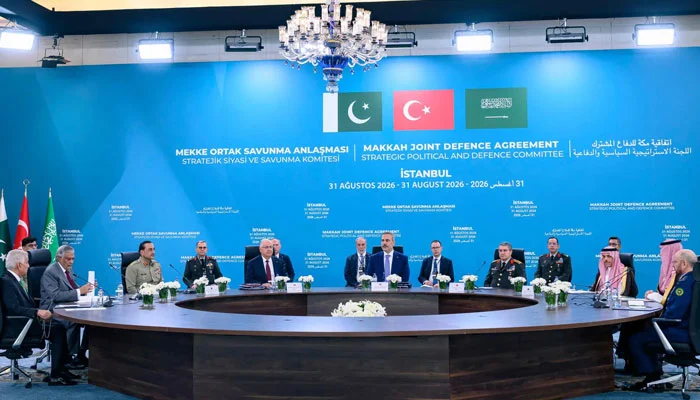
Istanbul – (Special Correpondent/Web Desk) – Makkah Joint Defence Agreement has entered a new phase this week. Its first-ever Strategic Political and Defence Committee meeting kicked off in Istanbul on Monday, bringing together top leaders from Pakistan, Saudi Arabia, and Turkiye.
This gathering matters. It’s the very first time officials from all three nations have sat down under this pact to talk strategy since it was signed.
Pakistan sent a strong team to represent its interests. Deputy Prime Minister and Foreign Minister Ishaq Dar led the delegation, joined by Defence Minister Khawaja Asif.
Also present was Field Marshal Syed Asim Munir, who serves as both Chief of Army Staff and Chief of Defence Forces. His presence shows how seriously Pakistan is treating this partnership.
Turkiye and Saudi Arabia didn’t hold back either. Both countries sent their foreign ministers, defence ministers, and top military chiefs to the table.
So why does this meeting carry weight? It marks the start of real, working coordination between three major regional powers.
Officials say the session will lay groundwork for a secretariat. This body would help manage joint projects going forward.
There’s also talk of building a clear roadmap. Leaders want defined steps for how this partnership grows over time.
The agreement itself was signed on August 7 in the holy city of Makkah. At its core lies a simple but powerful idea: an attack on one member counts as an attack on all three.
That clause has drawn comparisons to how NATO nations support each other. It signals a shift toward tighter, mutual protection between these three countries.
Regional tensions played a big role in pushing this deal forward. Ongoing instability across West Asia made closer security ties feel more urgent than ever.
For Pakistan, this isn’t just about defence. Officials describe it as a reflection of long-standing, brotherly ties with both Turkiye and Saudi Arabia.
The Foreign Office released a statement echoing this sentiment. It pointed to Pakistan’s genuine desire for stability and peace across the wider region.
Beyond politics, the meeting also touches practical matters. Talks are expected to cover defence capability building, better coordination between armed forces, and shared industry projects.
Joint production and research initiatives are reportedly on the table too. This could open new doors for defence technology sharing among the three nations.
Counterterrorism cooperation is another key focus. All three countries face overlapping security challenges, making joint action more effective than solo efforts.
What happens next remains to be seen. But this first meeting sets a tone of seriousness and long-term commitment.
As the roadmap takes shape, the world will be watching closely. This trilateral pact could reshape security dynamics across the wider Middle East and South Asia region.
Comments are closed, but trackbacks and pingbacks are open.