
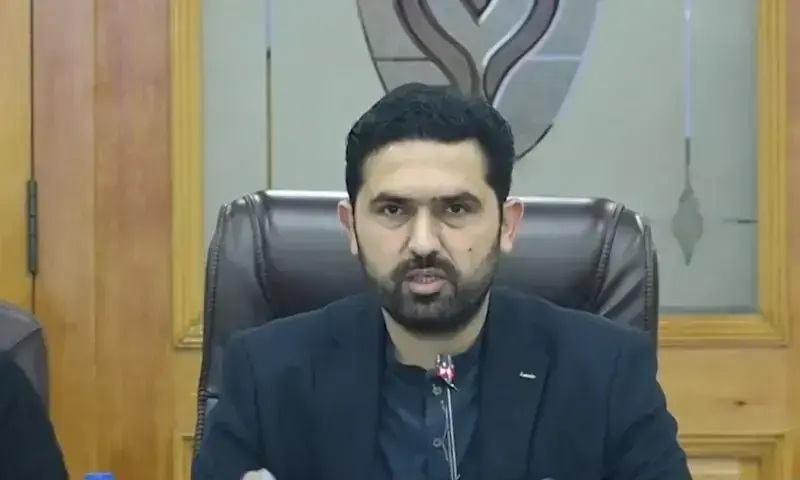
KP Launches Digital Education Drive to Transform Learning System
Sohail Afridi Announces Digital Revolution Plan to Modernise KP Education Sector

Peshawar: (Our Correspondent) – Khyber Pakhtunkhwa Chief Minister Sohail Afridi has announced a major digital transformation initiative for the province’s education sector, aimed at providing modern learning opportunities to students across urban and remote areas.
Chairing a meeting on digital education reforms, the chief minister said the government’s goal was to create a technology-driven education system and bring millions of out-of-school children into the mainstream through digital platforms.
Officials briefed the meeting that under the “Read Khyber Pakhtunkhwa” project, the provincial curriculum would be fully digitised, allowing students to access textbooks through mobile devices. The system would also enable learners to continue studies without internet connectivity.
Sohail Afridi said the initiative could help increase the province’s literacy rate by 30 to 35 percent within the next two years by improving access to quality education.
According to officials, a one-time investment of Rs5 billion in digital education reforms is expected to generate annual savings of more than Rs100 billion while improving the overall learning system.
The chief minister said the investment was small compared to the education budget but had the potential to bring major improvements and deliver results beyond the traditional education model.
Officials informed the meeting that smartphones available in around 90 percent of households across the province would be used to expand educational access, particularly for students in underserved areas.
The briefing revealed that online classes have already started in more than 50 schools, while 500 schools are expected to be connected with the virtual learning system by the end of August.
The upcoming virtual education platform will feature modern science laboratories, multilingual courses, and virtual language labs for Chinese, Korean, French, Arabic, Spanish and English languages.
Officials said the virtual school system would operate in two shifts to accommodate students across different time zones, including Asian and European regions.
The digital platform will provide lessons in Urdu, English and Pashto while combining teaching, examinations, assignments, attendance monitoring and academic assessments under one system.
The meeting was also informed that artificial intelligence tools would assist teachers by offering personalised learning support based on students’ abilities, performance and educational needs.
Students will receive access to live classes, recorded lectures, assignments, examinations and instant academic assistance through a single digital learning platform.
Chief Minister Sohail Afridi said the reforms would reduce geographical and social barriers, especially for girls’ education, by enabling more students across Khyber Pakhtunkhwa to access quality learning opportunities.
Comments are closed, but trackbacks and pingbacks are open.