

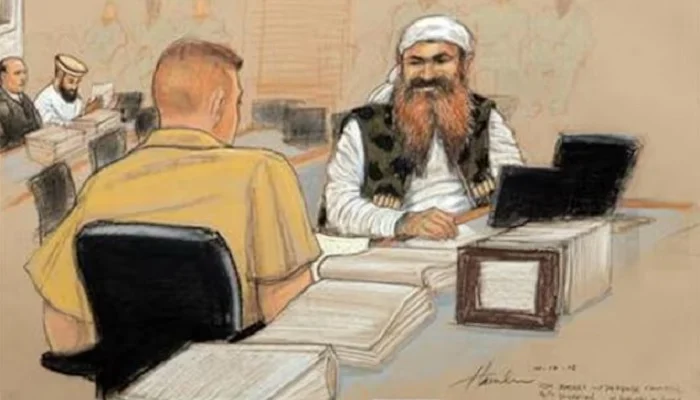
Judge Rejects Khalid Sheikh Mohammed’s 2007 Confession in 9/11 Case
9/11 Suspect's FBI Statements Ruled Coerced and Inadmissible

Khalid Sheikh Mohammed – (Special Correspondent/Web Desk) – Khalid Sheikh Mohammed, the man long accused of planning the September 11 attacks, has scored a significant legal win. A US military judge has thrown out confessions he gave to FBI agents back in 2007, saying they cannot be used against him at trial.
The judge in charge of the case, Lieutenant Colonel Michael Schrama, said the statements were still shaped by years of harsh treatment Mohammed faced while in CIA custody. He described it as an unbroken chain of pressure that carried straight through into the FBI questioning.
Before reaching Guantanamo, Mohammed had spent years inside secret CIA prisons. He was captured in Pakistan back in 2003 and endured repeated waterboarding sessions during that time. He wasn’t moved to Guantanamo Bay until 2006.
Prosecutors had leaned heavily on those later FBI interviews, calling them some of the strongest evidence in the case. Losing access to that material is a real setback, and it could slow things down even further.
A trial date had already been set for June 5, 2028, for Mohammed and three men charged alongside him. That timeline may now shift if prosecutors decide to challenge this latest ruling.
Families who lost loved ones on 9/11 have been watching this case for close to two decades. Many say they’re growing tired of the endless delays and worry a final outcome may never actually arrive in their lifetime.
The scheduling plan itself runs eleven pages and lays out how the trial is supposed to unfold. It starts with picking a jury made up of military service members.

After the jury is seated, both sides get thirty days before opening statements begin. From there, prosecutors present their case first, followed by the defense, and the trial wraps up with a sentencing phase if needed.
Schrama also turned down an earlier request from prosecutors who wanted the trial to start in January 2027. He explained that timeline didn’t leave enough room to sort out pending legal disputes and compliance issues beforehand.
This case has been anything but simple from the start. Mohammed and his co-defendants — Walid bin ‘Atash, Mustafa al Hawsawi, and Ali Abdul Aziz Ali — are all accused of helping plan the coordinated attacks that killed almost 3,000 people.
Back in 2024, a plea deal briefly seemed like it might bring the case closer to resolution. Mohammed and two others had agreed to plead guilty in exchange for avoiding the death penalty.
That agreement didn’t last long. Then-Defense Secretary Lloyd Austin canceled it months later after facing pushback from Republican lawmakers who opposed the deal.
Last year, an appeals court stepped in and blocked the plea agreements entirely, overturning earlier decisions that had allowed them to move forward.
Guantanamo Bay itself was set up under President George W. Bush back in 2002, built specifically to hold suspects captured after the 9/11 attacks. More than two decades later, the case tied to that day still hasn’t reached a courtroom conclusion.
Comments are closed, but trackbacks and pingbacks are open.