
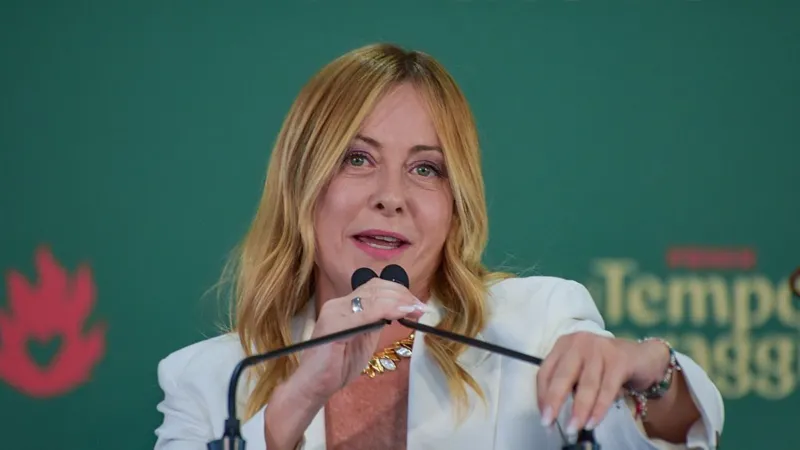
Italy Burqa Niqab Ban Schools, Caps Foreign Student Numbers
Meloni's cabinet also caps foreign student numbers in every classroom

Italy – (Special Correspondent/Web Desk) – Italy has taken a major step this week, with the Italy burqa niqab ban schools decree officially approved by Prime Minister Giorgia Meloni’s cabinet on Thursday. The new law also limits how many students with weak Italian skills can sit in one classroom.
Meloni shared the update herself on social media, saying the decree introduces a 30 percent cap on students who do not have a strong grip on the Italian language. She added that new tools for learning the language are also part of the plan.
Along with the language rule, the decree bans the burqa and niqab inside Italian schools. Meloni described the move as a matter of safety and dignity, not just tradition.
If a child struggles badly to settle into school life, social workers will step in to help. Parents of that child will also be required to attend free Italian language classes.
Families who skip these classes could face a fine of up to 1,000 euros, close to 1,140 US dollars. The government hopes this pushes parents to take part rather than ignore the support offered.
Migration remains a sensitive topic in Italy, and this decree lands just months before next year’s general election. Integration policies are already shaping political debate across the country.
Child welfare group Save the Children has raised concerns. The organization warned that moving children into separate schools based only on nationality or language skill could split students into first class and second class groups.
Education Minister Giuseppe Valditara defended the plan differently. He said poor Italian language skills slow down a child’s learning and that parents play a key role in their child’s school success.
Valditara also shared a number that stood out. He said around 34,000 school classes across Italy already have more than 30 percent foreign students.
Even so, most of those classes will not be affected right away. The new rule mainly targets newly arrived students, not children born in Italy or those who already attended kindergarten there.
This 30 percent limit is not brand new either. It first appeared in a 2010 ministerial memo, though it allowed flexibility depending on a student’s language ability.
Opposition leader Elly Schlein pushed back hard against the decree. She called it a fresh witch hunt aimed at children rather than a genuine solution.
Meloni defended the burqa and niqab ban as a security matter during a television interview after the cabinet meeting. She said forcing a woman or young girl to hide her face takes away her basic rights.
She also argued that true integration cannot happen when someone is hidden away. According to Meloni, real inclusion means being seen and heard, not covered up.
Pressure from the political right may have shaped the timing too. The National Future party had already called for tighter burqa rules back in July.
That party sits further right than Meloni’s own coalition and is not part of the current government. Still, it has climbed quickly in opinion polls since it launched in February.
As Italy heads toward another election year, school policy has become a new battleground. This decree shows how migration, language, and identity continue to shape the national conversation.
[…] (News Desk) – Schools across Riyadh have shifted to remote learning for a week after parents were informed of a last-minute decision to […]