
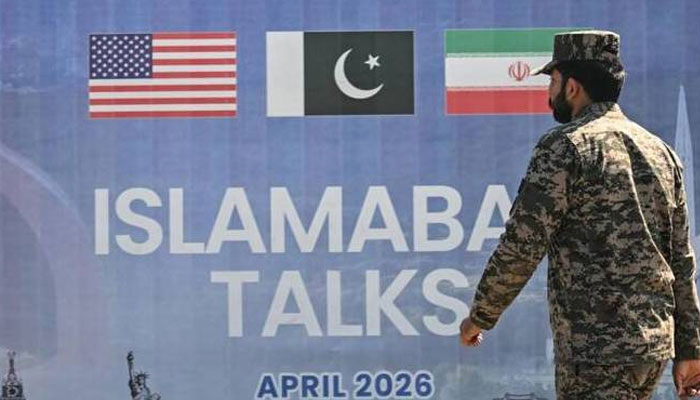

Islamabad once again appears to be emerging as the focal point of an intensely sensitive and complex phase of global diplomacy, as preparations accelerate for the second round of talks aimed at de-escalating the ongoing tensions between Iran and the United States. On the surface, this may appear to be a routine diplomatic engagement; however, beneath it lies a web of regional stability concerns, great-power interests, and highly sensitive issues such as nuclear capability. It is precisely for this reason that Pakistan has assumed not merely the role of a host, but that of an active mediator reflecting both its diplomatic maturity and its growing geopolitical relevance.
According to sources, the level of coordination among relevant state institutions indicates that Pakistan is not treating this opportunity as a mere procedural obligation. Rather, it is being approached as a critical diplomatic opening requiring exceptional attention to every detail. The synchronized functioning of foreign affairs, interior, and information institutions suggests a deliberate effort to ensure that the process remains not only secure but also productive. This also reinforces the impression that Pakistan cannot afford any lapse in handling such a delicate engagement, given its potential implications at both regional and global levels.
The Iran–U.S. dispute is rooted in deep and complex historical grievances, with Iran’s nuclear program remaining at its core. The United States has long maintained that Iran must completely abandon uranium enrichment, dismantle its facilities, and transfer existing stockpiles outside the country. Iran, in contrast, insists on its sovereign right to develop nuclear energy for peaceful purposes an entitlement it argues is recognized under international law. This fundamental divergence has pushed the issue into a domain where conventional diplomatic statements or partial compromises are no longer sufficient.
Notably, in the latest round of diplomatic engagement, both sides have not only maintained their traditional positions but have, in certain respects, further hardened them. The American strategy reportedly included a comprehensive agreement offering sanctions relief and full reintegration of Iran into the global economic system. While seemingly attractive, the attached conditions rendered it unacceptable for Tehran, which perceived the proposal as one-sided and tantamount to capitulation.
Iran’s apprehensions are not merely theoretical but grounded in past experiences. Incidents of attacks during previous negotiations have significantly eroded its trust. Consequently, Tehran now demands concrete and enforceable guarantees to prevent any future aggression. The United States, however, remains firmly focused on ensuring that Iran’s nuclear program is strictly limited or dismantled altogether, viewing it as a potential threat to regional and global security.

Within this complex matrix, Pakistan’s role assumes exceptional significance. As a country maintaining relations with both Iran and the United States while remaining outside direct conflict dynamics, it is uniquely positioned to facilitate trust-building between the two sides. Pakistani authorities have reportedly made substantial efforts to sustain dialogue and prevent any breakdown in negotiations. According to reports, the Iranian delegation continued extensive consultations with Pakistani mediators even after the departure of the American delegation, underscoring Islamabad’s credibility as a trusted facilitator.
It is also noteworthy that these talks represent one of the most significant high-level engagements between Iran and the United States since the Iranian Revolution of 1979. Over the decades, relations between the two countries have fluctuated dramatically, yet opportunities for direct and meaningful dialogue have remained rare. In this context, the Islamabad meetings are not merely diplomatic proceedings but a potentially historic moment that could redefine regional geopolitics if successful.
Nevertheless, it would be premature to suggest that a major breakthrough is imminent. The obstacles facing the negotiations are deeply entrenched, and an immediate resolution appears unlikely. Iran’s refusal to accept American “red lines” and Washington’s insistence on its core demands continue to reflect a fundamental trust deficit. Yet, the very fact that both parties remain engaged in dialogue is, in itself, a constructive development.
For Pakistan, this moment carries both diplomatic significance and reputational opportunity. A successful facilitation of this process would mark a major achievement in its foreign policy trajectory. Even in the absence of a concrete agreement, Pakistan’s role as a responsible and credible mediator would remain intact an asset of considerable diplomatic value.
Ultimately, the resolution of the Iran–U.S. conflict cannot be achieved through one or two meetings alone. It is a prolonged, arduous, and intricate process requiring trust-building, flexibility, and realism. While the ongoing efforts in Islamabad may not immediately yield a final agreement, they have certainly rekindled the possibility that the door to diplomacy remains open. That hope, perhaps, is the most valuable outcome of all one that may eventually lay the foundation for a more comprehensive and lasting accord.
Comments are closed, but trackbacks and pingbacks are open.