

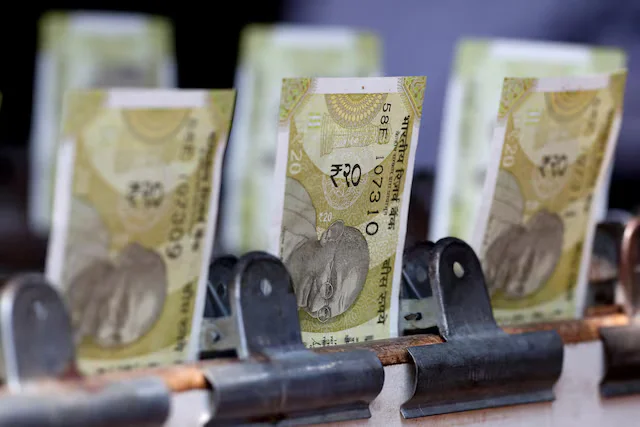
Iran War Impact on Indian Economy Sends Rupee to Record Low
How the Iran War Impact on Indian Economy Is Crushing the Rupee and Fueling Inflation

Indian Rupee – (Web Desk) – The Iran war impact on Indian economy is hitting hard, as the Indian rupee crashed to a historic low of 95.33 against the US dollar Thursday, dragged down by soaring crude oil prices, massive foreign fund outflows, and growing fears of stagflation threatening Asia’s third-largest economy.
Why Is the Rupee Falling So Sharply?
The rupee has now lost nearly 6% of its value in 2026 alone, piling on top of a similar decline last year. The currency briefly touched 95.33 per dollar before recovering slightly to 95.1875, but the damage to market confidence was already done.
The single biggest trigger is crude oil. Brent crude surged to $126 per barrel, the highest level in four years, squeezing India badly since the country imports most of its energy needs. Every time oil prices climb, India pays more in dollars, putting direct pressure on the rupee.
Other Asian currencies are feeling the pain too. The Indonesian rupiah weakened alongside the rupee, showing that oil-dependent economies across the region are all fighting the same battle right now.
What Is the Reserve Bank of India Doing About It?
The Reserve Bank of India already stepped in last month with rare currency-support measures, which briefly gave the rupee some breathing room. But those gains have been completely wiped out now, and markets are asking whether the central bank will be forced to act again.
According to Vivek Rajpal, Asia macro strategist at JB Drax Honore, the RBI has several tools available if things get worse. These include limiting dollar demand from oil companies in the spot market, tightening gold imports, and raising interest rates to make the rupee more attractive to foreign investors.
He added that India’s history clearly shows higher oil prices eventually feed into inflation, and that almost always forces the RBI to tighten monetary policy in response.

Are Foreign Investors Pulling Money Out of India?
Yes, and at an alarming pace. Foreign investors have sold more than $20 billion worth of Indian stocks and bonds just between March and April 2026. To put that in perspective, the total outflow for the entire year of 2025 was $11.8 billion. So in just two months, outflows have nearly doubled what was seen in all of last year.
This is a deeply worrying signal. When the rupee keeps falling, overseas investors earn less on their Indian investments once they convert returns back into dollars. That gives them even more reason to pull out, which weakens the rupee further, creating a damaging cycle that feeds itself.
Where Is the Rupee Headed Next?
Analysts at Barclays have warned that breaking through the psychologically important 95.0 level opens the door to further weakness. Their year-end forecast for 2026 is 96.80 per dollar, but they now say that level could be reached sooner than expected given current pressure.
The US Federal Reserve added fuel to the fire on the same day, signaling a more hawkish stance on interest rates. A stronger US dollar makes things even harder for currencies like the rupee that are already under stress.
The Iran conflict has triggered what the International Energy Agency has called the worst energy supply crisis in history. Energy disruptions of this scale do two damaging things at once: they slow economic growth while pushing inflation higher. That combination, known as stagflation, is every policymaker’s nightmare.
For India, a country that runs a large energy import bill, this could not come at a worse time. Trade tensions with the United States, weak capital flows, and now an energy shock have all arrived together, putting the economy under extraordinary strain from multiple directions simultaneously.
President Trump is reportedly holding talks to manage the impact of a possible months-long blockade of Iranian ports, but global markets remain deeply unsettled, and the uncertainty alone is keeping investors on edge.
Comments are closed, but trackbacks and pingbacks are open.