

History Will Remember PM’s Role in Saving Economy, Tarar Tells Parliament
Information Minister Attaullah Tarar Highlights Economic Recovery, Budget Relief Measures in National Assembly

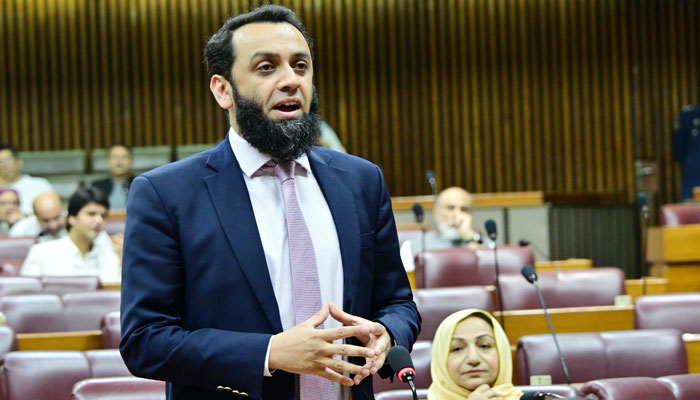
Islamabad: (Web Desk) – Federal Minister for Information and Broadcasting Attaullah Tarar on Saturday defended the federal budget and highlighted the government’s economic achievements during his speech in the National Assembly, stating that Pakistan has moved from economic uncertainty to stability under the leadership of Prime Minister Shehbaz Sharif.
Addressing the budget session, Tarar said that while criticism and protest over the budget were the opposition’s democratic right, the positive measures introduced in the budget also deserved recognition. He emphasized that the government had provided meaningful relief to salaried individuals and lower-income groups, noting that those earning up to Rs50,000 per month would continue to pay no income tax, while individuals earning between Rs50,000 and Rs100,000 would face only a one percent tax rate.
The minister recalled the difficult economic circumstances inherited by the government, saying there was a time when discussions about Pakistan’s possible default dominated national discourse. He said many believed the country would be unable to overcome its financial crisis, but Prime Minister Shehbaz Sharif took difficult decisions in the national interest, prioritizing the survival of the state over political considerations.
“History will remember the moment when Prime Minister Shehbaz Sharif declared that saving the state was more important than politics,” Tarar said, adding that the Pakistan Muslim League-Nawaz (PML-N) assumed office during one of the most challenging economic periods in the country’s history.
The minister reiterated that the prime minister had repeatedly called for a Charter of Economy, expressing regret that the proposal had not received broader political support. He stressed that economic stability was the result of collective efforts by various institutions and stakeholders but credited the prime minister and his economic team for steering the country toward recovery.
Highlighting key economic indicators, Tarar stated that inflation, which had reached 38 percent in previous years, had now been brought down to single digits. He also noted that the State Bank’s policy rate had been reduced from 22 percent to 11 percent, providing relief to businesses and investors.
The minister said remittances from overseas Pakistanis had reached record levels, totaling $33.9 billion, with a year-on-year increase of nine percent. Foreign exchange reserves, he added, currently stood at $17.2 billion, reflecting improved confidence in the economy.
He further pointed to growth in Pakistan’s technology sector, stating that IT exports had reached $3.8 billion, while freelance professionals contributed nearly $995 million to the national economy. According to Tarar, the country’s fiscal deficit had declined significantly, falling from eight percent of GDP in 2022 to just 0.7 percent.
Discussing governance reforms, the information minister said the government had taken concrete steps to eliminate favoritism and strengthen accountability. He claimed that any attempt to influence appointments or decisions within customs and tax departments now faced immediate disciplinary action.

Tarar highlighted reforms within the Federal Board of Revenue (FBR), including the introduction of a faceless tax assessment system designed to minimize direct interaction between taxpayers and tax officials. He said the initiative had increased transparency and reduced opportunities for corruption.
According to the minister, billions of rupees had been recovered through tax enforcement measures. He noted that special tribunals had been established on merit and that qualified legal professionals had been appointed to pursue tax-related cases more effectively. He added that approximately Rs60 billion had been recovered from the sugar industry alone, while overall enforcement measures generated around Rs800 billion in additional revenue during the previous fiscal year.
The minister also emphasized efforts to expand the tax net, stating that nearly 3.6 million retailers had remained outside the formal taxation system. Recent reforms, he said, were designed to ensure that tax-compliant citizens no longer carried the burden created by non-filers.
Tarar praised international support for Pakistan’s modernization efforts, noting that the Gates Foundation had provided funding for the digitalization of the FBR. He also highlighted the prime minister’s efforts to attract foreign investment, including engagements with Chinese companies during official visits. He claimed that discussions with Alibaba had resulted in commitments for investment opportunities in Pakistan.
Atta Tarar Urges Financial Support for Media Workers and Industry
Turning to budget measures, the minister said the housing and development sectors had been provided relief to stimulate economic activity. He described the “Apna Ghar Scheme” as a significant initiative aimed at supporting middle-class and underprivileged families in securing affordable housing.
He further stated that the government’s export-led growth strategy would strengthen the economy and improve competitiveness. Responding to longstanding demands from exporters, the government had reduced advance tax burdens and abolished the super tax for exporters, he said.
Additional relief measures included reducing sales tax on shipping services from 18 percent to zero and abolishing what he termed the “pink tax” by reducing taxes on women’s hygiene products from 18 percent to zero.
Concluding his address, Tarar described the upcoming fiscal budget as a “budget for every segment of society” and expressed confidence that Pakistan was entering a period of economic prosperity. He said the government had worked tirelessly to create fiscal space for public relief and economic growth.
The minister ended his speech by reciting verses from renowned poet Parveen Shakir, expressing pride in Pakistan and optimism about the country’s future. “Pakistan is moving forward on the path of development, and the world is increasingly recognizing its progress and potential,” he said.
[…] (Finance Reporter) – The Prime Minister’s Special Relief Scheme has been implemented across Pakistan, offering petrol to eligible beneficiaries at a subsidized […]