

From Policy to Practice: Insights from China on Disability Inclusion
Inclusion and Disability in Pakistan: How China's State-Led Approach Offers a Roadmap for Meaningful Reform

By Abdul Wahid
Public policy is often judged not by its intent but by its execution. This is particularly true in the case of Persons with Disabilities (PWDs), a segment of society that continues to face structural barriers despite formal legal protections. Pakistan has, over the years, introduced a range of legislative measures to safeguard the rights of PWDs. Yet, the distance between law and lived reality remains considerable.
I had the opportunity to study the policies, institutional framework and practical measures adopted by the Chinese government for persons with disabilities (PWDs) and it was encouraging to observe the level of respect, inclusion and state support extended to this segment of society. A key pillar of this system is the China Disabled Persons’ Federation (CDPF), established in March 1988 as a unified national body to safeguard the rights of persons with diverse disabilities. Its core mission is to promote the full and equal participation of persons with disabilities in all aspects of life, ensure their share in the material and cultural progress of society and foster a broader spirit of humanitarianism. The foundations of this system were laid after the establishment of the People’s Republic of China, when early efforts focused on developing welfare institutions such as charity homes, rehabilitation centres and mental health facilities. Education for children with visual and hearing impairments expanded significantly by 1965, the number of schools for blind and deaf children had risen to 266, compared to just 41 in the 1950s. Notably, scholars such as Huang Naican played a key role in developing and standardizing the Chinese Braille system, which was later implemented nationwide.
China has made remarkable progress in improving the lives and living standards of persons with disabilities through a well-structured, state-led approach. With an estimated 85–90 million persons with disabilities, the country has ensured wide access to education, healthcare, employment and social protection. Today, over 95% of persons with disabilities are covered by medical insurance, education enrollment is nearly universal at the primary level and millions benefit from employment programs, vocational training and financial support.

Pakistan’s framework for persons with disabilities (PWDs) reflects strong legislative intent but weak implementation. According to official figures, about 3.1% of the population is classified as having a disability, although estimates suggest that nearly 27 million people in Pakistan may be living with physical or intellectual disabilities. Despite the introduction of a 2% employment quota under the Disabled Persons Ordinance 1981, employment opportunities for PWDs remain limited due to social stigma and poor enforcement of laws.
According to Human Rights Watch, disability data in Pakistan is inconsistent, therefore the Government introduced the ICT Rights of Persons with Disabilities Act 2020, which promotes equal access to education, employment, legal protection, accessibility and safeguards against discrimination and abuse. However, the main challenge remains effective implementation. The Supreme Court has also directed those respectful terms such as “Persons with Disabilities” be used in place of outdated and derogatory language in all official communication.
Ministry of Human Rights, the National Council for Rehabilitation of Disabled Persons, provincial social welfare departments and a range of NGOs, who are working towards the betterment of PWDs in Pakistan. The Disabled Persons Organizations (DPOs) and The Network of Organizations Working for People with Disabilities in Pakistan (NOWPDP) in recent years has strengthened advocacy and contribution to the main goal of enabling PWDs to live independent, financially secure and empowered lives.
One notable organization Connect Here is playing a transformative role in promoting inclusion and improving the lives of persons with disabilities in Pakistan. Through innovative initiatives, Connect Here has been actively working to bridge the gap between PWDs and mainstream employment by facilitating job placements and building linkages with leading institutions, particularly in the banking and corporate sectors. Their efforts go beyond advocacy, focusing on practical solutions such as skill development, accessibility services and employer engagement. A notable example is the recent PWDs Career Fair held at Serena Hotel Islamabad, which brought together employers and talented individuals with disabilities on a single platform. Such initiatives not only create employment opportunities but also challenge societal perceptions and demonstrate that inclusion is both achievable and beneficial for economic growth.
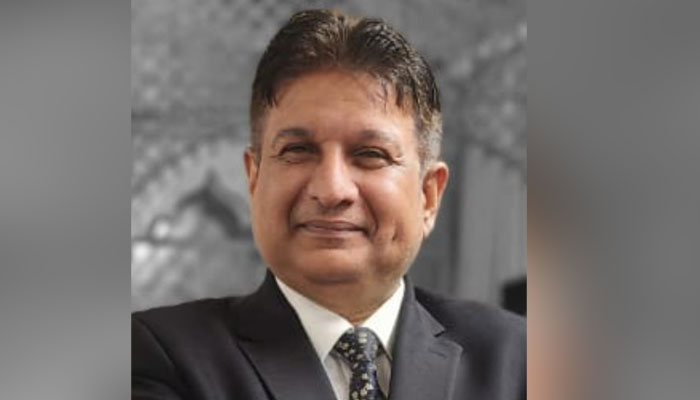
The writer is Divisional Head Administration in Pak China Investment Company Limited.
Comments are closed, but trackbacks and pingbacks are open.