
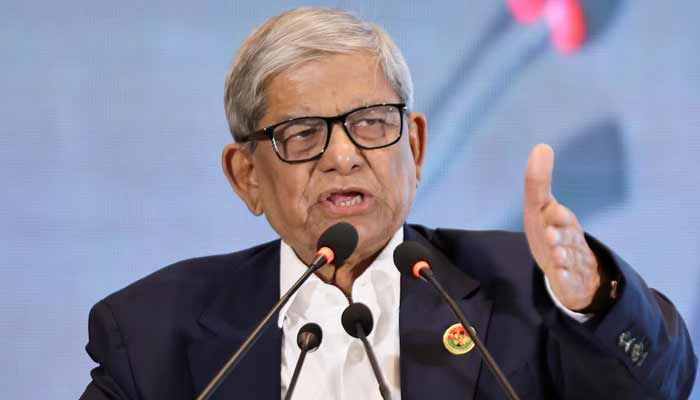
Fakhrul Alamgir Wins Election as Bangladesh’s New President Today
BNP leader takes charge as head of state after decisive parliamentary vote

Bangladesh – (Special Correspondent/Web Desk) – Bangladesh has a new head of state. Veteran BNP leader Mirza Fakhrul Alamgir was elected president on Thursday, marking a historic moment for the party and for the country’s ongoing political shift.
Lawmakers cast their votes in parliament, and the result was clear. Alamgir secured a strong majority, defeating his rival by a wide margin.
This win comes just months after BNP returned to power in February. That victory followed the dramatic collapse of Sheikh Hasina’s Awami League government back in 2024.
Although the presidency in Bangladesh is mostly a ceremonial post, it still carries weight. Alamgir will now serve as commander-in-chief of the armed forces and represent the nation as its formal head of state.
Real governing power, however, stays with the prime minister and the cabinet. That responsibility currently rests with Tarique Rahman, who took charge as prime minister after BNP’s election win.
A Decisive Vote in Parliament
The election pitted Alamgir against Oli Ahmed, a retired army colonel. Ahmed led the Liberal Democratic Party and ran as the candidate for an eleven-party opposition alliance backed by Jamaat-e-Islami.
When the votes were counted, the gap was significant. Alamgir received 255 votes, while Ahmed managed only 88.
Chief Election Commissioner AMM Nasir Uddin officially announced the result, confirming Alamgir as Bangladesh’s next president.
BNP and its coalition partners currently hold a two-thirds majority in parliament. That dominant position followed their sweeping win in the February 12 general election, a vote that returned the party to power after a long stretch in opposition.
Why This Election Happened Now
The presidential vote wasn’t originally scheduled for this moment. It was triggered by the sudden resignation of Mohammed Shahabuddin last month, who stepped down citing health concerns before completing his five-year term.
Shahabuddin had close ties to the previous Awami League government. He was elected president back in 2023, during a period when Hasina’s party held firm control over the country.
Since then, much has changed. Hasina fled Bangladesh in August 2024 after mass protests forced her government out of power. She has been living in India ever since.
Reports suggest Hasina intends to return to Bangladesh sometime in December this year, though nothing has been finalized publicly.
Who Is Mirza Fakhrul Alamgir?
At 78 years old, Alamgir is one of BNP’s most recognized and long-serving figures. He served as the party’s secretary-general from 2016 all the way until his nomination for president.
During Hasina’s years in power, Alamgir became a familiar face of resistance. He spoke out often against the ruling government and paid a price for it, facing repeated arrests and multiple legal cases over the years.
His journey into politics started far from the national stage. Alamgir studied economics at the University of Dhaka and began his career as a teacher.
He joined BNP in the early 1990s and slowly built his way up through the party’s ranks. Over time, he became one of its most trusted and well-known leaders nationwide.
Alamgir has also held several ministerial positions throughout his career. Most recently, he served as the local government minister before stepping down to accept his presidential nomination.
What Comes Next
The transition is moving quickly. Alamgir is expected to be sworn in as Bangladesh’s new president on Friday evening.
His swearing-in will mark another key chapter in Bangladesh’s political transformation, following months of major changes across the country’s leadership.
For BNP, this presidential win adds to a string of political gains this year. Combined with their parliamentary majority and control of the prime minister’s office, the party now holds a firm grip on the nation’s top positions.
As Bangladesh moves forward, all eyes will be on how this new leadership, both in parliament and now in the presidency, shapes the country’s direction in the months ahead.
Comments are closed, but trackbacks and pingbacks are open.