
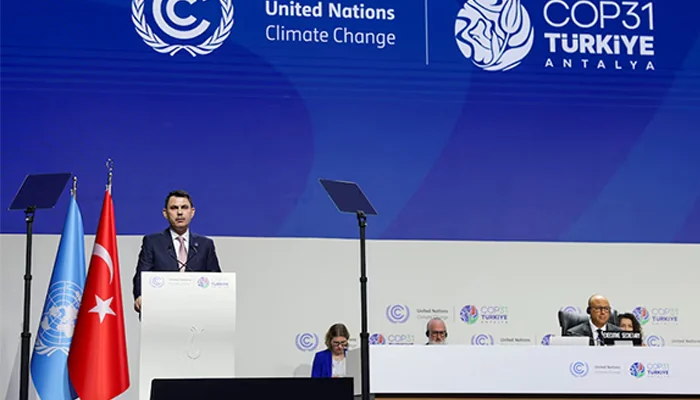
COP31 Climate Talks Collapse as EU Rejects Weak Final Deal
Leaders failed to agree after two extra days in Antalya, as fossil fuels and climate money split nations.

European Union – (Specail Correspondent/Web Desk) – COP31 climate talks collapse ended in disappointment on Sunday, after the European Union and several other countries refused a final draft deal. They said the text was too weak to fight global warming.
The draft came from the conference presidents, Turkey and Australia. It followed more than two weeks of talks, plus two extra days. This made it the longest COP on record.
Turkey’s conference president, Murat Kurum, said no agreement was possible. He told delegates that his team had done all it could and that no new text would follow. He later left the stage while country speeches were still going on.
Australia’s Chris Bowen called the result very disappointing. He said fuels and climate finance were the main problems.
This is the first time since Copenhagen in 2009 that UN climate talks ended without a deal accepted by all.
The EU objected to the draft because it did not mention fossil fuels at all. Ireland’s environment minister, Darragh O’Brien, said it was wrong to have a climate deal with no word on moving away from them. Observers said Saudi Arabia and other big oil producers had pushed hard to keep that language out.
Panama also rejected the text. It said the draft did not match the size and urgency of the climate crisis.
The draft did admit that global temperatures will likely pass the 1.5 degree limit. It also urged faster use of carbon removal technology. Critics feared this could give oil producers an excuse to keep drilling. Saudi Arabia backed that part and said it offered a real solution.
Developing countries were unhappy too. The text called for tripling climate finance but did not say what the starting point would be. A Turkish goal to raise electricity’s share of world energy use to 35 percent by 2035 also drew mixed views. Supporters said it would cut emissions, while critics said it could burden poor nations.
Belgium’s climate minister, Jean-Luc Crucke, said the outcome was hard but fair. He said this was not the end of multilateralism, but that it takes courage to say no.
The failure does not cancel earlier UN climate promises. Existing rules and legal frameworks still stand.
Comments are closed, but trackbacks and pingbacks are open.