

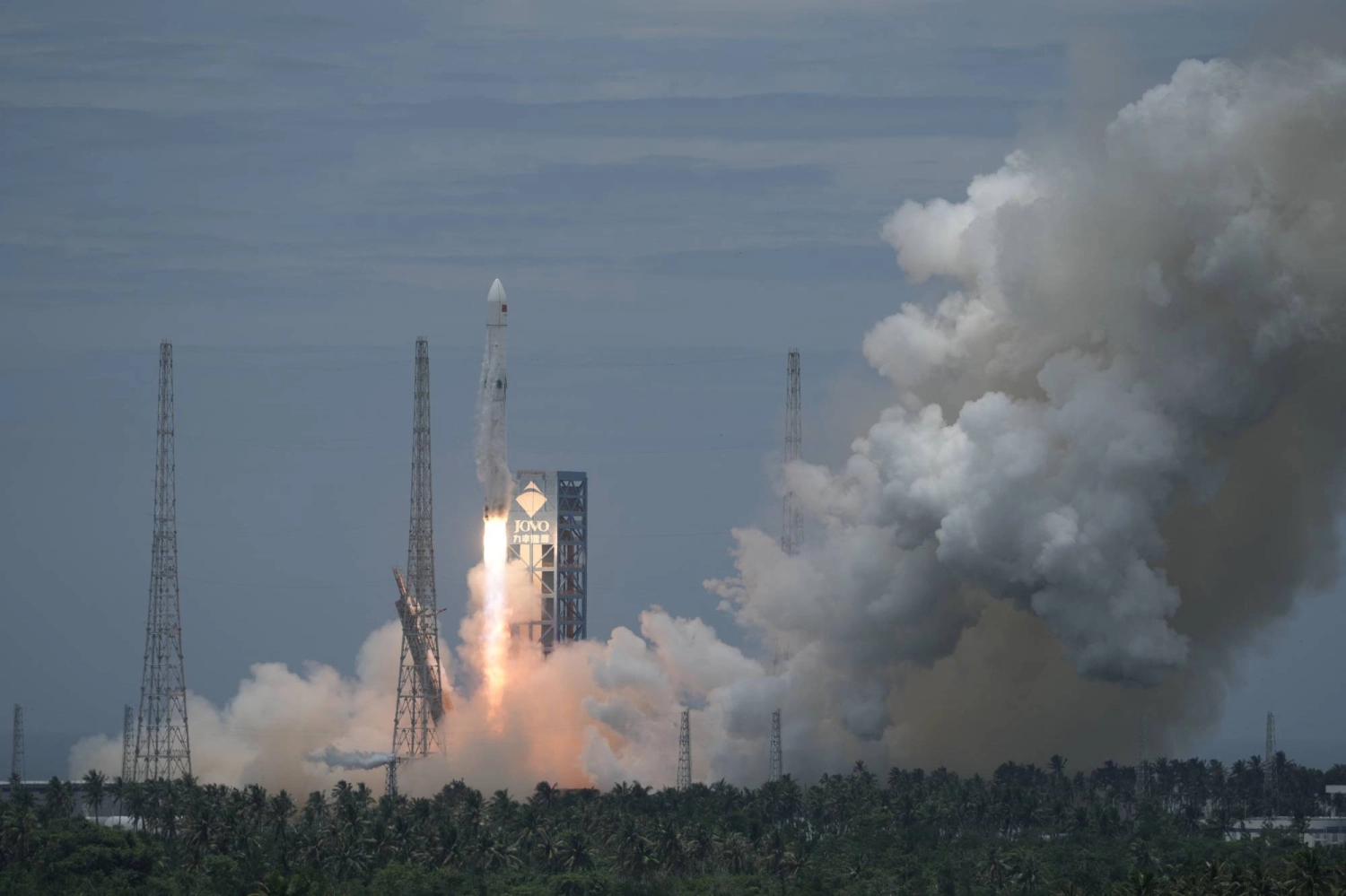
China Tests Sea-Based Rocket Booster Recovery System
Long March 10B Rocket Recovery Marks Big Step for Reusable Space Travel

CHINA – (Special Correspondent/Web Desk) – China has pulled off a major win in space technology. On Friday, the country carried out its first successful Long March 10B rocket recovery, using a sea-based rocket booster system that caught the falling rocket stage in a giant net. State media called it a big step toward China’s dream of building reusable rockets, something the United States has led for years.
The rocket blasted off from the Hainan commercial space site around noon. About six minutes after its two main parts split apart, the booster dropped back down and landed the right way up. Workers then caught it on a floating platform out at sea. The whole event was shown live on state TV.
This marks the first time China has managed to catch and bring back an orbital rocket booster in one piece. It’s a huge deal for the country’s space program, which has spent almost ten years working toward this goal.
Before this test, the rocket also did its main job well. It carried a satellite into space and dropped it off exactly where planned.
News of the successful catch sent Chinese space company stocks soaring. Shares of China Spacesat and China Satellite Communications both jumped to their daily limit right after the announcement.
People have compared the Long March 10B to SpaceX’s Falcon 9, since both rockets are built for regular business use and can carry heavy loads. But there’s one big difference. Falcon 9 lands on its own legs on solid ground or a floating ship. The Long March 10B does something different. It uses four hooks that grab onto a net spread across the sea platform.

A rocket expert from the China Academy of Launch Vehicle Technology explained why this method makes sense. Catching the booster with a net means engineers don’t need to build heavy landing gear into the rocket. That saves weight and lets the rocket carry more cargo. It also gives more room for error, since the net can adjust and still catch the booster even if it lands slightly off target.
SpaceX was the first company to pull off a rocket landing after reaching orbit, doing so back in December 2015. Blue Origin followed with its own success using the New Glenn rocket in late 2025. These days, SpaceX launches its Falcon 9 rocket around three times every week, reusing the same boosters again and again.
China’s space industry has been working its way up to this moment for years, starting with basic hover tests and moving toward full orbital attempts. Once reusable rockets become common, launch costs should drop, which would help China grow its satellite networks much faster.
It’s not just state-run companies chasing this goal either. Private Chinese rocket firms are racing to build their own reusable systems too, and the government has made it easier for these companies to raise money by loosening stock market rules.
Not every attempt has gone smoothly. Last year, two separate try-outs by other Chinese companies failed during the final landing stage.
Looking ahead, the Long March 10B is also part of a bigger plan. It belongs to a family of rockets being built to eventually send Chinese astronauts to the moon before 2030. Engineers say data from this flight will help shape that lunar mission too.
China now plans to reuse this same rocket booster for another launch before the year ends, according to state broadcaster CCTV.
Comments are closed, but trackbacks and pingbacks are open.