

FDA Warns of Vision Loss Risk Linked to Weight-Loss Drugs
Popular Diabetes and Weight-Loss Drugs Linked to Potential Vision Complications

ISLAMABAD: (News Desk) – The US Food and Drug Administration (FDA) has warned patients and healthcare professionals about a potential increased risk of a serious eye condition associated with certain medicines used to treat diabetes and obesity, including popular weight-loss drugs.
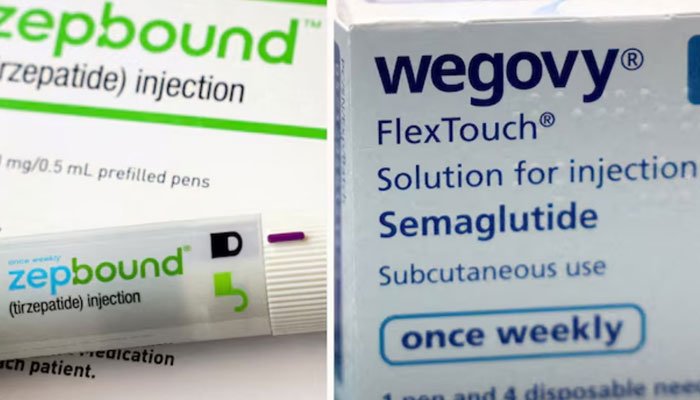
On Monday, the regulator announced that medicines containing glucagon-like peptide-1 receptor agonists (GLP-1 RAs), including Eli Lilly’s Mounjaro and Zepbound and Novo Nordisk’s Ozempic and Wegovy, will be required to include additional information about the potential risk in the “Warnings and Precautions” section of their product labels.
The condition, known as non-arteritic anterior ischemic optic neuropathy (NAION), is a leading cause of sudden, painless vision loss. In some cases, it can result in permanent damage to eyesight. The condition develops when blood flow to the front portion of the optic nerve is reduced, although its exact underlying causes are not fully understood.
A spokesperson for Eli Lilly said the FDA’s safety communication applied to all medicines with GLP-1 receptor agonist activity and did not refer to findings specific to the company’s products.
The spokesperson added that the company was carefully reviewing the regulatory update and would respond to the FDA promptly.
Meanwhile, Novo Nordisk maintained that available evidence had not established a direct causal relationship between its GLP-1 medicines and the eye condition. The company also expressed confidence in the overall benefit-risk profile of its medications.
The FDA said its assessment included evidence from clinical trials, animal studies and post-marketing surveillance, including observational research and reported cases.
Citi analyst Geoff Meacham said the FDA announcement could temporarily raise concerns among patients and investors. However, he noted that the condition was rare and that the medicines offered substantial benefits in weight management, blood sugar control, cardiovascular and kidney health, as well as sleep apnoea.
Last year, the European Medicines Agency’s safety committee identified NAION as a possible side effect of semaglutide, the active ingredient in Ozempic and Wegovy, as well as Novo Nordisk’s diabetes medicine Rybelsus.
The European regulator estimated that the condition could affect up to one in every 10,000 people using semaglutide for at least a year. The assessment marked the first time a regulatory authority had formally recognised the potential association.
In a separate development, four patients in Denmark who experienced vision loss after using Novo Nordisk’s GLP-1 medicines were awarded compensation, according to the Danish Patient Compensation authority last year.
Further concerns emerged from a large-scale study published in 2025, which followed nearly 175,000 diabetic patients treated with semaglutide and an equal number receiving medications from other drug classes.
The research found that patients taking GLP-1 medication had more than twice the risk of developing NAION after two years of treatment compared with those using other diabetes medicines.
Comments are closed, but trackbacks and pingbacks are open.