
Bridges of Diplomacy and Pakistan’s Strategic Equilibrium
How Pakistan's Strategic Equilibrium Shapes Its Role in a Changing World

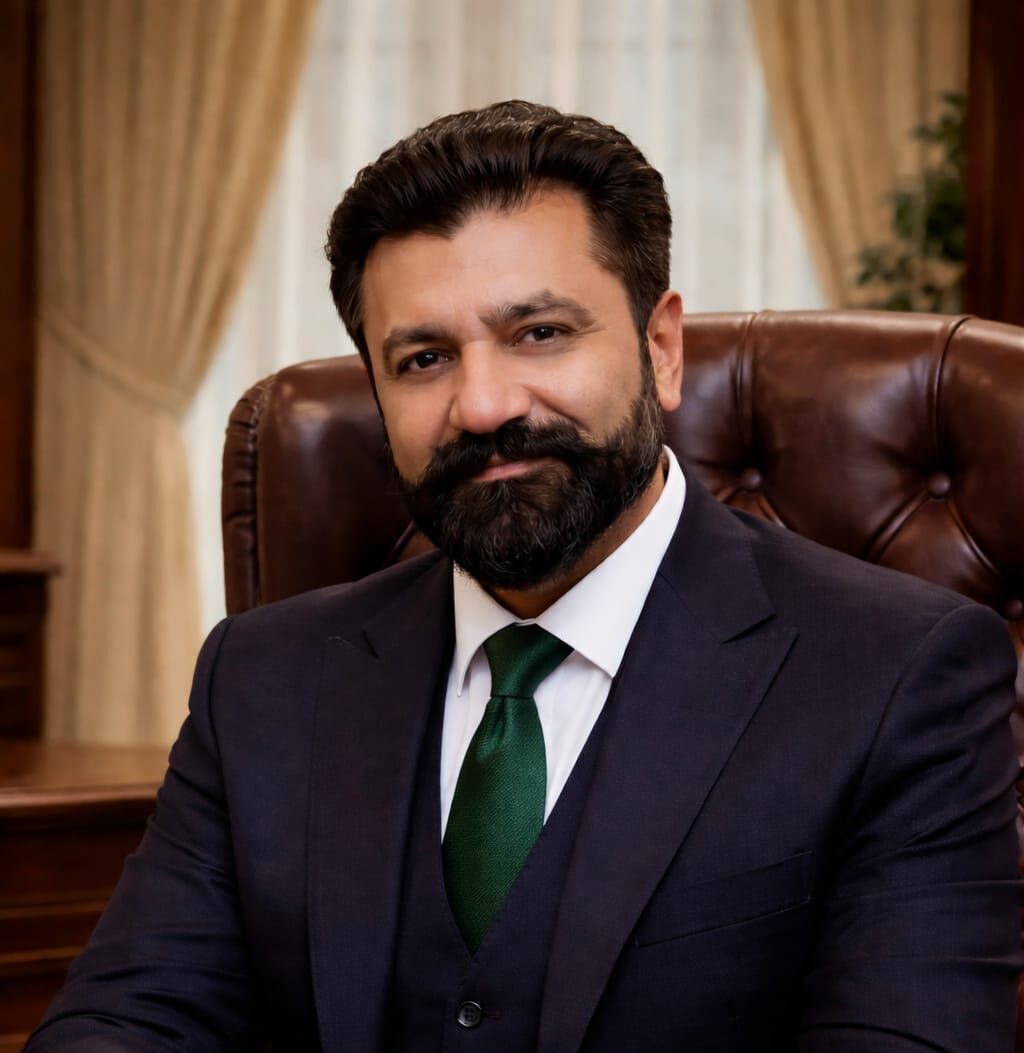
By Muhammad Mohsin Khan (Rajput)
Within the intricate architecture of international affairs, many bilateral relationships emerge as transient arrangements, contingent upon fluctuating interests and shifting alliances. Yet rarer associations exist whose durability derives from the cumulative force of trust, mutual esteem, and convergent strategic interests.
The relationship between Pakistan and China constitutes one such enduring partnership. Having traversed three-quarters of a century, this diplomatic bond has evolved beyond conventional state-to-state engagement. It now stands as a significant pillar of regional stability, strategic cooperation, and political confidence within an increasingly complex Asian order.
A recent intellectual and diplomatic gathering in Lahore served as a compelling reminder that the vitality of international relationships cannot be measured solely through treaties or governmental negotiations. Equally consequential are the informal channels through which nations cultivate understanding, foster goodwill, and nurture long-term confidence.
Public diplomacy, intellectual exchange, and sustained interpersonal engagement frequently provide the invisible foundations upon which durable interstate partnerships are constructed.
The participation of newly appointed Chinese Consul General Sun Yan in such a forum exemplified this principle. The occasion brought together distinguished scholars, journalists, public officials, political figures, and representatives from diverse professional spheres.
This setting allowed reflections on the historical trajectory and future prospects of Sino-Pakistani relations to be explored with both candour and intellectual depth. The significance of the gathering lay not merely in commemorating past achievements, but in its forward-looking examination of emerging opportunities and challenges shaping the next phase of cooperation.
Particular attention was devoted to China’s consistent support for Pakistan’s sovereignty, territorial integrity, and ongoing counterterrorism efforts. At a time when the international environment is increasingly characterised by security uncertainties and evolving transnational threats, defence cooperation between Islamabad and Beijing assumes heightened importance.
Shared concerns regarding regional stability, counterterrorism, and strategic resilience have fostered a partnership whose relevance continues to expand in line with the changing realities of contemporary geopolitics.
The China–Pakistan Economic Corridor (CPEC) remains perhaps the most visible manifestation of this strategic convergence. Far more than an aggregation of infrastructure projects, transportation networks, and energy initiatives, CPEC represents a broader developmental vision.
Its aim is to enhance connectivity, stimulate economic growth, and promote collective prosperity. Substantial progress achieved across various regions of Pakistan, including Punjab, demonstrates that Sino-Pakistani cooperation produces tangible outcomes with far-reaching implications for economic transformation and regional integration.
The efficacy of Pakistan’s foreign policy cannot rest exclusively upon the strength of a single partnership, regardless of its historical significance. Contemporary diplomacy requires states to maintain constructive and balanced relationships with multiple centres of global influence.
Consequently, Pakistan’s engagement with the United States remains an important component of its broader strategic calculus. In an era increasingly defined by major power competition, prudence dictates that Pakistan pursue a foreign policy guided by national interest rather than ideological alignment or bloc politics.
Recent diplomatic interactions suggest a growing emphasis on public diplomacy within American engagement with Pakistan. Academic exchanges, cultural interactions, media outreach, and direct societal communication possess the capacity to mitigate misunderstandings that often arise amidst political tensions and competing narratives.
Such initiatives have become indispensable instruments of modern statecraft. They reflect the recognition that sustainable international relationships require not only governmental cooperation but also meaningful engagement between societies.
Pakistan’s geographical position, economic aspirations, and regional responsibilities collectively necessitate an approach that remains simultaneously attentive to both Eastern and Western centres of power. China continues to be a trusted strategic partner and a vital contributor to Pakistan’s developmental ambitions.
The United States, meanwhile, retains immense influence within the global economic, technological, and institutional landscape. Pakistan’s most judicious course lies not in perceiving these relationships as mutually exclusive, but in approaching them through a complementary framework that advances its long-term national objectives.
History repeatedly demonstrates that armed confrontation rarely resolves the underlying causes of conflict. More often, it deepens existing complexities and generates new sources of instability. Diplomacy, by contrast, provides the mechanisms through which disagreements may be transformed into dialogue and competing interests reconciled through negotiation.
Whether the issue concerns regional security, economic cooperation, or broader geopolitical disputes, durable solutions invariably emerge through engagement, communication, and the patient cultivation of trust.
Pakistan faces the imperative of further refining a foreign policy that is proactive, balanced, and strategically farsighted. While preserving the profound foundations of its friendship with China, it must simultaneously pursue constructive engagement with the United States and other influential international actors.
In an age defined by accelerating geopolitical change, nations achieve lasting success not through isolation or confrontation, but through wisdom, adaptability, and cooperation. Diplomacy, in its highest sense, embodies precisely these virtues — and it is through diplomacy that Pakistan will most effectively navigate the opportunities and challenges of the future.
Comments are closed, but trackbacks and pingbacks are open.