

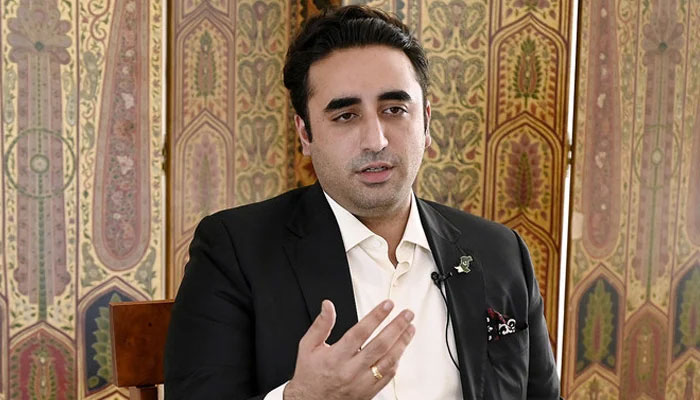
Bilawal Bhutto calls for Iran-US talks to ensure regional peace
Bilawal Bhutto says peace talks in Pakistan are the world's last chance to stop a growing crisis between Iran and the United States.

Pakistan People’s Party – (Web Desk) – Pakistan People’s Party Chairman Bilawal Bhutto Zardari believes that the talks between the United States and Iran simply have to work. Speaking to a British media outlet, he was very clear that there is no backup plan here. Peace is the only option on the table and it must succeed.
Bilawal pointed out that after nearly a month of hard work, both sides have agreed to a ceasefire. But he also warned that if this war continues, the damage will not stay limited to one region. The whole world will feel it.
These negotiations are actually taking place in Pakistan, which stepped in to host the talks after US President Donald Trump announced a two week pause in fighting. Before that pause, US and Israeli airstrikes on Iran had been going on for six straight weeks.
Bilawal, who previously served as Pakistan’s foreign minister, said the conflict has already taken too many lives and is quietly hurting economies around the world as well.
He also shared that Iran brought a 10 point plan to the table and that plan is now being used as the starting point for talks. Not everyone agrees on every point just yet but at least the conversation has begun.
The good news, he said, is that the bombings have stopped and so have the retaliatory strikes across the region. Pakistan is now hoping that both sides can slowly start building trust and close the gap between their positions.
When asked about rumours that he may be nominated for the Nobel Peace Prize, Bilawal kept it humble. He said the prize is not what matters to him right now. What matters is that peace actually takes hold and lasts.

The Middle East conflict began on February 28 after the United States and Israel launched coordinated strikes that assassinated Supreme Leader Ali Khamenei and struck Iran’s military and nuclear infrastructure.
In response, Tehran escalated operations across the region, effectively disrupting shipping through the Strait of Hormuz and carrying out strikes against Israeli territory as well as US military bases across the Gulf.
The six-week conflict resulted in more than 2,000 deaths.
The confrontation between Washington and Tehran eventually came to a halt on April 8, when PM Shehbaz announced a two-week ceasefire agreement.
Washington’s proposed 15-point framework for peace talks focuses on Iran’s enriched uranium, ballistic missiles, sanctions relief, and the reopening of the Strait of Hormuz.
Pakistan Promotes Diplomacy to Ease Iran-Linked Tensions: Envoy Rizwan Saeed Sheikh
Tehran, meanwhile, has presented a counter 10-point proposal calling for greater control over the strategic waterway, the introduction of transit tolls, an end to regional military operations, and a comprehensive lifting of sanctions.
The international community has broadly welcomed Pakistan’s role in facilitating the ceasefire, with several countries expressing support for Islamabad’s diplomatic efforts to de-escalate the conflict and advance peace negotiations.

Comments are closed, but trackbacks and pingbacks are open.