
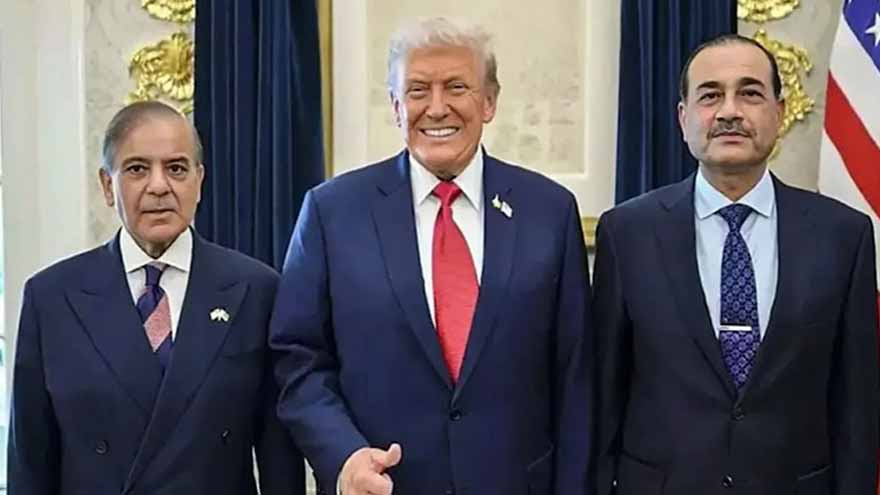

The contemporary international order is undergoing a profound transition, entering a phase in which the traditional conception of power is steadily dissolving into new and more complex configurations. Politics, economics, energy, technology, and security once treated as distinct domains are now deeply interwoven, to the extent that even minor shifts within a single region can reverberate across the global balance of power. Within this fluid and rapidly evolving landscape, certain states are gradually losing their former centrality, while others are asserting themselves as emerging nodes of influence. Among these ascending actors, Pakistan’s name is increasingly being recognized, shaped by its geostrategic location, demographic potential, and evolving role in regional and global affairs.
To comprehend Pakistan’s significance, it is insufficient to view its geography as a mere cartographic entity. Rather, it must be understood as a natural crossroads linking South Asia with Central Asia and the Middle East. For centuries, this region has served as a conduit for civilizations, commerce, and mobility. In the present era marked by a reconfiguration of global trade and energy corridors Pakistan’s location has once again acquired strategic centrality. As nations reassess maritime and overland connectivity, Pakistan emerges as a natural gateway state, capable of facilitating new arteries of regional and intercontinental exchange.
Within this framework, the China–Pakistan Economic Corridor (CPEC) represents far more than a bilateral development initiative; it constitutes a component of a broader strategic vision. By integrating infrastructure development with energy generation, industrial expansion, and trade facilitation, CPEC has repositioned Pakistan within the global economic architecture. It has effectively transformed geographical advantage into operational economic relevance, with implications that may extend well beyond national borders to reshape regional economic dynamics.
Yet Pakistan’s significance cannot be confined solely to geography or economic corridors. In the realm of global security, its role has acquired distinct and growing relevance. Years of sustained engagement in counterterrorism operations, coupled with internal security challenges and regional instability, have endowed Pakistan with extensive operational experience. In contemporary security discourse particularly in relation to Afghanistan’s evolving situation and shifting regional power equilibria Pakistan is increasingly regarded as an indispensable stakeholder. This reality compels major global powers to view Pakistan not merely as a sovereign state within the region, but as an active security partner whose participation is essential for any durable stabilization framework.
Economically, while Pakistan continues to confront structural challenges, its latent potential remains substantial. Agriculture continues to serve as the backbone of the national economy, ensuring food security and contributing significantly to exports. Simultaneously, the rapid expansion of the information technology sector driven by a young, digitally adept population is propelling Pakistan toward integration with the global digital economy. Freelancing ecosystems, software development industries, and emerging tech startups are collectively reshaping economic narratives and introducing new avenues of growth. In parallel, untapped mineral resources are attracting increasing international attention, offering the prospect of long-term structural transformation if effectively harnessed.
Central to this evolving trajectory is Pakistan’s demographic composition. Its predominantly young population constitutes a strategic asset of considerable magnitude. If adequately equipped with education, technical training, and institutional opportunities, this demographic dividend has the potential to transform Pakistan from a developing economy into a competitive participant in the global economic order. Historically, sustained national progress has been closely linked to the effective utilization of human capital, and Pakistan stands at a critical juncture in this regard.
On the diplomatic front, Pakistan is navigating a complex yet increasingly significant strategic posture. Amid intensifying rivalries among global powers, the formation of regional blocs, and the redefinition of geopolitical alignments, Pakistan occupies a unique intermediary space. Its ability to maintain balanced relations across competing power centers positions it as a potential bridge-state capable of facilitating dialogue, mitigating tensions, and enabling limited convergence among divergent interests. This diplomatic flexibility is gradually enhancing its relevance within global strategic calculations.
Energy geopolitics further reinforces Pakistan’s emerging importance. The pursuit of alternative energy routes, transnational pipeline projects, and regional energy cooperation frameworks underscores the increasing strategic value of its geographical corridor. As global energy demand rises alongside concerns over supply constraints, Pakistan’s position as a transit hub becomes increasingly significant within the broader architecture of global energy security.
Taken collectively, these dimensions suggest that Pakistan’s rise is not abrupt or accidental but rather evolutionary in nature. It is the product of a gradual convergence of internal reforms, institutional resilience, policy continuity, and shifting global dynamics. Nonetheless, this trajectory is not without constraints. Economic volatility, political discontinuity, and governance inefficiencies remain persistent challenges that may impede the pace of this ascent if not addressed with strategic coherence.
Despite these limitations, Pakistan’s growing relevance in the international system is becoming increasingly difficult to overlook. Its significance is not merely speculative but grounded in a confluence of geography, human capital, economic potential, and security experience. Should these elements be integrated within a coherent national strategy, Pakistan possesses the capacity not only to consolidate its regional standing but also to project itself as a meaningful actor within the global order.
Ultimately, in an era where the value of states is no longer static but continuously reshaped by capability, adaptability, and strategic alignment, Pakistan finds itself at a pivotal moment of transition. This is a phase defined simultaneously by opportunity and constraint, demanding clarity of vision, institutional consistency, and collective foresight. If navigated effectively, Pakistan may transcend its traditional classification as a developing state and emerge as a consequential and respected participant in the evolving architecture of global power.
Comments are closed, but trackbacks and pingbacks are open.