
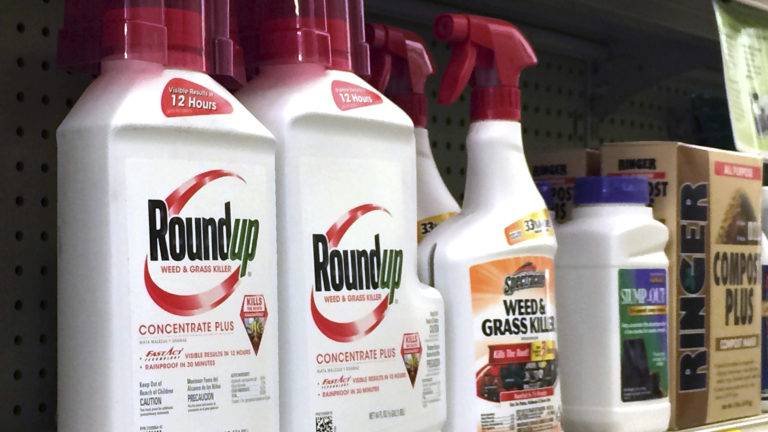
US Judge Approves Bayer’s $7.25 Billion Roundup Cancer Settlement
US Court Clears Major Settlement in Roundup Cancer Lawsuits

The ruling clears the way for compensation to tens of thousands of people who were exposed to the glyphosate-based herbicide and diagnosed with Non-Hodgkin lymphoma (NHL). The agreement also covers individuals who were exposed to Roundup but may develop the disease in the future.
Missouri state court Judge Timothy Boyer approved the agreement in its entirety, stating that the court “fully and finally approves the Settlement Agreement in its entirety”.
“Today is a real good day,” Christopher Seeger, a court-appointed lead attorney representing plaintiffs already diagnosed with NHL, told AFP.
Under the settlement, eligible patients diagnosed with the disease will receive compensation ranging from $10,000 to $165,000. The amount will depend on several factors, including whether they used Roundup for residential or occupational purposes, such as landscaping.
Seeger described the agreement as the most practical route to compensation for many affected individuals, particularly after a recent US Supreme Court ruling strengthened Bayer’s legal position.
In June, the Supreme Court sided with Bayer in a case involving claims that the company had failed to warn consumers about the alleged cancer risks associated with Roundup. The ruling restricted the ability of plaintiffs to pursue such claims under state laws.
The court concluded that the US Environmental Protection Agency’s determination that Roundup is not a carcinogen pre-empts state-level claims linking the product to cancer diagnoses.
According to Seeger, failure-to-warn claims had previously offered one of the strongest legal avenues for many plaintiffs. Although the settlement was negotiated before the Supreme Court decision, both parties had agreed to honour the agreement regardless of the court’s ruling.
People who were exposed to Roundup but have not yet filed lawsuits may also qualify for compensation if they develop Non-Hodgkin lymphoma in the coming years and meet the settlement’s eligibility requirements.
Bayer has already spent billions of dollars resolving thousands of lawsuits linked to Roundup since acquiring Monsanto, the US agricultural chemicals company that developed the weedkiller, in 2018.
In a statement to AFP, Bayer said it hoped the settlement, combined with the Supreme Court ruling, would help bring an end to years of litigation.
Chief Executive Officer Bill Anderson described the court’s approval as a major step in the company’s efforts to reduce the risks associated with pending and future lawsuits.
Glyphosate cancer concerns remain disputed
The International Agency for Research on Cancer (IARC), part of the World Health Organization, classified glyphosate, Roundup’s main active ingredient, as “probably carcinogenic to humans” in 2015.
Bayer, however, maintains that scientific studies and regulatory approvals support the safety of the weedkiller.
The controversy intensified last year when a long-standing scientific study that had concluded Roundup posed no significant health risks was retracted.
The journal Regulatory Toxicology and Pharmacology cited serious shortcomings in the research, including the omission of carcinogenicity studies available at the time and undisclosed contributions from Monsanto employees.
Glyphosate was introduced as a herbicide in the 1970s and was initially promoted as a less toxic alternative to chemicals such as DDT.
Its use expanded significantly during the 1990s, particularly after Monsanto introduced genetically modified seeds designed to tolerate glyphosate, allowing farmers to spray the chemical across crops to control weeds.
The growing use of the herbicide subsequently attracted scrutiny from scientists, regulators and environmental groups. Several countries have introduced restrictions or bans on certain uses of glyphosate.
France, for example, has prohibited its household use. Bayer also announced in 2023 that it was phasing out Roundup products for residential use in the United States amid mounting legal pressure.
Comments are closed, but trackbacks and pingbacks are open.