

Dr. Ghulam Nabi Fai
Chairman
World Form for Peace & Justice
November 19, 2026
An inspiring lesson from the past for the Kashmiri diaspora: collective action, timely diplomatic initiative and open channels of communication can produce outcomes that once seemed beyond reach.
Today, I came across a social media post by Dr. Syed Nazir Gilani, a distinguished jurist and President of the Jammu Kashmir Council for Human Rights (JKCHR), an NGO accredited with the United Nations Economic and Social Council (ECOSOC). His post recalled some important developments surrounding the Seventh Islamic Summit, held in Casablanca, Morocco, from December 13 to 15, 1994.
Dr. Gilani referred to the important role played by the Kashmiri delegation in preparing a substantive OIC resolution on Kashmir, which called for urgent humanitarian assistance for the people of Jammu and Kashmir. He also recalled that aide-mémoires were presented to the heads of state attending the Summit.
His post brought back fond memories of an extraordinary diplomatic initiative in which a small group of Kashmiris, working together at a critical moment, helped secure an outcome that initially appeared almost impossible.
I was invited by Dr. Hamid Al-Gabid, the then Secretary General of the Organization of Islamic Cooperation (OIC), to attend the Seventh Islamic Summit in Casablanca. The All Parties Hurriyat Conference (APHC) had been formed in Kashmir just a year earlier, on March 9, 1993. I felt that it would be particularly significant if an APHC delegation could also participate in this important international gathering.
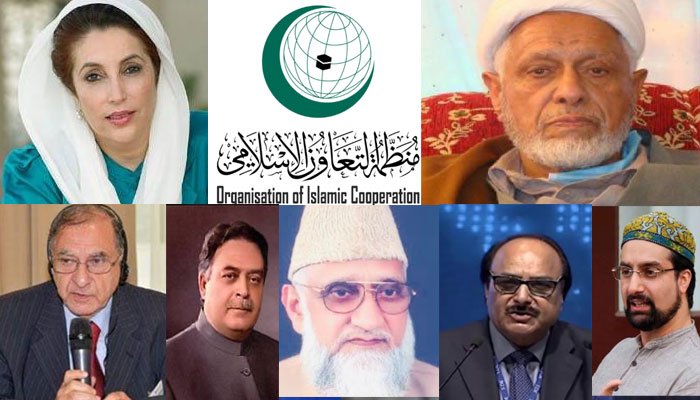
I subsequently learned that invitations had also been extended to Dr. Syed Nazir Gilani, Mirwaiz Umar Farooq, Maulana Abbas Ansari, Sardar Mohammad Qayyum Khan, then Prime Minister of Azad Kashmir, Sardar Sikander Hayat Khan, then President of Azad Kashmir, and Khalid Hasan, a well-known journalist. I contacted Mirwaiz Umar Farooq, who confirmed that the invitations had been received.
Although the Summit was scheduled to begin on December 13, I decided to arrive in Casablanca a day earlier. Soon after my arrival, I met one of the senior diplomats from Pakistan’s Foreign Office. To my surprise, he was not even aware that Mirwaiz Umar Farooq, Chairman of the APHC, would be attending the Summit.
The diplomat explained that securing a reference to Kashmir in the Casablanca Declaration would be extremely difficult. The usual practice was that all declarations and resolutions were drafted in advance by senior officials of the foreign ministries of OIC member states, approved by foreign ministers and ultimately adopted by the heads of state and government.
I impressed upon him that the Chairman of the APHC was attending an OIC Islamic Summit for the first time. It would be unfortunate if such an important occasion passed without any meaningful reference to Kashmir. He advised me to approach Nawabzada Nasrullah Khan, Chairman of Pakistan’s Parliamentary Kashmir Committee, who was also attending the Summit.
Dr. Syed Nazir Gilani and I met Nawabzada Nasrullah Khan and explained the importance of securing a meaningful reference to Kashmir. He immediately understood the seriousness of the situation. Without wasting time, he called Jalil Asghar Jeelani, who had been deputed by the Foreign Office to assist him, and asked him to arrange a meeting with Prime Minister Benazir Bhutto.
Dr. Gilani and I subsequently briefed Prime Minister Bhutto. We emphasized that the presence of the APHC Chairman at the Summit should translate into tangible progress on Kashmir.
What happened next demonstrated the power of timely diplomatic intervention. We later learned that Prime Minister Bhutto had personally contacted the office of His Majesty King Hassan II of Morocco. Her intervention had a remarkable impact. Multiple resolutions on Kashmir, extending to twenty-one pages, were adopted, and the Kashmir issue became an important part of the Casablanca Declaration.
Most significantly, seven consecutive paragraphs, Items 53 to 59, were devoted to Jammu and Kashmir. The Declaration recognized the APHC as the “True Representatives of the people of Jammu and Kashmir.”
Item 58 was particularly significant. It welcomed the establishment of the OIC Contact Group on Jammu and Kashmir at the United Nations and called upon the Contact Group to continue its efforts to promote the right of self-determination of the Kashmiri people in accordance with United Nations resolutions and to safeguard their fundamental human rights.
Two important institutional developments followed from this diplomatic initiative. First, the OIC Contact Group on Jammu and Kashmir was established. Its membership included Pakistan, Turkey, Saudi Arabia, Niger, Morocco, the OIC Secretary General and the APHC, in accordance with the arrangements made at the time.
The inaugural meeting of the Contact Group was held at the heads-of-state level. It was chaired by Turkish President Suleyman Demirel and attended by the President of Niger, Crown Prince Abdullah of Saudi Arabia, Prime Minister Benazir Bhutto, OIC Secretary General Dr. Hamid Al-Gabid, representatives of Morocco and the APHC delegation. Crown Prince Abdullah addressed the Kashmir Contact Group in Arabic, with his remarks translated into English by Prince Saud Al-Faisal, the Saudi Foreign Minister.
It was also decided that the OIC would convene three Contact Group meetings on Kashmir every year: one during the United Nations General Assembly in New York, another during the United Nations human rights proceedings in Geneva, and a third during the annual OIC Council of Foreign Ministers meeting.
This institutional arrangement provided Kashmir with a continuing platform for diplomatic engagement. I had the honor of attending more than two dozen of these Contact Group meetings over the years.
Second, it was decided that the head of the APHC delegation would address every Islamic Summit on Kashmir. Mirwaiz Umar Farooq thus became the first APHC leader to address an Islamic Summit when he spoke at Casablanca.
Looking back, the Casablanca experience remains an extraordinary example of what collective effort can achieve. A few of us, including Dr. Gilani and myself, recognized an opportunity and worked to persuade the relevant diplomatic actors that Kashmir deserved meaningful attention at the Summit. Nawabzada Nasrullah Khan extended his support, and Prime Minister Benazir Bhutto took the initiative that ultimately transformed the situation.
It would be unfair to overlook the contribution of Prime Minister Benazir Bhutto. Her personal interest, diplomatic initiative and timely intervention with the Moroccan leadership were decisive in making the possible out of what had initially appeared impossible. The outcome was not simply another reference to Kashmir in an international declaration; it was the creation of an institutional mechanism and a sustained diplomatic opportunity for the Kashmir cause.
There is, however, another incident from Casablanca that deserves attention. It may appear relatively minor when compared with the adoption of resolutions and the establishment of an international contact group, but I believe it carries an equally important lesson.
During the Summit, Mirwaiz Umar Farooq, representing the APHC, suggested that we should immediately brief the APHC leadership back in Kashmir about the developments taking place in Casablanca. We tried to establish telephone contact with the APHC leadership, but could not reach anyone except Khawaja Abdul Gani Lone.
We therefore briefed him about the discussions, diplomatic developments and important decisions emerging from the Summit. It was a simple telephone conversation, but it reflected something fundamental: despite geographical distances and difficult circumstances, communication between people working for a common cause must never be allowed to break down. That telephone call has stayed with me over the years.
The Kashmiri diaspora has much to learn from the Casablanca experience. We may live in different countries, belong to different political traditions, hold different opinions and sometimes disagree sharply with one another. But disagreements should not become permanent barriers to communication. Nor should differences prevent us from identifying areas where collective action is possible.
The Casablanca initiative succeeded because people communicated, shared information, recognized one another’s contributions and acted together when an opportunity arose. No single individual could have achieved the outcome alone. Each person played a part: one opened a door, another made a connection, someone else presented the case, and a political leader used her influence at the decisive moment. That is the real meaning of collective effort.
The lesson is particularly relevant today. The Kashmiri diaspora has considerable experience, professional expertise, international connections and access to influential institutions. Yet these strengths can only translate into meaningful results if we develop a culture of cooperation, mutual respect and regular communication.
We do not have to agree on everything to work together on something important. We do not have to abandon our individual convictions to build common ground. What we must abandon is the tendency to allow misunderstandings, mistrust and personal differences to close the channels through which dialogue and cooperation can take place.
The Casablanca Declaration of 1994 reminds us that international outcomes are not always determined by the size of a delegation or the power of an institution. Sometimes, a small group of committed individuals, acting with clarity of purpose and at the right moment, can influence an outcome far greater than their numbers would suggest.
What initially appeared impossible became possible because people came together, communicated effectively and seized an opportunity.
Perhaps that is the most important message Casablanca has left for us: when we keep our channels of communication open, respect collective contributions and work together towards a shared objective, even the most unexpected positive outcomes can become possible. Kashmiri diaspora should learn from that experience, not merely remember it.
Dr. Ghulam Nabi Fai can be reached at:
WhatsApp: 1-202-607-6435
gnfai2003@yahoo.com
Comments are closed, but trackbacks and pingbacks are open.