

According to Glaukos, none of the patients who received the treatment required additional intervention during the three-year follow-up period, suggesting that the benefits were sustained over time.
Eyes treated with Epioxa showed a 1.9-diopter improvement in maximum corneal curvature from baseline after three years, indicating continued flattening and stabilisation of the cornea.
The company reported that approximately 29% of treated eyes gained at least two lines on a standard vision chart, while 20% improved by three or more lines compared with measurements taken before treatment.
The findings add to evidence supporting Epioxa as a potential less-invasive treatment option for keratoconus. Unlike procedures that require removal of the cornea’s outer protective layer, Epioxa treatment does not require that step.
The study included 38 eyes from 35 patients, with 92% of treated eyes completing the three-year assessment.
Glaukos also reported no serious adverse events, treatment-related adverse events or treatment discontinuations associated with Epioxa during the follow-up period.
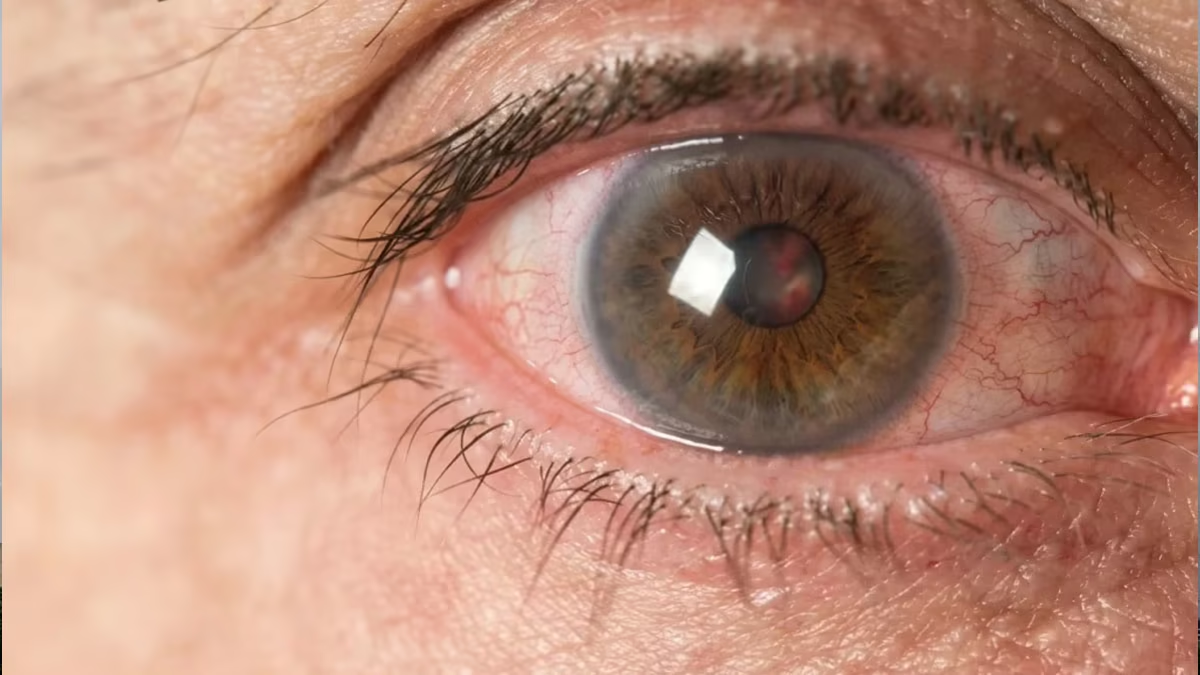
Keratoconus is a progressive eye condition that usually develops during adolescence or early adulthood. It causes the cornea to thin and bulge into an irregular cone-like shape, potentially leading to blurred or distorted vision. In advanced cases, patients may eventually require a corneal transplant.
Comments are closed, but trackbacks and pingbacks are open.