
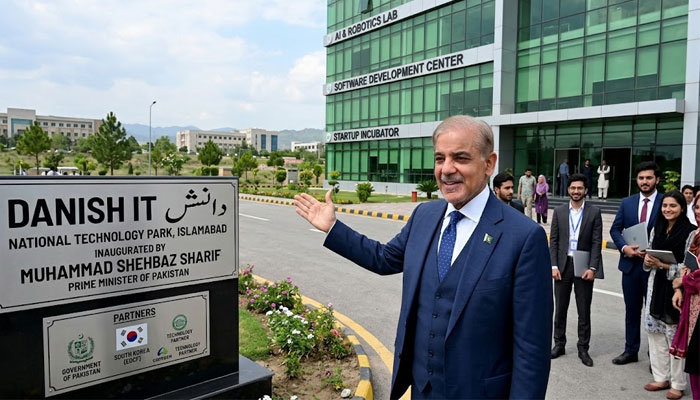

ISLAMABAD: (Mudassar Iqbal) – Pakistan has taken another step towards embracing modern technology with the inauguration of the National Technology Park in Islamabad, officially named the Danish IT Park by Prime Minister Muhammad Shehbaz Sharif. The initiative is expected to create new opportunities for young Pakistanis to develop skills in artificial intelligence (AI), information technology and other emerging fields.
Addressing the inauguration ceremony, the prime minister said the Danish IT Park would serve as a platform for innovation, entrepreneurship and youth empowerment. He expressed confidence that the project would help young men and women acquire modern skills, explore new career paths and contribute to the country’s economic growth.
The importance of the project goes beyond its physical infrastructure. At a time when technology is transforming industries and creating new forms of employment around the world, access to practical training, mentorship and modern facilities has become increasingly important. The IT park aims to provide an environment where young people can turn their ideas into viable businesses and develop solutions that meet international standards.
Pakistan has a large pool of talented young people, but providing them with the right direction, training and professional opportunities remains a key challenge. Through the Danish IT Park, aspiring professionals could strengthen their expertise in AI, software development, digital services and other technology-driven sectors.
The prime minister said the initiative had the potential to benefit not just thousands but millions of young people over time. He also expressed his commitment to extending similar IT parks to other parts of the country, ensuring that opportunities in the digital economy are not confined to major cities. Young people in all four provinces, Azad Jammu and Kashmir, and Gilgit-Baltistan should also be able to benefit from Pakistan’s growing technology sector.
Emphasising the need for effective management, the prime minister directed the relevant ministry to invite local and international companies working in IT and artificial intelligence through a transparent process. He said the most suitable company should be selected to manage the facility, helping ensure that the park fulfils its intended purpose.
He also appreciated the efforts of everyone involved in completing the project, noting that it had initially been considered difficult to accomplish. According to him, teamwork, dedication and consistent efforts made its completion possible. He further acknowledged South Korea’s cooperation and stressed that the facility would require proper maintenance and efficient management to deliver lasting benefits.
Drawing a connection between the Danish IT Park and the Danish Schools initiative, the prime minister said the project reflected a similar vision of expanding opportunities for people who might otherwise have limited access to quality education and professional development. While Danish Schools focus on educational opportunities for underprivileged children, the IT park aims to help young people gain the technological knowledge and practical skills needed to succeed in a competitive world.
Pakistan’s future economic growth will increasingly depend on its ability to develop a skilled workforce capable of competing in international markets. Young Pakistanis have the potential to create software, develop AI-based solutions, work with global companies and generate valuable foreign exchange through IT exports. With the right support, they can move beyond seeking employment and become entrepreneurs who create jobs for others.
Modern technology can also play an important role in transforming traditional sectors, including agriculture, manufacturing, industry, mining and education. By encouraging innovation and equipping young professionals with relevant skills, initiatives such as the Danish IT Park could contribute to broader economic development and improve Pakistan’s competitiveness in the global marketplace.
However, the project’s long-term success will depend on more than its infrastructure. Young people must have access to quality training, internships, research opportunities, investment, industry partnerships and meaningful employment pathways. Strong links with technology companies and international markets will also be essential.
Ultimately, the real measure of success will be the number of skilled professionals trained, startups established, jobs created and technology services developed for domestic and international clients.
The Danish IT Park presents Pakistan with an opportunity to turn the potential of its youth into a driving force for national progress. In an increasingly digital world, countries advance not only through their natural resources but also through knowledge, skills and innovation.
With sustained investment, effective management and equal access to opportunities, Pakistan’s young people can compete with their counterparts around the world. The goal should be to empower them not merely to use technology, but to create it, not simply to look for jobs, but to generate employment, and not only to learn from the world, but also to contribute to global technological advancement.
The Danish IT Park represents a step towards that vision, offering hope that Pakistan’s future can be shaped by the creativity, talent and technological capabilities of its young generation.
Comments are closed, but trackbacks and pingbacks are open.