
Government Cannot Alter Petroleum Levy Without Multilateral Partners, Says Minister Malik
Ali Pervaiz Malik tells a National Assembly committee that budget targets are fixed, while MPs question the heavy burden of fuel taxes on the public.

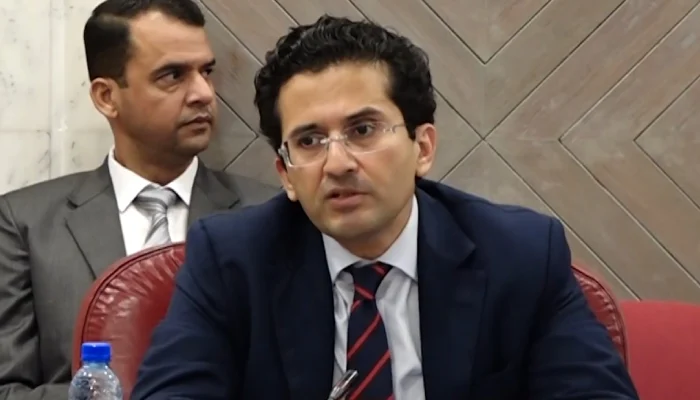
ISLAMABAD – (Staff Reporter/Web Desk) – The petroleum levy multilateral partners issue came up strongly in parliament, as Petroleum Minister Ali Pervaiz Malik said the government cannot change the levy targets set in the budget on its own.
Speaking at a meeting of the National Assembly Standing Committee on Petroleum, he said any change needs talks with the country’s international lenders first.
“The targets for the petroleum levy are allocated in the budget, and we cannot change them without our multilateral partners,” he told the committee.
Committee Chairman Mustafa Mahmood said diesel supply matters more than petrol. Farmers and goods transporters depend on diesel, so any shortage hurts the whole economy.
Committee member Saif-ul-Mulook Khokhar asked why the levy on petrol and diesel is so high. He called it a very heavy burden on ordinary people and said it was an easy way for the government to collect tax.
The minister replied that regional tensions had disturbed the supply of petrol, diesel and crude oil. He described the situation as a major crisis for the country.
“The world has never seen diesel this expensive,” he said. He added that the government understands the problems people are facing.
The Meeting of the National Assembly Standing Committee on Energy (Petroleum Division) was held today under the Chairmanship of Syed Mustafa Mahmud, MNA, at the Parliament House, Islamabad.
@NA_Committees
@appcsocialmedia @PTVNewsOfficial https://t.co/bgHRULFpNQ— National Assembly 🇵🇰 (@NAofPakistan) October 8, 2026
Malik explained that the petroleum levy counts as non-tax revenue. He said the rate is Rs80 and that all details are available on the website of the Oil and Gas Regulatory Authority (OGRA).
PPP leader Naveed Qamar raised another point. He said lawmakers do not vote on the levy because it stays in the hands of the executive.
Qamar also asked why the government is involved in deciding fuel prices at all. He noted that pricing moved from a 30-day formula to a 15-day formula and is now heading towards daily changes.
The minister said OGRA, not the government, decides petroleum product prices.
He also defended the current approach. “If the diesel price were Rs600 per litre today, there would have been an uproar,” he said. According to him, the government has improved the supply chain and stopped profiteering.
On local production, Malik said about 70 percent of the country’s diesel is refined at home. PARCO is working at full capacity, while Pakistan Refinery is running at 84 percent and National Refinery at 85 percent.
He said four refineries have signed agreements to make Euro V-compliant fuel. Talks are still going on with one more refinery.
The minister told the committee that a winter plan is being reviewed daily. He said gas supply was kept steady for households during meal times, even in hard conditions.
He also said the whole fuel supply chain is being moved to a digital system. The aim is better tracking and fewer chances of hoarding or theft.
The meeting showed a clear gap between lawmakers and the government. MPs want relief from high fuel taxes, while the minister says budget commitments and lender agreements limit what can be changed.
For now, the levy targets will stay as they are. Any future change will depend on talks with the country’s international partners.
Comments are closed, but trackbacks and pingbacks are open.