

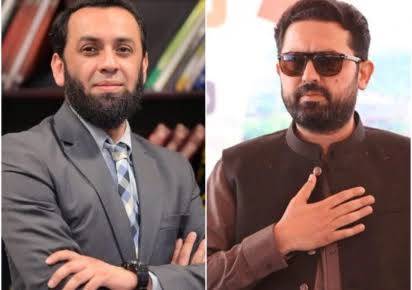
Atta Tarar Says Sohail Afridi Acts More Like TTP Commander
Federal minister accuses Sohail Afridi's government of shielding militants and profiting from illegal trade in Khyber Pakhtunkhwa

Atta Tarar – (Staff Reporter/Web Desk) -Federal Information Minister Atta Tarar has launched a sharp attack on Khyber Pakhtunkhwa Chief Minister Sohail Afridi. He said the CM behaves more like a militant leader than an elected head of a province.
Speaking in a formal statement, Tarar said the provincial setup was failing its people. He claimed the KP government was not doing enough to stop armed groups from operating freely in the region.
The minister did not stop at criticism of security policy. He raised serious money-related claims too. According to him, illegal timber cutting and tobacco smuggling are running unchecked across the province.
Tarar also pointed to gold mining. He alleged that people close to the ruling party in KP are benefiting from unlawful mining deals. He said these deals and related contracts may be feeding money into terrorist networks.
This, he argued, explains why the provincial government seems reluctant to take real action. Money tied to illegal business, he suggested, creates a reason to look the other way when militants operate nearby.
The minister’s words were blunt. He said no government can be excused if it lets ordinary citizens die at the hands of terrorists. For him, safety of the public comes before politics.
This is not the first time tensions have flared between the federal government and the KP administration. Disagreements over how to handle militancy in the province have grown louder in recent months.

Security remains a sensitive topic across Pakistan right now. Attacks in border areas have raised public concern. Any statement linking a provincial government to militant sympathy tends to spark strong reactions.
Political observers say this exchange reflects a deeper rift. The federal government wants unified action against armed groups. Provincial leaders, meanwhile, often push back against claims that they are not doing enough.
For residents of Khyber Pakhtunkhwa, these debates carry real weight. Many families in the province have already suffered losses due to violence. They want results, not blame games between leaders.
Whether these allegations lead to any formal inquiry remains unclear. For now, the claims stay verbal, exchanged through statements and media coverage rather than documented evidence.
The coming days may bring a response from the KP government. Political watchers expect Sohail Afridi or his team to reply to these accusations directly.
Public trust in leadership often depends on how such disputes are resolved. Citizens generally prefer visible action over ongoing arguments between different levels of government.
As tensions continue, people across Pakistan will be watching closely. The outcome of this dispute could shape how security policy is handled in the province going forward.
Comments are closed, but trackbacks and pingbacks are open.