
Iran Qatar Mediation Push Grows as US Tightens Sanctions
Qatar's top diplomat presses Iran to reopen the vital waterway

Iran & Qatar – (Special Correspondent/Web Desk) – Iran Qatar mediation efforts have picked up pace this week, as Tehran agreed to put together a formal list of conditions for reopening the Strait of Hormuz to normal shipping. The move came after Qatar’s top diplomat urged Iranian leaders to respect free passage through the waterway.
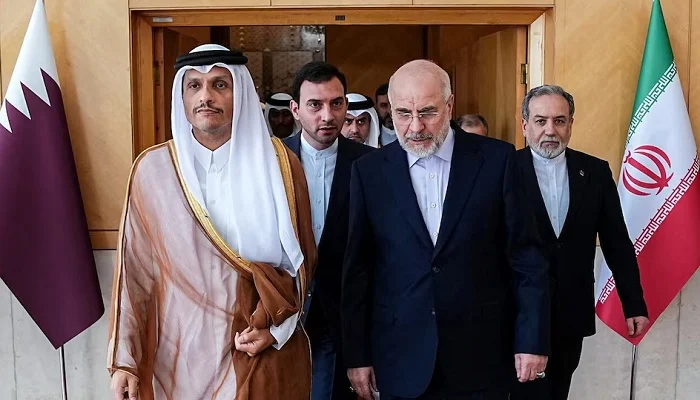
Qatar’s Prime Minister and Foreign Minister, Sheikh Mohammed bin Abdulrahman Al Thani, traveled to Tehran on Thursday for talks with senior Iranian officials. He later said online that he had stressed the need to honor international shipping law in the strait.
This narrow stretch of water sits between Iran and Oman. Before the war, it carried around a fifth of the world’s oil supply. Since fighting broke out between the United States, Israel, and Iran six months ago, traffic through the strait has dropped sharply.
Iran had earlier warned it would strike any ship crossing the strait without its permission. That threat pushed oil prices higher and gave Tehran extra leverage in wider negotiations with Washington and its allies.
Mohsen Rezaei, who leads Iran’s Supreme National Security Council, said his country is now drawing up conditions for reopening the passage. He explained that mediators had specifically asked Iran to lay these terms out clearly.
Speaking on Al Manar television, Rezaei said Iran and Oman had already worked out a shared shipping route. Part of this path runs through Omani waters, while the rest stays inside Iranian territory. Ships would follow a central lane once the United States agrees to Iran’s demands.
In earlier rounds of talks, Iran’s demands included lifting the American blockade on its ports, receiving compensation, and ending sanctions. It is still unclear whether Tehran plans to soften or change these terms this time around.
For weeks now, Iran and the United States have traded only sharp public statements. Neither side has returned to direct talks, leaving Qatar and other regional partners to carry the diplomatic weight.
Back in June, Qatar and Pakistan helped put together an agreement that led to a ceasefire and set fresh shipping terms for the strait. That deal broke down soon after, though, once both sides disagreed over how much control Iran should have over shipping routes. Washington later called the agreement finished.
On Wednesday, Iran’s Revolutionary Guards said Tehran and Oman had reached a broad understanding on managing traffic and sharing revenue from the strait. A separate source close to the talks said the finer details are still being worked out.
Meanwhile, American forces say they have cleared sea mines that Iran’s Revolutionary Guard Corps placed in the strait months earlier. A senior US commander said shipping lanes are open again and that momentum is building toward normal traffic.
Despite these claims, many ships are still avoiding the route because of lingering safety concerns. Tracking data suggests shipping activity remains far below normal levels, even though officials insist the passage is technically open.
The United Nations’ maritime agency has recorded dozens of incidents in the strait since the war began, with the fighting resulting in the loss of nearly twenty lives among sailors.
Comments are closed, but trackbacks and pingbacks are open.