
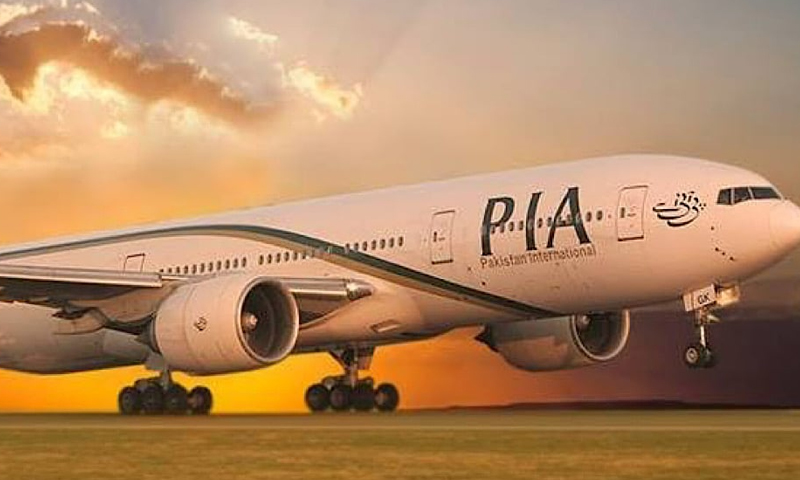
Government to Pay Rs30 Billion Interest on PIA Debt
Govt Allocates Rs73bn for Privatisation and PIA Legacy Debt

ISLAMABAD: (Finance Reporter) – The government has allocated Rs73 billion as a privatisation contingency, with around Rs30 billion earmarked to cover interest payments on legacy debt of Pakistan International Airlines (PIA). The government has also decided to extend sales tax exemptions to all locally operating airlines from the next fiscal year to ensure a level playing field.
According to government records, taxpayers will bear approximately Rs30 billion in interest on Rs268.5 billion of PIA debt during the current fiscal year. The debt was transferred to the PIA Holding Company as part of the airline’s restructuring ahead of its privatisation.
The annual interest bill is three times the Rs10 billion in cash received by the government against the sale of a 75% stake in PIA. Out of the Rs135 billion bid amount, Rs10 billion was paid to the government, while the remaining amount is being invested in the airline by the successful bidder. The remaining 25% stake is also expected to be transferred to the same consortium for Rs45 billion in cash.
A Finance Ministry official said the Rs73 billion contingency allocation would cover unexpected costs linked to the privatisation of three power distribution companies as well as interest payments on PIA’s legacy debt.
The official explained that the Finance Ministry is providing the interest payment to PIA Holding Company in the form of a loan. Since the holding company has no independent revenue source, it is expected to repay the amount through the potential sale of its hotel assets.
In 2024, the PIA Holding Company board approved the restructuring of around Rs268 billion in commercial debt, transferring it into public debt. Banks agreed to extend the repayment period to 10 years at an interest rate of 12%.
Under the arrangement, banks could receive more than Rs300 billion in interest over the decade. With principal included, the total payment to banks is expected to reach around Rs573 billion over 10 years.
The Privatisation Commission, however, clarified that the Rs73 billion contingency was not specifically allocated to the commission or the Privatisation Division.
A Finance Ministry spokesperson said the provision was created to meet expenses arising from the privatisation or winding up of public-sector entities. The government’s broader privatisation programme could also generate legacy liabilities involving entities such as the Pakistan Agriculture Storage and Services Corporation (PASSCO).
Sales Tax Exemption for Airlines
The government has also decided to extend sales tax exemptions to all locally operated airlines from the next fiscal year. Privatisation Commission Secretary Usman Bajwa informed the National Assembly Standing Committee on Privatisation that the move was intended to eliminate discriminatory tax treatment and create a level playing field.
The government had previously granted PIA an 18% sales tax exemption on aircraft procurement and leasing for 15 years. The National Assembly Standing Committee on Finance had raised concerns over providing preferential treatment to the airline’s new owners.
Bajwa said the exemption was a government decision and was not specifically demanded by the bidders. He added that sales tax relief for other airlines would become effective from fiscal year 2027-28, with the exemption available for 15 years.
Officials said the government had also taken the International Monetary Fund (IMF) into confidence over the decision.
DISCO Privatisation Process
The committee was also briefed on the proposed privatisation of three power distribution companies — FESCO, IESCO and GEPCO.
The companies have been placed in the first phase of the privatisation programme, with the private sector being offered between 51% and 100% ownership. The deadline for submitting expressions of interest for GEPCO has been set for August 21.
Bajwa said the DISCOs carry historical losses and face several balance-sheet and transaction-related issues. A final valuation of their assets will be determined after reviewing their financial position.
Bidding for the first three companies is expected to take place in December 2026.
The committee chairman also recommended that DISCO employees should not be dismissed for five years following privatisation, while the committee called for performance audits of the distribution companies.
Officials said prospective investors had sought greater flexibility over workforce restructuring, arguing that advanced metering systems could reduce staffing requirements. A compromise proposal could restrict the new owners from terminating employees for at least one year.
The committee was further informed that losses of the DISCOs remain above the targets established by the power-sector regulator.
Comments are closed, but trackbacks and pingbacks are open.