
White House Ballroom Court Ruling Halts Trump’s $400 Million Project
Federal Appeals Court Blocks Above-Ground Construction, Sets Stage for Supreme Court Fight

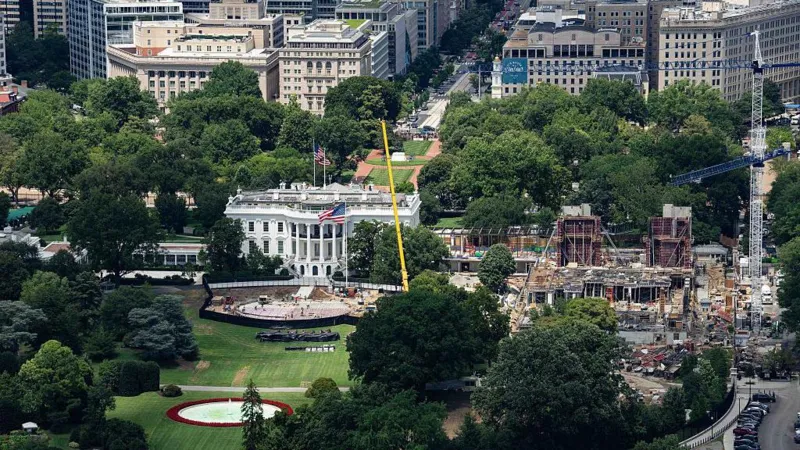
WASHINGTON – (Special Correspondent/Web Desk) – A major White House ballroom court ruling has stopped construction on Donald Trump’s $400 million project, at least for now. A federal appeals court in Washington sided against the administration on Friday, marking a big setback for the president’s building plans.
The US Court of Appeals for the District of Columbia Circuit issued a 2-1 decision. Judges said no leader can reshape the White House without Congress signing off first. They noted that every president is simply a short-term resident of the building, not its owner.
The ruling backs an earlier order won by the National Trust for Historic Preservation. This group sued last year after crews tore down the East Wing. Workers had begun building a massive 90,000-square-foot ballroom without asking lawmakers for approval.
Judges on the panel said the choice to build something this large rests with Congress, not the White House acting alone.
The court gave the administration two weeks before the order takes effect. That window allows Trump’s team to bring the fight to the Supreme Court.
Trump Calls Ruling Political
Trump did not hold back his frustration. He labeled the ballroom a “military center” in a social media post and promised an appeal. He called the court’s decision unfair and driven by politics.
He argued that the project includes real safety features. These include shelters, medical rooms, and protection against drones or missile threats. Trump says all these elements work together as a single, complex structure.
Brent Leggs, who leads the National Trust, welcomed the outcome. He said it reflects the public’s right to speak up about places that matter to the nation’s history.
Background of the Legal Battle
This fight isn’t new. US District Judge Richard Leon had already paused construction above ground twice. However, he allowed underground work to continue during the legal process.
During arguments in June, a Justice Department lawyer said courts shouldn’t weigh in on a privately funded project. He claimed the old East Wing left White House staff and visitors unsafe.
The two judges who ruled against the administration disagreed strongly. They said national security claims can’t be used as a free pass to ignore the law.
A dissenting judge saw it differently. She argued the lower court overstepped its role by controlling construction decisions at the White House.
This isn’t the only clash over changing government buildings in Washington. A separate case recently forced the removal of Trump’s name from the Kennedy Center’s exterior wall.
For now, all eyes turn to the Supreme Court. The final word on the White House ballroom court ruling could shape how much power future presidents have over historic federal property.
Comments are closed, but trackbacks and pingbacks are open.